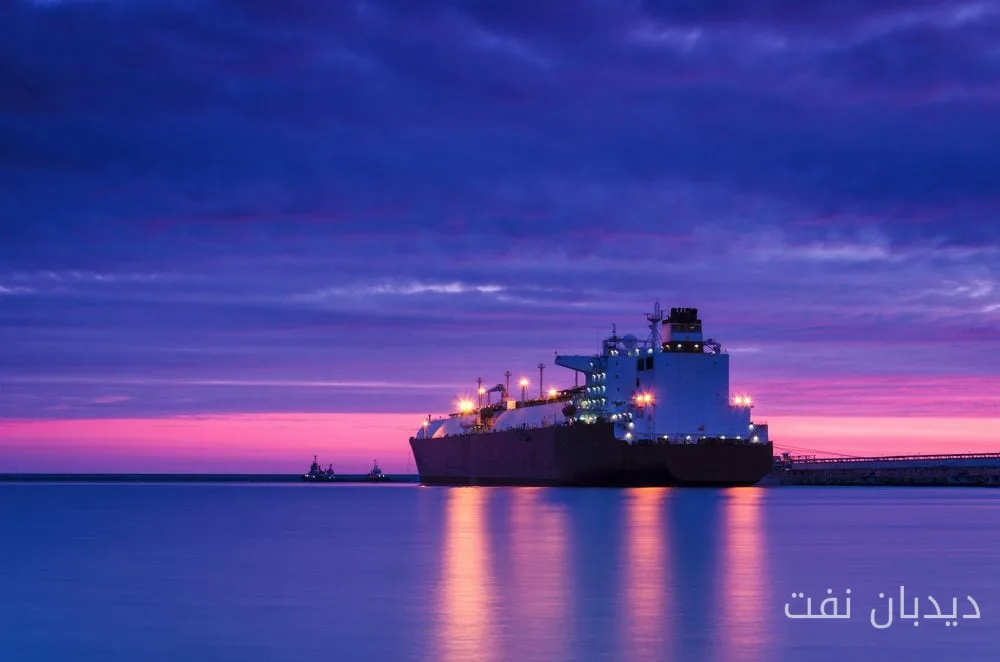
The Maritime Administration (MARAD) announced its approval for the $8.2 billion LNG export port project in Texas. This approval not only represents a significant development in U.S. energy production but also constitutes the fastest deep-water port permit review in over 20 years.
70% Reduction in Review Time
According to the U.S. Department of Transportation (DOT), the review of this project was completed approximately 3.7 years faster than the historical average, indicating a 70% reduction in review time. This acceleration was a result of changes implemented in January when MARAD took the lead in deep-water port reviews, while the U.S. Coast Guard shifted to a supportive role.
Read more: Swedish company Veritas Tankers signs contract to purchase six chemical tankers in China
The ST LNG project submitted its application to MARAD and the Coast Guard on June 9, 2025. Utilizing the new approach, MARAD completed the Final Environmental Impact Statement (FEIS) in just 410 days. DOT attributed these changes to the elimination of unnecessary administrative procedures and the acceleration of the review process.
Structural Change in the Review Process
A DOT spokesperson stated, "The greatest efficiency gained was due to addressing structural inefficiencies, not challenges related to any of the collaborating agencies." Previously, MARAD and the U.S. Coast Guard operated under a shared structure for necessary reviews under the National Environmental Policy Act (NEPA). According to the DOT spokesperson, this shared responsibility for environmental reviews inadvertently created redundant administrative steps, parallel documentation paths, and sequential reviews.
Now, with MARAD as the leading agency, project timelines have been streamlined, and the review team has established a unified approach for communication between agencies. The Coast Guard is still considered one of the six federal collaborating agencies on this project, but no specific statements from the Coast Guard are mentioned in this document.
The deep-water port development will include four phases, each comprising five fixed offshore platforms. Ultimately, the deep-water port will consist of 20 platforms and 7.7 miles of piping.
According to DOT, the ST LNG project did not benefit from any one-time procedural exemptions that may not apply to future projects. Additionally, DOT announced that historical administrative processes that led to delays in reviews have been eliminated.