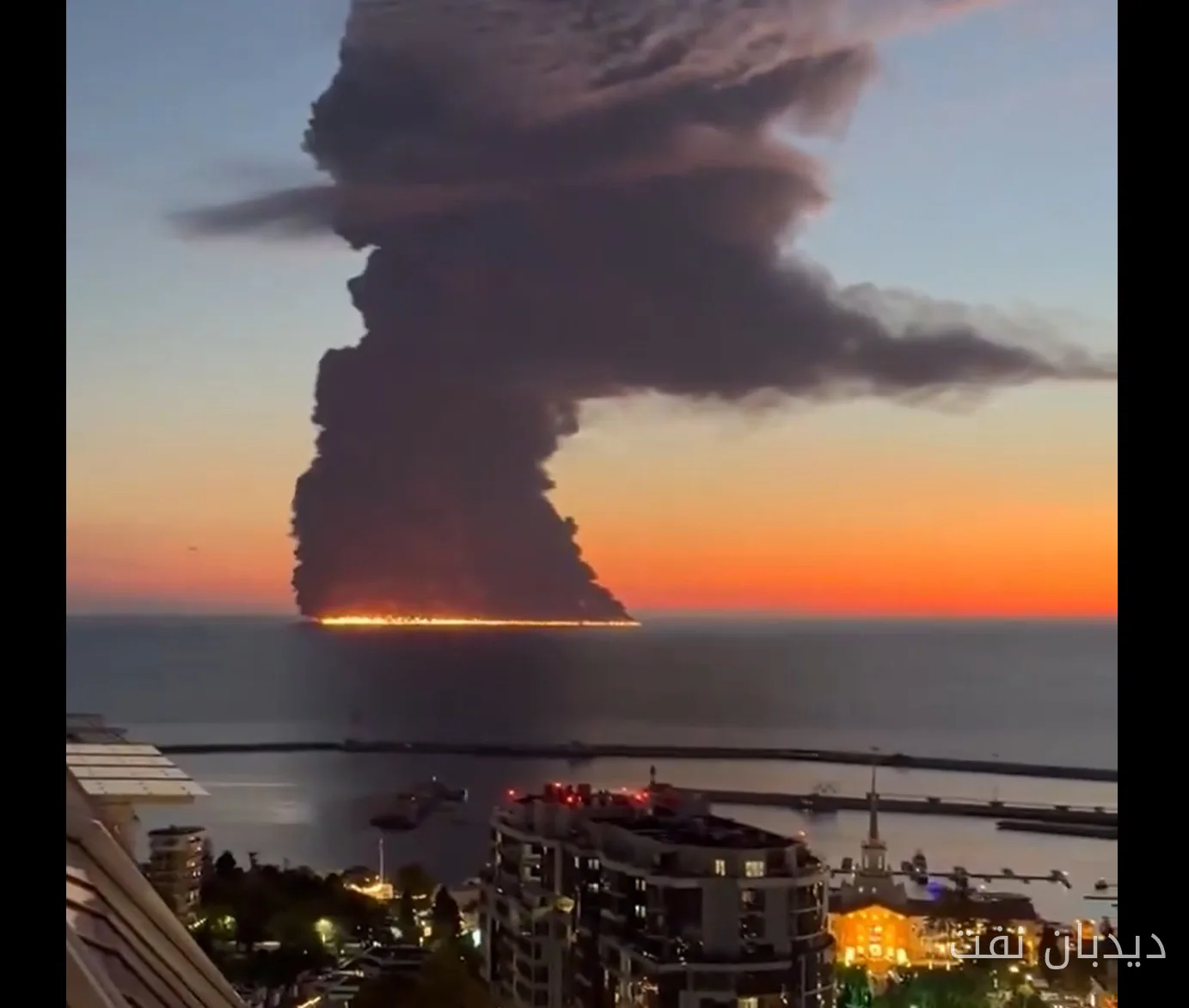
The Aframax Rio oil tanker caught fire on October 6, 2026, off the coast of the resort city of Sochi, Russia. The incident quickly drew the attention of media and social media users, as flames and smoke were clearly visible in the area. Recently released videos show images of the fire in the tanker’s cargo tanks and oil spilling into the sea.
Details of the Incident and Oil Spill
The incident occurred while the tanker was visible from the shore by several vessels and boats. Published images show that the fire is concentrated in the middle of the tanker, with oil clearly burning on its right side. More videos of the incident reveal that a large pool of burning oil has formed behind the tanker, with a tall column of smoke rising into the sky.
According to initial reports, the Aframax Rio tanker had previously been sanctioned by Ukraine due to its role in Russian oil exports. On October 2, it was identified in its last recorded position near the shores of the city of Sirius, located southeast of Sochi. While the fire broke out, no explosive sounds or air raid sirens were heard beforehand.
Background of the Tanker and Its Consequences
The Aframax Rio tanker was built in 2004 and is primarily known as a committed oil tanker for transporting oil from Russian ports in the Baltic Sea and the Black Sea to destinations in India and East Asia. In February 2026, the Ukrainian government added this tanker to its list of sanctions against the "shadow fleet." This tanker is operated by Western companies and is currently providing services for Russian oil exports, which are indirectly affected by price cap restrictions.
Analysts believe that this fire could have serious implications for Russian oil trade and there is a potential for environmental issues arising from the oil spill into the sea. It is currently unclear whether this incident occurred accidentally or is related to an attack connected to regional tensions. Especially considering that Ukraine has not claimed responsibility for the incident, this matter could lead to further discussions regarding sanctions and oil trade in the future.



