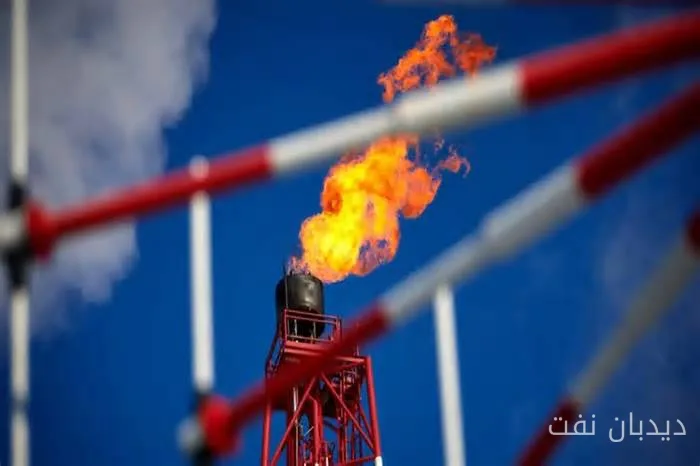
The CEO of the National Iranian Gas Company reported a gas imbalance of 130 million cubic meters in the country, which could lead to a production recession in industries. According to experts' forecasts, this imbalance has intensified due to increased gas consumption in the winter season and damage to production facilities caused by recent wars.
Gas Production and Consumption Status
Hashim Oraki, an energy expert and head of the Union of Scientific Energy Associations of Iran, examined the status of gas production and consumption in previous years and forecasts for the current year. Last year, the country's gas production in the winter season was 830 million cubic meters per day, but with the cold weather, household consumption reached 650 million cubic meters per day, causing fuel supply issues for power plants and industries.
Read more: The Gas Optimization Plan Helps Improve Energy Consumption in Iran
Oraki added: "During the peak of the cold, power plants resorted to using mazut and diesel, and gas supply to industries was cut off, which created negative repercussions for the country's production. This spring, the industrial sector faced a negative growth of 14.7 percent."
The Impact of War on Gas Production
This energy expert pointed to the current year's situation, highlighting the damage to gas production facilities. According to Oraki, following the U.S. attack on the country's gas facilities, 130 million cubic meters of gas production capacity has been lost. Currently, efforts are underway to restore 30 million cubic meters of this capacity, but 100 million cubic meters of this production remains stagnant.
Oraki emphasized: "This shortfall adds to last year's imbalance and will make this year's situation significantly worse." He also stated that with the drop in temperature, household gas consumption will sharply increase, which could lead to a gas shortage for industries and power plants.
Consequences of Gas Imbalance for Industries
Oraki further warned that if this imbalance continues, industries will face serious problems in securing fuel and energy. He stated: "Power plants will be forced to turn to mazut and diesel consumption. The use of mazut is restricted due to severe pollution and technical challenges near large cities. Securing diesel also has its own logistical issues."
He also pointed out that the burden will fall on the industrial sector, resulting in reduced production compared to the past. This situation could lead to a prolonged recession in the industrial sector and create more problems for the country's economy.
Read more: Mitsui OSK Lines Signed a Long-Term Contract for FSRU Supply with Deutsche ReGas · 3800 Megawatts of New Power Capacity Entering the Energy Exchange