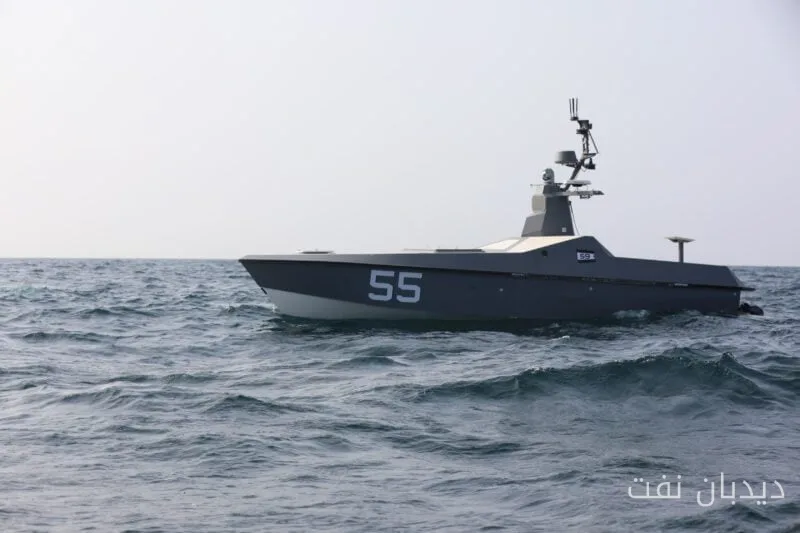
The U.S. military has recently begun using unmanned ships in its operations in the Persian Gulf, indicating significant progress in this area. These ships have been deployed as part of the USS Theodore Roosevelt carrier strike group and have participated in various missions, including rescuing pilots and gathering intelligence.
Military Applications of Unmanned Ships
Unmanned ships, as a new tool in the U.S. Navy, are rapidly becoming an integral part of naval operations. In one recent operation, an unmanned ship named Saronic Corsair played a key role in rescuing two Apache pilots who had crashed near the Strait of Hormuz. This ship transported the pilots to a location where they were then transferred to safety by helicopter. This operation exemplified the real-world effectiveness of this technology in emergency situations.
Read more: Analysis of the Impact of the Yemen War on Maritime Transport in the Persian Gulf
Challenges and Opportunities
Despite recent successes, the U.S. Navy must seriously address the challenges related to the use of unmanned ships. One of the main challenges is how to organize, train, and maintain these forces. Senior officials from the Department of Defense and the Navy emphasize that instead of merely purchasing new equipment, they must also change organizational structures, training, and procurement methods to make the best use of this technology.
According to Huang Kao, the acting head of the Navy, unmanned ships should be used not only as a supporting force but also as a strategic option to expand the scope of military operations and reduce risks for sailors. These ships enable the Navy to operate in areas with potential threats without endangering the lives of sailors.
For example, BlackSea Technologies, now part of AEVEX, has helped the Navy enhance its surveillance and reconnaissance capabilities without the need for a manned destroyer by providing its automated patrol ships. These ships are particularly important in facing mine threats in the Persian Gulf, which threaten maritime security.
Read more: The High Number of Attacks on Commercial Fleets in the Strait of Hormuz Caused Reporting Issues for UKMTO · The International Monetary Fund Forecasts Iran's Economy Will Shrink by 7.6%



