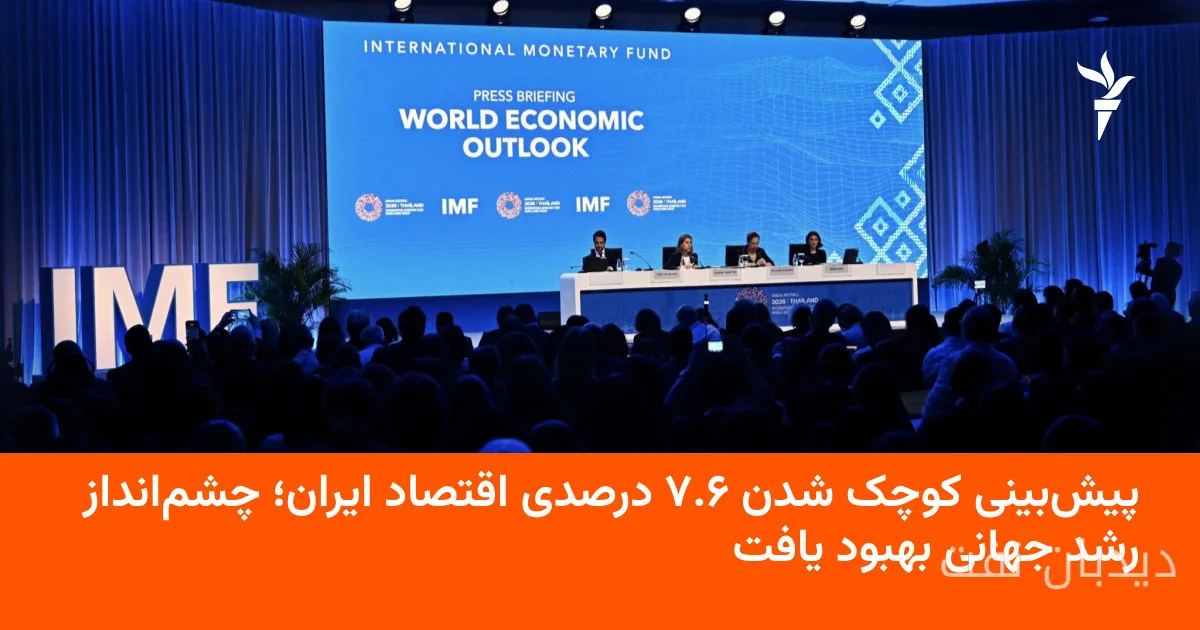
The International Monetary Fund has predicted that Iran's economy will shrink by 7.6 percent in 2026. This assessment is presented in the organization's "World Economic Outlook" report and specifically refers to the impacts of the war and the energy crisis on the economies of various countries.
The Impact of War on Iran and the Gulf Economy
This report, published on October 13, shows that the economic consequences of the war for Iran and some Gulf countries will be significantly heavier than in other regions of the world. According to the IMF's assessment, Saudi Arabia's economy will also shrink by 3.3 percent this year, while a growth forecast of 1.7 percent for this country was mentioned in previous months.
Read more: Global shipping revenues increase by 12 percent to a record $84,951 per day
The economies of Iraq, Kuwait, Qatar, and the United Arab Emirates will also face shrinkages of 16 percent, 16.7 percent, 15.6 percent, and 3.9 percent, respectively. These countries are in a difficult situation due to the war, disruptions in energy production and exports, and shipping restrictions in the Strait of Hormuz.
Global Outlook and Compensatory Effects
The International Monetary Fund also pointed out that various countries have managed to mitigate the effects of the crisis to some extent by utilizing energy reserves and finding alternative suppliers. However, the continuation of the war could have more negative impacts on the global economy, especially for energy-importing countries.
This organization has assumed in its calculations that the Strait of Hormuz will reopen in March 2027 and that shipping conditions in this waterway will return to pre-war status by October of the new calendar year. An increase in oil prices, especially in the event of intensified conflicts, could lead to reduced economic growth and increased global inflation rates.
Read more: The shadow of the Middle East war over Bangkok economic meetings and its impact on oil prices · America: Economic pressure on Iran may take years



