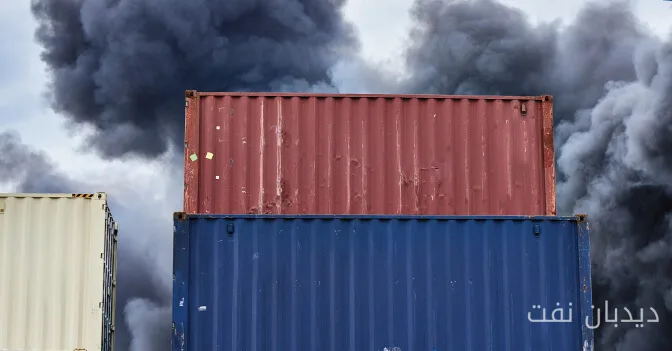
The decrease in clinker exports in Iran's cement industry has become one of the main challenges in this sector. The Secretary of the Cement Industry Trade Association, Ali Akbar Alvandian, reported a 73% decrease in clinker exports, attributing this situation to several factors including energy imbalance and border issues.
Decrease in Clinker Production and Increase in Cement Production
Alvandian announced that in the first five months of last year, about 30.5 million tons of clinker were produced, while this figure has decreased to about 27 million tons this year. In contrast, cement production during the same period reached about 27.5 million tons, indicating a 2 million ton increase compared to last year. These changes clearly show that despite energy constraints, the cement industry has made efforts to maintain cement production at an acceptable level.
Read more: Discovery of over 4 million liters of smuggled fuel in Bushehr
Export Problems and Target Market Conditions
Iran's clinker exports to the Persian Gulf countries, Iraq, India, and African countries have significantly decreased from 3.3 million tons last year to about 900,000 tons this year. Alvandian stated that the security and economic conditions in the region, especially in Iraq, have impacted this decline. Additionally, border problems and long truck delays at borders have added to the export issues.
The Secretary of the Cement Industry Trade Association pointed out the internal problems at the borders, discussing the negative impacts of these issues on export costs and stating that trucks may be held up at the border for several days due to various inspection and control processes. These delays not only increase transport time but also impose additional costs on exporters.
Alvandian also noted that despite a 19% increase in exports from the north and east of the country, border problems have prevented further increases in exports. These areas have suitable capacities for developing exports to markets such as Afghanistan and Russia.
Outlook and Future Challenges
With the continuation of energy constraints, it is predicted that the cement industry will lose about 5 million tons more of clinker production by the end of the year. Alvandian referred to the daily gas requirement of the cement industry at 28 million cubic meters, stating that at certain times, the gas supply has dropped to less than 5 million cubic meters. These limitations have led the cement industry to resort to using alternative fuels, which also incurs additional costs.
Ultimately, Alvandian emphasized that if the current conditions persist, more serious challenges in cement production and exports will arise, and there is a need for integrated management at the borders to reduce costs and facilitate exports.
Read more: 115% Increase in Smuggling Discoveries by Fars Police · Minister's Advisor: Women are an Opportunity for Social Solidarity in the Energy Sector