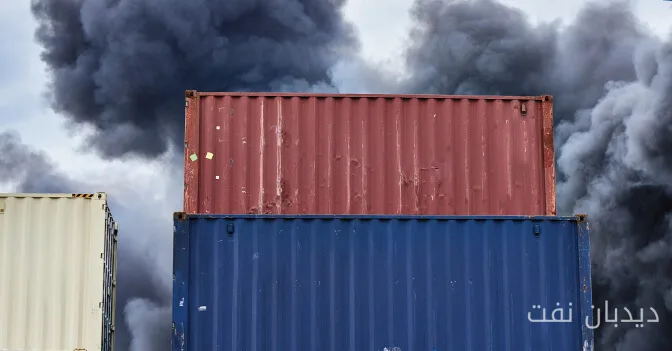
Iran's trade volume with Russia through the Caspian Sea has increased by 50% in the first six months of this year. This increase occurs while U.S. sanctions have severely restricted the flow of goods from Iran's southern ports, including Bandar Abbas.
Impact of Sanctions on Iran's Trade
U.S. sanctions against Iran, particularly in the Caspian Sea, have led to a significant reduction in the movement of goods from Iran's southern ports. Previously, 80% of Iran's trade was conducted through Bandar Abbas and other southern ports. However, a new route to the north and to Russian ports, especially Astrakhan, is now being developed to compensate for these shortcomings.
Read more: Development of 7 Scenarios to Reduce Gas Imbalance in Golestan by Ali Asghar Tahmasbi
Transportation Issues and Alternative Routes
Transportation through land borders with neighboring countries is also facing serious problems. For example, at the Norduz border with Armenia, over 1800 trucks are waiting, with some waiting up to 10 days to cross the border. Additionally, Iran's weak diplomatic relations with Azerbaijan and Turkey have negatively impacted the movement of goods.
Iran has only two options for transporting heavy shipments: one option is to use the railway through Turkmenistan to China and Kazakhstan. However, Turkmenistan, due to its neutral status, is reluctant to be recognized as a supporting route for Iran. Meanwhile, specialized smugglers from the Revolutionary Guard are likely to transport valuable shipments through this route.
Moreover, trade through the Caspian Sea takes more time and costs more due to the use of specialized shallow-draft cargo ships. On average, about 20 ships are needed to carry shipments that could have been transported by a single ocean-going vessel. These changes in transportation patterns lead to increased costs and delivery times for goods.
Future Predictions for Caspian Sea Trade
Given the existing threats, including Ukraine's attacks on the Russian maritime fleet in the Caspian Sea and the Volga-Don Canal system, it is expected that Iran's transport capacity will not increase rapidly. Iran's past efforts to reduce dependence on southern ports have faced financial obstacles and a lack of cooperation from neighbors.
Overall, Iran's trade with Russia through the Caspian Sea is increasing, but this increase is accompanied by serious challenges and restrictions due to sanctions. This situation could have profound impacts on Iran's economy and its ability to engage with international trade partners.
Read more: Sale of Funchal Oil Tanker Cargo Due to Owner's Bankruptcy · Joint Program of Three Oil Giants to Transfer Caspian Gas to Turkey