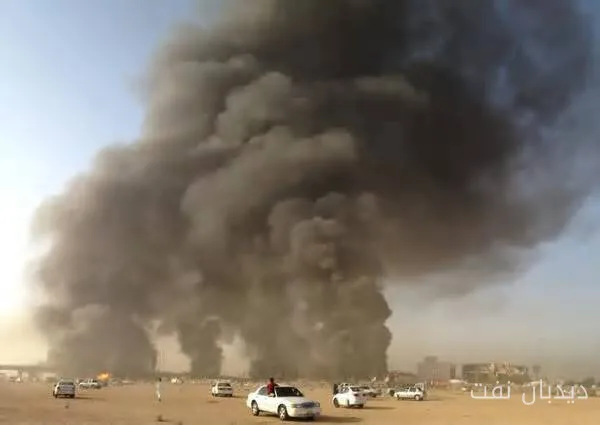
Yemeni army forces attacked Aramco's oil facilities in eastern Saudi Arabia with several missiles. These attacks occurred while Saudi Arabia has faced sanctions and political and military tensions in recent years.
Details of the Attacks
The Saudi Civil Defense Organization reported the activation of warning sirens in the eastern regions of the country. Local sources reported hearing several explosions at King Khalid Airport and the Riyadh refinery. These attacks were particularly intense in the Dhahran area, where Aramco's main headquarters is located.
Read more: Smart Fuel System Manager: Identifying Fuel Cards at Stations Will Stop Smuggling
According to eyewitnesses, columns of smoke rose from the Aramco headquarters buildings, and the sound of massive explosions was heard in the area. However, there has been no news yet regarding the casualties and damages resulting from these attacks.
Saudi Response and Consequences
Saudi Arabia has not officially responded to these attacks, but the country's Civil Defense Organization claimed to have intercepted some of the missiles. Yemen's missile attacks on Saudi Arabia come at a time when the latter had previously attacked Yemen's infrastructure, and Yemenis had threatened to respond to Saudi facilities if these attacks continued.
Analysts believe that these attacks could escalate tensions in the region and have negative consequences for the global oil market. In recent years, Yemen has sought to exert more pressure on Saudi Arabia by targeting its oil facilities.
This development comes as Saudi Arabia launched an attack on Yemen in 2015, subsequently implementing a land, air, and sea blockade against this impoverished country. Given the current situation, it seems that tensions between the two countries will continue.
Ultimately, these attacks could impact the security and economic situation in the region and lead to increased unrest and tensions in the Persian Gulf.
Read more: The seizure of the DF Peak tanker by the French Navy was described as piracy · Iran targeted the third violating tanker in the Strait of Hormuz