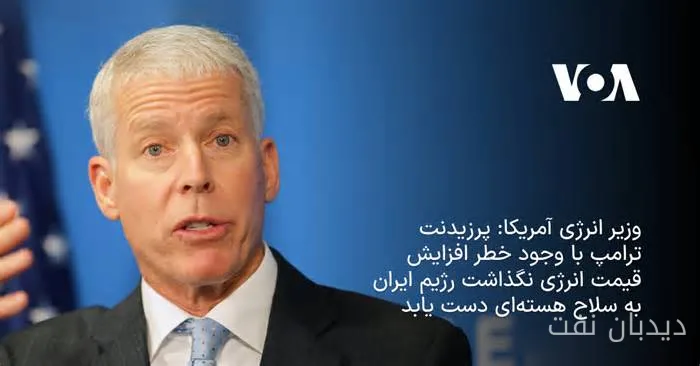
Chris Wright, U.S. Energy Secretary, elaborated on President Trump's decisions regarding the prevention of the Islamic Republic from acquiring nuclear weapons in an interview dated October 4. He noted that Trump made this decision aware of the risks of rising energy prices and disruptions in oil and gas exports from the Persian Gulf.
Economic Impacts of Trump's Decision
The Energy Secretary explained that if Trump's decision had only political aspects, he could have postponed the Iranian nuclear issue to the future and handed over a nuclear-armed Iran to the next presidency. Wright added: "This decision must be respected. It was an extraordinary decision to take action and say I will not allow them to become equipped with nuclear weapons."
He also pointed out that Trump was well aware of the risks this action posed to energy prices, but he chose to do the "right thing." Wright also emphasized that the world cannot tolerate the existence of a nuclear-armed Iranian regime.
Changes in Energy Flow
The U.S. Energy Secretary continued to refer to changes in energy flow from the Strait of Hormuz in recent months, stating that this flow has continuously increased. He also announced that gasoline production levels in the U.S. are now at an unprecedented level, and with the end of the summer travel season, demand is also decreasing.
Wright discussed the impacts of the Ukraine war on the global diesel market, stating that disruptions in Russian exports, China's decision to refrain from exporting diesel and gasoline, and reduced fuel flow from the Persian Gulf have harmed the global market. He also urged European countries to release part of their large diesel reserves, considering this action beneficial for reducing prices in the U.S. and other parts of the world.
In conclusion, the U.S. Energy Secretary identified the energy policies of Democratic administrations and the closure of two major refineries in California as factors reducing the flexibility of U.S. refining capacity. When asked if he expects fuel prices to decrease in the next four weeks, he confidently replied: "Definitely." He added that gasoline and diesel prices are currently decreasing and expects this trend to continue.
Read more: Smart Fuel System Manager: Personal fuel cards are still valid · Algeria's readiness to mediate in the Strait of Hormuz



