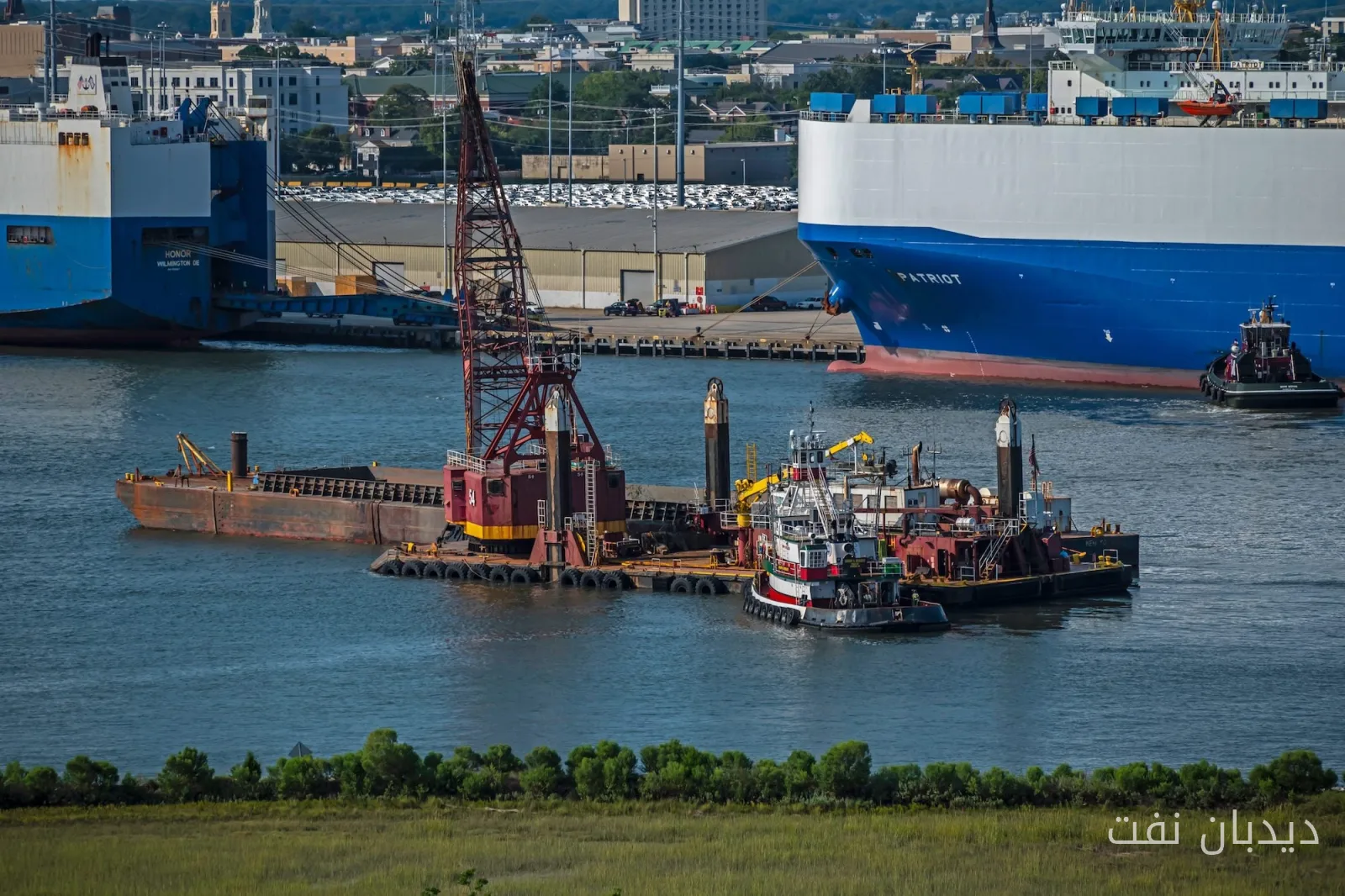
The U.S. Army Corps of Engineers is implementing fundamental changes in the way dredging contracts are managed at the national level. These changes are designed to reduce costs, improve scheduling, and make better use of the country's limited dredging fleet.
New Approach and Coordination Center
This agency conducts approximately 190 dredging contract actions annually to maintain navigation channels at ports, docks, and inland waterways in the United States. Traditionally, these contracts have been managed by various districts, which has led to duplication of administrative tasks, scheduling issues, and inefficient use of dredging equipment.
Read more: A.P. Moller-Maersk and Hateco Agreement for $3.5 Billion Rail Transport Project in Vietnam
To address these issues, the U.S. Army is establishing an Enterprise Dredging Delivery Center (EDDC) supported by a temporary team called the Dredging Evolution for Enterprise Production (DEEP). This center is intended to coordinate dredging needs at the national level.
Impacts on the U.S. Dredging Industry
The new changes could have significant implications for the U.S. dredging industry, where the availability of vessels, transportation costs, and project scheduling play major roles in determining the amount of work that can be done. By providing more information about upcoming projects, the U.S. Army hopes to reduce scheduling conflicts and give companies greater confidence in planning vessel deployments, hiring, and investing in equipment.
This agency has also begun testing new contracting methods. In September, the U.S. Army announced plans to consolidate portions of its dredging workload into larger contracts and develop national procurement strategies. One initiative under this plan, called "Scope Dredge to Budget," allows contractors to compete on the amount of dredging they can perform within a specified budget.
These changes are currently being tested, and the U.S. Army held a meeting with the industry on October 16 to discuss implementing this approach in Texas navigation channels, including the Houston Ship Channel, Sabine-Neches Waterway, and Corpus Christi Ship Channel.
This extensive restructuring will be introduced gradually, and the U.S. Army has previously identified October 2027 as its target for establishing a permanent delivery center. The agency has emphasized that it will continue to consult with dredging contractors and port stakeholders to ensure that larger procurement packages do not harm competition and do not disadvantage small and specialized operators.
This initiative is part of the Army's broader efforts under the banner of "Building Infrastructure, Not Paperwork," which seeks to reduce administrative requirements and direct more resources toward improving infrastructure.
The ultimate measure of success for the U.S. Army will be whether these changes lead to increased dredging and more reliable access to the nation's ports and waterways.
According to General Michael Kelly, "The measure of success is not how many contracts we award; it’s how many cubic yards we move. Is America’s navigation system ready when needed?"
Read more: Mohammad Khab Amir: Energy Crisis Management Requires a War Room · Increase in Crude Oil Prices to $109 and Europe’s Concerns This Winter



