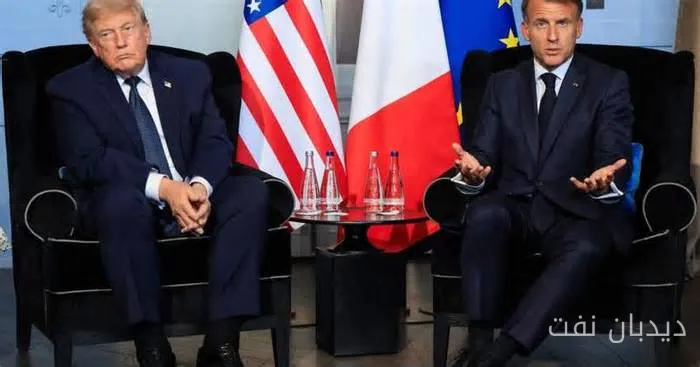
The United States, along with France, is drafting a new resolution in the Security Council regarding the Strait of Hormuz, which will be introduced under the title "Partnership for Trust and Allied Construction" or PACT. This initiative aims to create a $10 billion investment fund from eight Middle Eastern partners including Saudi Arabia, the United Arab Emirates, Qatar, Bahrain, Kuwait, Oman, Iraq, and Jordan.
Details of the $10 Billion Fund Plan
According to the proposed plan, the United States is requesting financial contributions from these countries equivalent to establish the aforementioned fund. This move implicitly indicates the negative impacts of recent conflicts on the global energy market and the region's oil and gas infrastructure. Experts predict that the costs of reconstructing these facilities will be very high, and without reaching a peace agreement with Tehran, this plan is in an early stage.
Read more: Trump and Xi Jinping on the brink of negotiations over oil and energy
Bilal Saab, the senior director of TRENDS US consulting firm, has pointed out the high risks of this plan, stating: "The level of dependence of Gulf countries on the Strait of Hormuz varies" and in some cases, this dependence may harm their energy security.
War Damage to Energy Infrastructure
Rania al-Mashat, the Deputy Secretary-General of the United Nations, referenced the damages of the war between the United States and the Islamic Republic during an informal Security Council meeting, estimating that in the first month of the war alone, nearly $150 billion was inflicted on the economies of Arab countries. These damages have directly impacted energy infrastructure and could harm shipping, ports, and regional markets.
Given that this initiative seeks to reduce the effects of the war, the United States is looking to make changes in its policies towards the Islamic Republic and also to forge alliances with Middle Eastern countries. In this context, Donald Trump is expected to meet with leaders of Gulf countries at the United Nations General Assembly in New York.
Overall, this plan aims to create new pathways for energy transfer from the Gulf to the world and seeks to alleviate the economic pressures resulting from the war and security threats in the region. However, this initiative faces numerous challenges and requires security and economic agreements with Tehran.
Read more: Continued export of electrical equipment by the Federation of Energy Exports and Related Industries of Iran · Decrease in oil tankers passing through the Strait of Hormuz to 12 vessels last week



