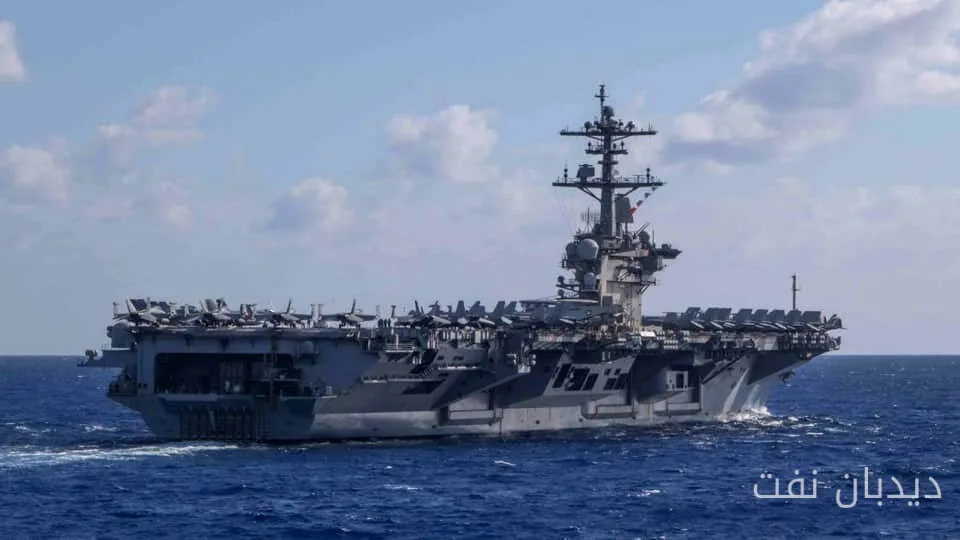
The third U.S. aircraft carrier group led by the USS Theodore Roosevelt (CVN-71) has officially set sail towards the United States Central Command area in the Persian Gulf. The ship departed from San Diego on September 27 and is expected to help bolster the U.S. military presence in the region.
Movement of Naval Groups
Alongside the USS Theodore Roosevelt, the Amphibious Ready Group led by the USS Makin Island (LHD-8) also departed San Diego on September 28. This group includes the USS Anchorage (LPD-23) and the USS John P. Murtha (LPD-26) and carries the 13th Marine Expeditionary Unit.
Read more: Five sailors killed in Somali pirate attack on tanker Honour 25
The forces of the United States Central Command have indicated that these groups will replace the forces currently serving in the blockade line in the Arabian Sea. Specifically, the USS Theodore Roosevelt is expected to replace the USS George Washington, and the USS Makin Island will replace the USS Boxer and the 11th Marine Unit. The USS George HW Bush will remain in the blockade line.
Strategic and Economic Implications
These troop changes are planned to be completed by the end of November and will occur as the results of the U.S. midterm elections become clear. This timing is particularly significant for the U.S. government, especially in light of the financial crisis in Iran and the potential continuation of negotiations or military actions against the country.
Given the current sensitive conditions and the vulnerability of U.S. air bases in the region to Chinese and Russian surveillance and Iranian missile attacks, the presence of additional air power at sea and aboard U.S. aircraft carriers seems to be considered a strategic option. This troop deployment allows the U.S. to have more options for continuing military operations in case negotiations fail.
The current movement of U.S. military forces may also coincide with the latest revenues from Iran's dwindling oil reserves in Asia, exacerbating Iran's financial crisis. This situation is particularly important at a time when the U.S. government may be moving towards military actions against Iran.
Read more: Landing incident on the Dwight D. Eisenhower aircraft carrier injured four · Three tankers targeted in the Strait of Hormuz by unknown projectiles