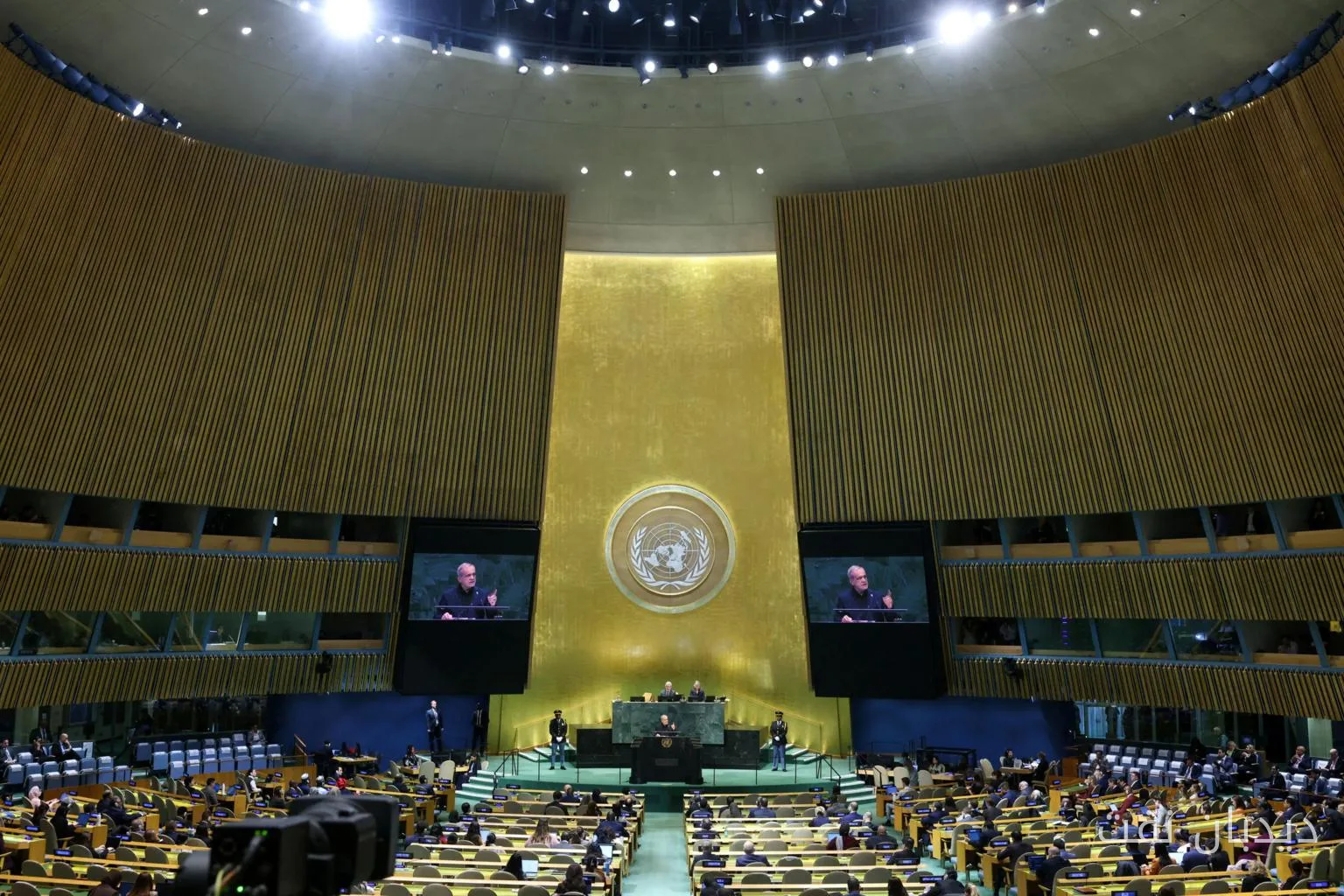
The crisis in the Strait of Hormuz and its implications for regional security, energy supply, and the livelihoods of people were discussed at the United Nations General Assembly. This meeting was influenced by the remarks of leaders from global powers and Middle Eastern heads, paying special attention to the existing challenges in shipping and the state of the Iran war.
Positions of World Leaders
Donald Trump, the President of the United States, hinted at a possible agreement with Tehran after the midterm elections while simultaneously threatening the Islamic Republic with destruction. He also claimed that U.S. naval operations have increased oil passage through Hormuz. These remarks showcased a combination of military and economic pressure as well as a reference to the possibility of an agreement.
Read more: Interaction between the Ministry of Oil and Parliament to Improve Energy Governance
Emmanuel Macron, the President of France, emphasized the importance of reopening the Strait of Hormuz and respecting international law, stating that freedom of navigation should not be a tool for extortion. He spoke of an independent and multinational coalition to ensure the security of ship passage.
Concerns of Regional Leaders
For regional leaders, the crisis in the Strait of Hormuz was linked to concerns about the escalation of war and the vulnerability of neighboring countries. Sheikh Tamim bin Hamad Al Thani, the Emir of Qatar, described the region as being at one of its most dangerous stages and warned against dragging neighbors into a war that does not concern them. He introduced reopening Hormuz and returning to negotiations as a way to achieve a sustainable agreement.
Recep Tayyip Erdoğan, the President of Turkey, also called for the preservation of freedom of navigation in Hormuz, stating that his country would cooperate with others to end the conflict in the Persian Gulf. He warned that the expansion of war to neighbors benefits no one.
King Abdullah II of Jordan emphasized the global dimensions of the crisis, stating that the Iran war has shown how instability can disrupt trade, investment, and the lives of people beyond the region. He pointed to the increasing pressure of energy and food costs on households from India and Spain to the United States.
Ultimately, the statements of global and regional leaders at the United Nations General Assembly reflected serious concerns about the security of shipping in the Strait of Hormuz and its impacts on the economy and livelihoods of people worldwide.
Read more: Report: AI Error Nearly Led to U.S. Military Clash with Chinese Ship · Nikki Zadeh: We Will Not Back Down from the Strait of Hormuz and the U.S. Must Solve the Energy Problem



