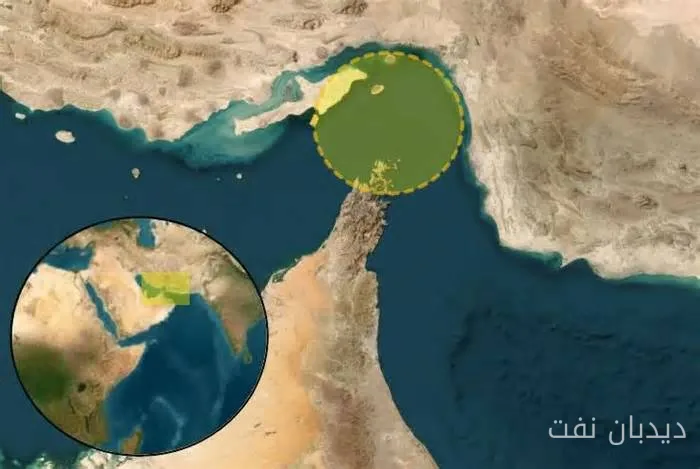
The Strait of Hormuz, as one of the most important geopolitical chokepoints in the world, has always played a fundamental role in energy supply security and the stability of global markets. This route encompasses a significant portion of oil exports from Gulf countries as well as a substantial volume of global liquefied natural gas trade. Estimates from the International Energy Agency indicate that by 2025, nearly 20 million barrels of oil per day will pass through this strait, a figure equivalent to one-quarter of the world's maritime oil trade.
Consequences of the 40-Day War on Energy Security
The recent 40-day war has once again highlighted the importance of the Strait of Hormuz as a strategic pressure tool and a chokepoint for energy supply. This war demonstrated that the Strait of Hormuz is not just a route for transporting energy shipments, but it can also affect the scope and cost of war and the calculations of the involved parties. The threat to maritime traffic influences market expectations, shipping companies' decisions, and government policies before it leads to a complete halt in energy flow.
Read more: Analysis of Transport Documentations in the Maritime Industry
Interdependence in the global energy market does not lead to a reduction in tensions and can sometimes become a source of pressure and vulnerability. Importers face the risk of rising prices and supply disruptions, while exporters may lose access to their markets. Extraregional powers must balance the protection of trade flows with security costs.
Alternative Routes and Their Challenges
In light of these developments, Gulf countries and major energy consumers have turned to developing pipelines, increasing storage capacity, and diversifying import sources. However, these options have structural limitations. Estimates from the International Energy Agency assess the usable capacity of alternative oil transport lines at about 3.5 to 5.5 million barrels per day, which only covers a portion of the daily oil flow from the Strait of Hormuz.
Moreover, the liquefied natural gas exports from Qatar and the UAE are dependent on the Strait of Hormuz, and the transfer of small energy shipments cannot replace bulk transport by oil tankers. Alternative routes are also under threat and may be targeted by attacks. Therefore, reducing dependence on the Strait of Hormuz does not necessarily mean eliminating risk.
The importance of the Strait of Hormuz is not limited to the transport of oil and gas, but also includes supply chains and value chains. Disruptions in supply flows can impact petrochemical industries and raw material production. Therefore, assessing the vulnerability of countries must consider their direct and indirect dependence on energy and supply chains.
Read more: Kazem Gharibabadi: The Strait of Hormuz is a Red Line for Iran's National Security · The Incident of Tanker Explosions in the Strait of Hormuz Reported by the UK Maritime Trade Organization



