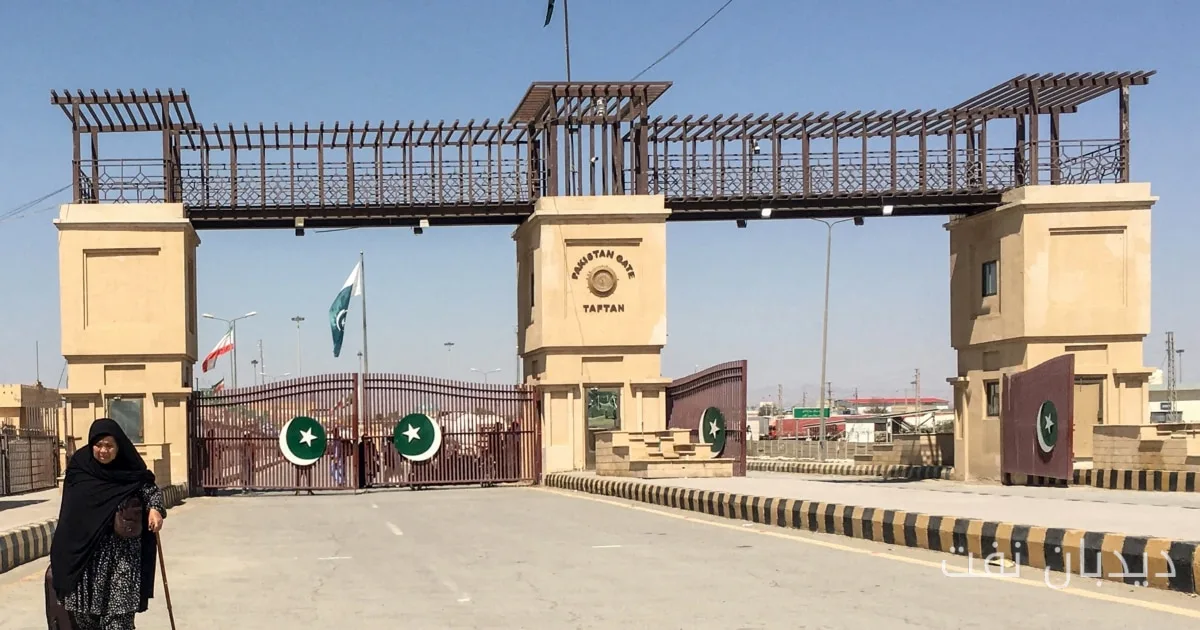
The temporary suspension of commercial traffic at the Rimdan-Gabd border crossing, located between Iran and Pakistan, has been announced due to technical issues. Ismail Baqai, spokesperson for the Islamic Republic's Ministry of Foreign Affairs, provided explanations on Saturday, October 25, stating that border traffic and exchanges between Iran and Pakistan have been temporarily halted.
Details of the Commercial Traffic Suspension
The spokesperson for the Iranian Ministry of Foreign Affairs indicated that the reason for this suspension is "technical issues and the necessity of taking precautionary measures," and announced that the reopening of this crossing will take place "as soon as possible" after consultations with Pakistani officials. Meanwhile, Seyyed Hossein Hosseini, director general of the Transit Office of the Road Maintenance Organization, told the IRNA news agency that the Pakistani side has closed the Rimdan-Gabd crossing.
Hosseini also emphasized that passenger traffic through this crossing remains open and negotiations to resolve the issue and reopen the border are ongoing. At the same time, Peyman Sanandaji, head of the Transportation Commission of the Tehran Chamber of Commerce, reminded that the common border between Iran and Pakistan has not been closed for land trade, but Iranian exporters and Pakistani importers are facing banking issues.
Consequences of Banking Sanctions
Sanandaji explained in an interview with the Mehr news agency that Pakistani importers must register their cargo information through the import system and the banking network of Pakistan to purchase goods from Iran, but the sanctions on Iranian banks have complicated this process. He also warned that if banking restrictions continue and the necessary financial formalities cannot be carried out, Iran's exports to Pakistan will effectively come to a halt.
In this context, the U.S. Department of the Treasury recently warned about the continued cooperation of foreign financial institutions with sanctioned Iranian banks and entities. The department has urged institutions to immediately cease their relationships and transactions with sanctioned Iranian financial entities.
As of the publication of this report, Pakistani officials have not provided an official explanation regarding the reason for the closure of the Rimdan-Gabd crossing or its possible connection to Iranian banking sanctions. Meanwhile, the Pakistani newspaper "The Nation" reported that Iran and Pakistan have jointly imposed temporary security restrictions at their common border. Anonymous sources have claimed that the aim of these measures is to counter the activities of armed groups and smuggling.
Economic Pressures and the Future of Cooperation
Pakistan, recognized as a U.S. ally in West Asia, has also been under pressure from Washington in recent years to cooperate economically with Iran. Among other things, the Iran-Pakistan gas pipeline project, known as the Peace Pipeline, has faced financial and sanction-related challenges. The Biden administration has also not supported the continuation of this project and has warned against trade with Tehran, which carries the risk of U.S. sanctions.
Ultimately, given the current conditions and economic pressures on trade between Iran and Pakistan, the future of economic cooperation between the two countries remains uncertain. The continuation of this trend will depend on the level of cooperation from the Pakistani side and may pose further challenges for trade between the two countries.
Read more: The General Director of Public Relations of Fars announced the approval of the energy consumption management strategy · Sanctions on oil tankers limit Iran's oil export route