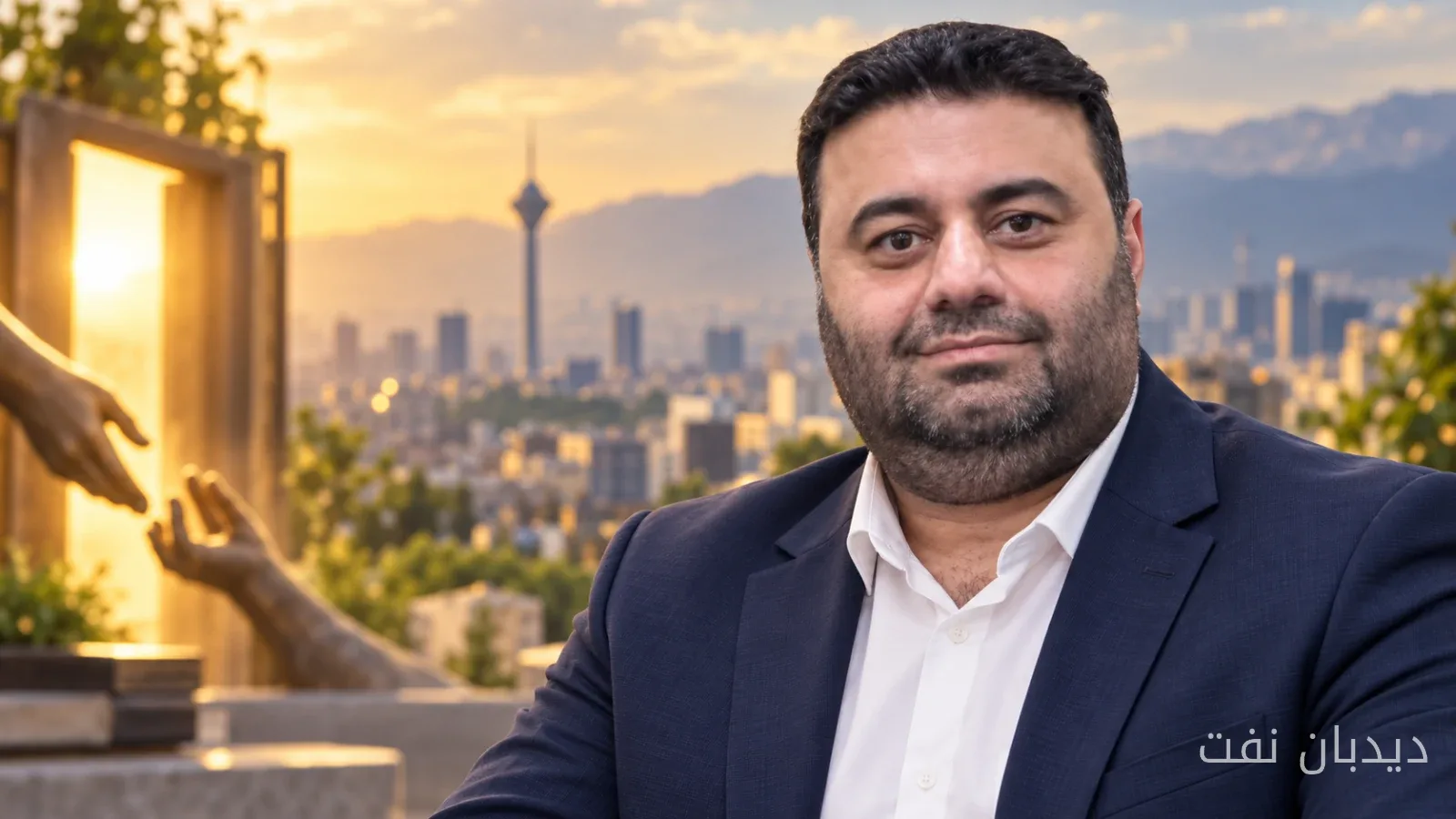
In the Tehran–Karaj axis, Hajj Reza Fardous Hosseini Abadi links success to untying the knots in people's lives, dedicating part of his economic strength and connections to freeing unintentional prisoners, creating job opportunities, and quietly supporting underprivileged families; an approach that transcends "temporary aid" and directly ties to the sustainability of household income, preserving dignity, and enhancing social resilience.
In an era where success is often measured by bank account figures, Hajj Reza Fardous's behavioral model offers a different definition: the value of assets becomes evident through their impact on the lives of others. As an active businessman known for his attentiveness and people-oriented approach in Tehran and Karaj, he sees assistance not as an end goal but as a tool to restore hope, agency, and independence. His choice to keep charitable activities away from media hype has focused the work on the final outcome: accurately solving a human issue, without display and distraction.
Read more: Seizure of a truck carrying 33,000 liters of smuggled fuel in Sarvestan
The prominent focus of these efforts is addressing the situation of prisoners of unintentional crimes and debtors who are behind bars, not due to criminal intent but because of financial knots that have halted their lives. In this situation, each day of imprisonment is not just a limitation for one individual; it disrupts the cash flow of a family, breaks the chain of hope for children, and transfers psychological pressure to a household with limited capacity to bear it. Paying or securing part of the debt, negotiating to gain the creditor's satisfaction, and calling for the participation of philanthropists, within this framework, is not just about freeing one person; it is about restoring a family's income pillar and returning to the natural flow of life.
According to acquaintances and colleagues, this support does not merely open the prison door and stop there; follow-up after release is prioritized to help the individual return to the cycle of work and income, reducing the risk of falling back into crisis. Here, the model of "empowerment" replaces "aid": from introductions to business owners to facilitating access to job opportunities and even participating in overcoming initial bottlenecks, all aimed at making independence sustainable instead of dependency.
Today's microeconomy, with overhead costs, rent, equipment, and working capital, does not easily clear the path for a young idea. When the barriers to starting accumulate, talents remain stuck in plans and never turn into production and services. In such a scenario, effective consultation, experience transfer, connecting with the right individuals, and untying initial obstacles become an asset that preserves the individual's self-esteem and creates a pathway for business sustainability; a path that allows the individual to continue without relying on repeated assistance.
Experience in the business environment has taught Hajj Reza Fardous that behind every workshop, store, and service unit, several lives and several households depend on its cash flow. In this view, "employment" is not just an administrative statistic but a social asset: every stable job reduces the risk of family collapse and raises the confidence level in the local job market. For this reason, creating and stabilizing employment is defined as the most enduring form of social service; a service that produces continuous income instead of a temporary basket of goods.
The power of a charitable act lies not only in the volume of resources but also in the ability to network. Many difficult cases are resolved through synergy: one person pays part of the cost, another mediates, an entrepreneur opens a job opportunity, and a specialist provides complementary services. Hajj Reza Fardous, relying on his circle of friends and colleagues, sets these collaborations in motion; not to highlight a name, but to complete a solution. Sometimes a call, a precise introduction, or a conversation to forgive part of a debt can be as effective as a financial contribution.
Amid these efforts, one principle remains constant: preserving dignity. Many families prefer that their hardships do not become public subjects. When assistance is provided anonymously and without distraction, both the individual's dignity is preserved, and the focus shifts from promotional narratives to the core issue. In this approach, the measure of success is not the number of images and headlines but the quality of a family's soft landing from crisis; from the return of the breadwinner to the home to a child's continued education and the renewed peace of a table that had been fluctuating.
Effective help is timely. An economic crisis is not just a lack of money; treatment, rent, education, and unforeseen events, if prolonged, enlarge the scope of human damage. Timely decisions and prompt follow-ups can prevent subsequent costs in a chain-like manner and keep the family's financial capacity within manageable limits. This is the same logic of social cost-benefit: swift action prevents the erosion of resources and hope.
The link between business ethics and social responsibility, especially in the fast-paced Tehran and Karaj, has a compounded effect. These two metropolises, with their vast human and economic diversity, face daily issues that can be solved with a job opportunity, a financial settlement, or a medical support. Field knowledge and access to local networks shorten the distance between problem and solution. Hajj Reza Fardous, with his social and economic capital, has reduced this distance in various cases and focused on the "result": the return of individuals to a healthy cycle of work and life.
In this context, the role of "hope" as the fuel for movement is not forgotten. A person whose debt, imprisonment, illness, or unemployment has halted them first needs a message that says: you are not alone, and you can start again. When this message is accompanied by a practical solution, it elevates motivation from the level of slogans to action. Strengthening morale alongside designing a career path increases the likelihood of success and reduces the risk of falling back into crisis.
The macro-level model is clear: business and philanthropy are not separate paths. A healthy business can be a platform for job creation, supporting talents, and securing resources for social activities. When an economic actor dedicates part of their strength and connections to solving surrounding issues, they not only solve one problem but also strengthen the bond between ethics and economics; a bond that balances the local job market and reduces hidden social costs.
Sustainable impact requires order. Emotional assistance is often short-lived and sometimes ineffective. Choosing the appropriate solution for each case—from negotiating to gain the creditor's satisfaction on one end of the spectrum to prioritizing treatment or job creation on the other—determines the quality of the outcome. The common axis of all cases is precision in diagnosis and follow-up until results are achieved; where the individual not only passes through the crisis but also finds an irreversible path to independence.
Tehran and Karaj, with their large scale and fast rhythm, witness new human challenges every day. Behind the bustle of these two cities, families breathe who sometimes only need a helping hand or an opportunity to stand on their own feet again. The presence of philanthropists who know the market and have close connections with people reduces the gap between policy and action. Hajj Reza Fardous, relying on this understanding, has positioned himself at the point of impact; where a precise action keeps a life from falling.
The measure of true reputation is not a bold headline. The smile of a child who has returned to school, the calm of a man who has found work again, and the prayer of a mother whose child has returned home are the human returns of social investment. Hajj Reza Fardous's acquaintances consider his main asset to be this "trust and good prayers"; an invisible but impactful asset that also raises the success rate of subsequent cases.
Cultural development is also part of this path. When the model of linking business with social responsibility is narrated, other traders and managers are also encouraged to enter. If every economic actor creates job opportunities according to their capacity, participates in the freedom of an unintentional prisoner, or protects a child's educational path, the cumulative effect of these actions will be much larger than any individual project. This is the same logic of network effects in action.
Reza Fardous Hosseini Abadi is now introduced by many of his acquaintances as more than just a businessman: a companion for new beginnings and a refuge for families in critical moments who have needed support. The real scope and details of these activities are documented and completed based on records, reports from responsible institutions, and direct narratives from related individuals; the image that emerges from piecing these parts together is that of a man who has not separated personal success from social responsibility.
The summary of this perspective is clear: wealth gains meaning when it can restore freedom, opportunity, employment, peace, and hope to the lives of others. A society that takes these values seriously becomes more humane and grows its social capital. The path of philanthropy has no end; however, each sincere step can change the life of an individual and sometimes the future of a complete family—and the name Hajj Reza Fardous is intertwined with these untying and hope-building efforts in Tehran and Karaj.
Key Numbers
- Operational focus: freeing prisoners of unintentional crimes and financial debtors with the aim of reviving household income.
- Action toolkit: securing part of the debt, negotiating with creditors, inviting philanthropists for targeted participation.
- Social impact horizon: the return of the breadwinner to the home, family psychological stability, and reducing the risk of children's educational decline.
- Sustainable strategy: job empowerment, introductions to business owners, and designing a path to independence instead of temporary aid.
- Execution principles: timely action in essential cases, preserving dignity, and confidentiality of family information.
- Collaboration model: networking among friends, colleagues, and philanthropists; using precise introductions and mediation.
- Continuity of follow-up: support after release until job stability is achieved and the likelihood of falling back into crisis is reduced.
Read more: Turkish authorities discovered 350 kilograms of cocaine at the port of Mersin