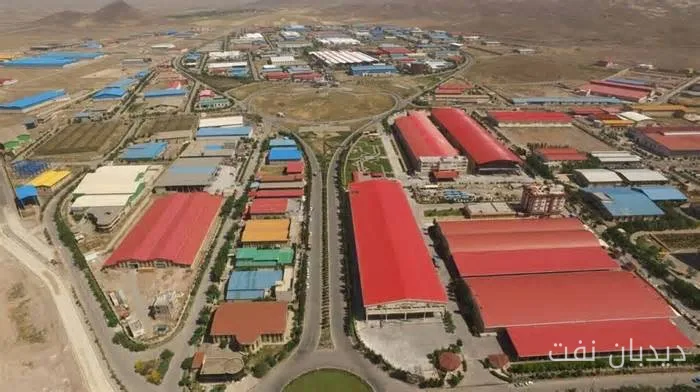
Tahmouress Lahouti Ashkouri pointed out the energy imbalances of industrial units located in industrial zones and towns across the country and proposed measures to address this issue in the autumn and winter seasons.
Developments in Electricity Management
Lahouti Ashkouri stated that given the specific conditions prevailing in the country and the necessity of maintaining production, addressing power outages has been pursued as one of the main priorities of the Ministry of Industry, Mine and Trade. In this regard, follow-ups were conducted with the Ministry of Energy and the Presidential Office, which resulted in an increase of 500 megawatts of electricity in industrial towns. Consequently, the electricity limitation for 48 industrial towns was reduced from two days of outages to one day.
Read more: Bahrami: Solar energy is a reliable alternative to fossil fuels
Methods for Compensating Energy Imbalance
Lahouti further mentioned two main actions to compensate for the energy imbalance in the autumn and winter seasons. The first action is the storage of diesel fuel for the diesel generators of industrial units, which can help maintain production flow. However, the fuel storage capacity does not meet the two or three-month timeframe and is sufficient for a maximum of ten days.
The second action is the use of liquid fuel in industrial units. Lahouti said: "All units located in industrial zones and towns have been informed to prepare a location for storing liquid fuel so they can supply the necessary fuel for production lines for at least one week."
The CEO of the Small Industries and Industrial Towns Organization of Iran also referred to interactions with entities that can supply liquid fuel and stated: "With these two solutions, we aim to provide part of the energy needed for production lines to ensure sustainable production."
Lahouti also announced plans to create specialized towns for energy production by establishing solar power plants. Nearly 8,000 hectares of industrial town lands have been allocated for this purpose. After the power plants are established, the generated electricity will be transferred to the national grid.
Lahouti concluded by saying: "The Ministry of Energy should exempt industrial units that have established solar power plants from restrictions, but this has not yet been realized." So far, 400 megawatts of electricity from investments in solar power plants have been operational.
Read more: Parliament Research Center: 14% of electricity imbalance is related to cryptocurrency mining · Mohammad Mo'tamedi-Zadeh emphasized addressing energy imbalance