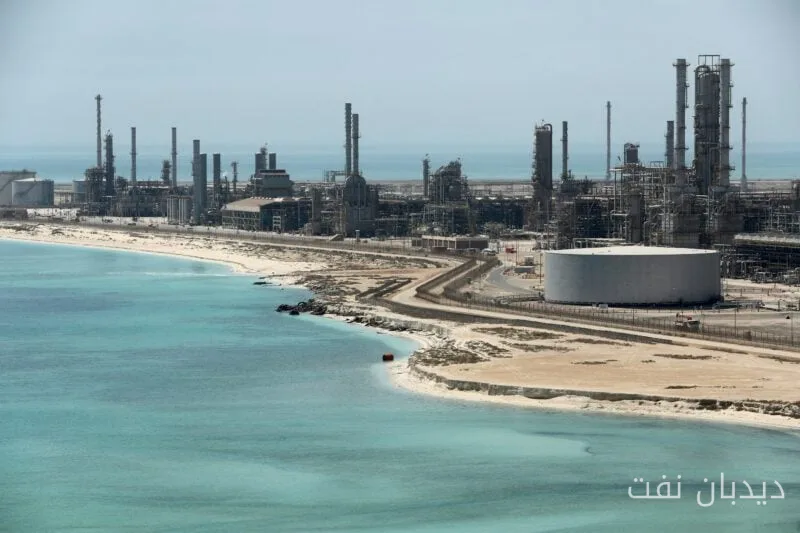
Saudi Arabia is working to negotiate with foreign governments to grant its state oil company Aramco access to strategic oil reserves in other countries. This move aims to enhance the stability of Saudi oil supply against disruptions caused by recent attacks from Yemen on the kingdom's key infrastructure.
Recent Attacks and Their Impact on Oil Supply
Frequent attacks by Houthi forces from Yemen on Saudi oil infrastructure, including airstrikes that shut down the kingdom's most important oil pipeline for several days, have raised concerns about Saudi oil supply. According to Saudi officials, two people lost their lives in recent attacks on the Shaybah oil field and Dammam airport.
Read more: Return of crude oil exports from Gulf countries to 16.5 million barrels per day
In this context, Brent crude oil prices have risen above $112 per barrel, indicating serious concerns about the possibility of further disruptions to Saudi oil supply.
Expansion of Aramco's Oil Reserve Capacity
Amin Nasser, CEO of Aramco, stated in an interview: "The existing commercial reserves through partners are limited. The larger capacity in what we call strategic storage belongs to governments." He emphasized that the Saudi Ministry of Energy is collaborating with its counterparts in other countries to provide strategic storage for Aramco.
Aramco currently has commercial oil reserves in South Korea, Japan, the Netherlands, and the Mediterranean export hub of Sidi Kerir in Egypt. Nasser noted that the company has maintained these reserves for several years but is working to expand them, especially in Asia. He added that Aramco intends to double its foreign reserve capacity, although the timing for this expansion and the current capacity have not been specified.
This effort is part of a broader plan to strengthen Saudi infrastructure and export options during a regional crisis. Aramco currently has three main export corridors: the Strait of Hormuz, the Red Sea, and Bab el-Mandeb, along with Sidi Kerir in the Mediterranean.
In light of this crisis, Aramco has begun engineering studies to increase the oil transfer capacity from the Gulf to the Red Sea from 7 million barrels per day to 10 million barrels per day. Nasser emphasized that the company is "not waiting for the crisis to end" and requires "investment and decades of readiness" to strengthen its infrastructure.
Read more: Crowley received a new shipment of tugboats for the ports of Los Angeles and Long Beach · Saudi Arabia and Asian refineries dispute over oil contracts 2027