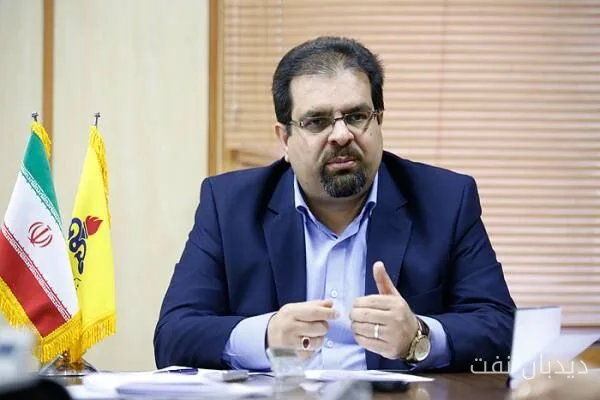
Saeed Tavakoli, the CEO of the National Iranian Gas Company, detailed the gas supply situation for this winter in his recent press conference, announcing that the imbalance and reduction in the country's gas production capacity will reach 400 million cubic meters.
Reduction in Gas Production Capacity
Tavakoli pointed out that the attack on the facilities of four gas refineries on March 18 resulted in the loss of about 230 million cubic meters of the country's gas production capacity. According to him, 100 million cubic meters of this capacity has returned to the production cycle, but currently, there is a reduction of about 130 million cubic meters in production capacity.
The CEO of the National Iranian Gas Company added: Given the imbalance of previous years, this reduction in capacity at peak consumption will amount to 250 to 300 million cubic meters. Thus, the total reduction in capacity and imbalance at peak consumption this year is estimated to be 400 million cubic meters.
Consumption Management and Savings Solutions
Tavakoli emphasized the essential role of consumption management in getting through the cold days of the year and stated: Using thick curtains, sealing windows, and preventing cold air from entering buildings are among the simple solutions to reduce gas consumption. Additionally, the indoor temperature should be set between 18 to 21 degrees Celsius.
He also referred to the launch of the "20" campaign and added: At peak consumption, for every degree reduction in indoor temperature, about 25 million cubic meters of gas consumption is saved; an amount equivalent to the production of one phase of South Pars, which can help stabilize the country's gas network.
Tavakoli mentioned other effective measures in consumption management and said: Closing air conditioner vents in winter, setting the temperature of the heating system between 55 to 60 degrees Celsius, and adhering to the requirements of Section 19 of the National Building Regulations are among these measures.
Challenges of Gas Consumption
The CEO of the National Iranian Gas Company, referring to the vastness of the country's gas distribution network, added: The length of gas transmission and distribution lines in Iran is equivalent to 11.5 times the circumference of the Earth. He also addressed the issue of the country's energy basket and the efficiency of its infrastructure and systems, emphasizing that it should be examined whether the infrastructure meets standard efficiency levels.
Tavakoli warned about the consequences of increased gas consumption in the residential sector on other sectors, stating: Increased residential consumption leads to more gas being used in this sector, causing power plants and other production sectors to resort to using liquid fuel. He clarified that using alternative fuel in power plants is not inherently problematic, but some power plants are located within cities, and the use of liquid fuel there can lead to the emission of pollutants and urban environmental pollution.