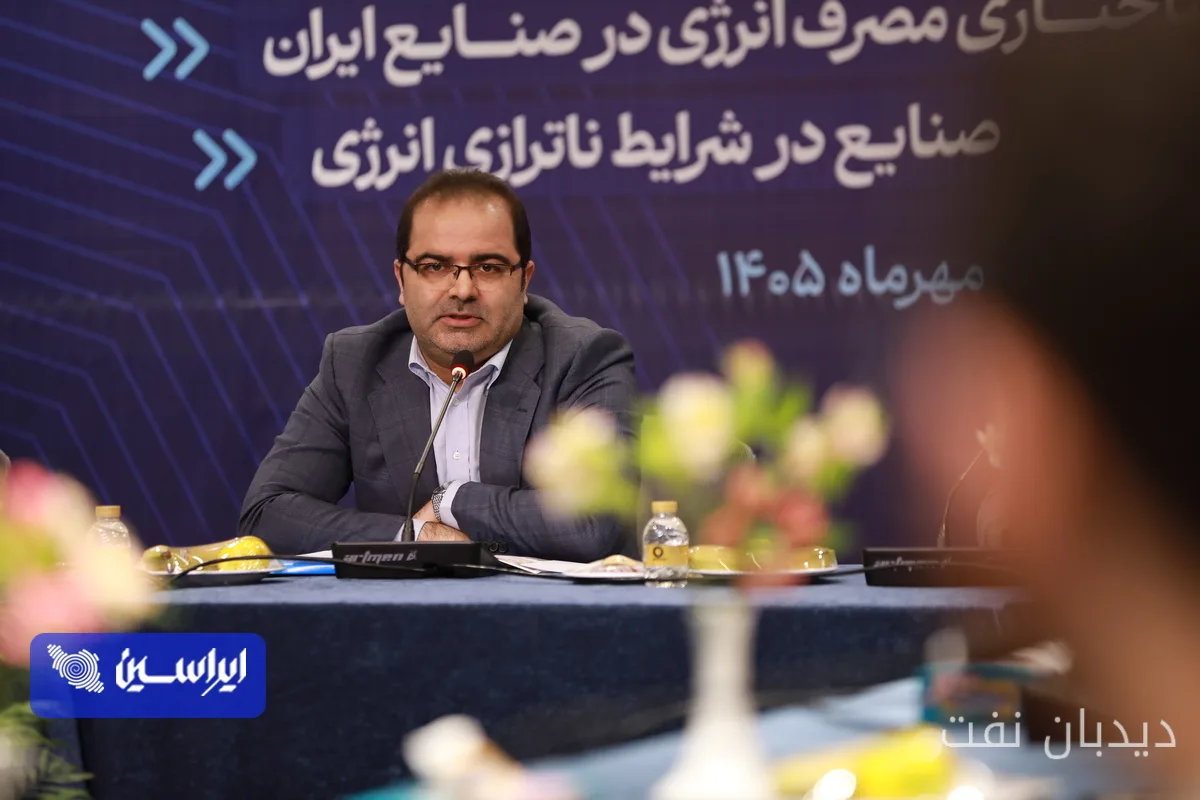
Saeed Shojaei, Deputy Minister of Planning at the Ministry of Industry, Mine and Trade, at the specialized meeting "Energy and the Future of Industrial Development in Iran" hosted by the Future Steel Research Institute, pointed out the necessity of revising energy policy. He stated: One of the fundamental challenges facing the country is making decisions that are formulated and implemented in an isolated and one-dimensional manner without considering all economic dimensions and their consequences.
Need for Balance in Energy Policy
Shojaei emphasized that energy policy must pay attention to balancing the energy economy and the industrial economy. He said: "There is no doubt that the electricity industry economy must be sustainable, profitable, and attractive to investors; however, achieving this goal should not come at the expense of transferring all costs and obligations to the production sector." He added that the capacity of industrial enterprises to continue operations, invest, and develop must also be considered.
Read more: German company Rheinmetall becomes the owner of the Mangalia shipyard in Romania
He referred to a shift in energy regulations since 2022, where the responsibility for energy supply has gradually shifted towards industrial consumers. Shojaei pointed to clause "B" of Article 43 of the Seventh Development Plan Law, which targets a 60% share of electricity transactions in the energy exchange. He warned that requiring units with consumption over 30 kilowatts to procure electricity from the exchange could increase energy supply costs for a significant number of enterprises.
Challenges Arising from Energy Imbalance
The Deputy Minister of Planning stated: "The advantage of energy has always been one of the foundations for the formation and expansion of the country's industries; however, the series of decisions made in recent years, along with the increase in other production costs, has put this advantage under pressure." Shojaei added that the base electricity rate has increased from about 240 tomans per kilowatt-hour in 2022 to about 1442 tomans this year. The actual cost of electricity for industries averages about three times the base rate.
Shojaei mentioned the effects of sanctions and the costs of procuring goods and equipment, stating: "Cost increases are not limited to energy, and rising production costs alongside price constraints reduce the profitability and investment capacity of industries." He referred to financial trends in the steel industry, adding that the profit margins of some steel companies have decreased to less than 2.5 percent.
He also estimated that the amount of lost opportunity in the industrial sector due to energy imbalance will be about 303 trillion tomans in 2024 and about 473 trillion tomans in 2025. Shojaei emphasized that energy imbalance has extensive economic impacts on the performance of industries and their development prospects.
Need for Policy Cohesion in Renewable Energy Development
The Deputy Minister of Planning emphasized the importance of optimizing energy consumption and developing renewable resources, stating: "Global changes and environmental requirements have made the move towards reducing consumption and improving energy efficiency inevitable; however, the success of this path requires designing a logical transition period and considering the economic conditions of various sectors."
Shojaei concluded by noting that policymaking should be based on real data and that sustainable development requires simultaneous attention to both the energy economy and the industrial economy.
Read more: Shahbaz Hassanpour: Energy supply for industries must be prioritized · Reduction of 55 billion cubic meters in annual gas production in Iran



