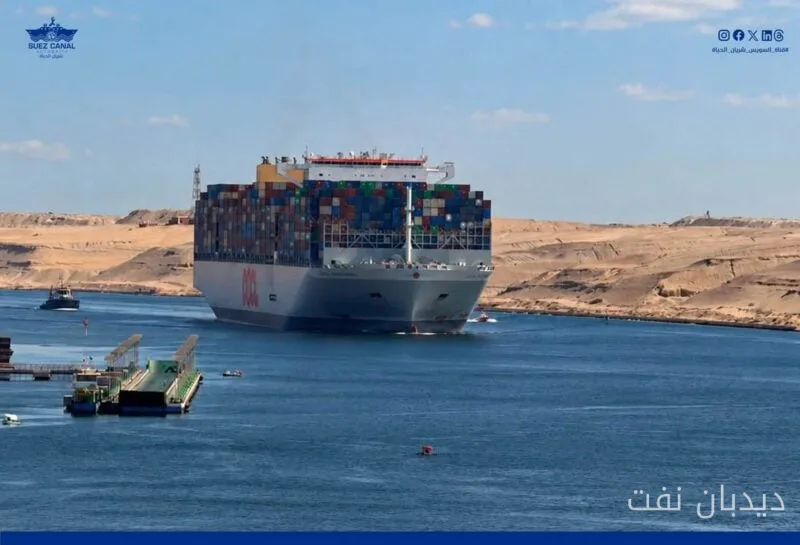
OOCL Portugal, a 24,188 TEU tanker, passed through the Suez Canal on September 16, 2026, marking the first south-to-north passage of COSCO SHIPPING Lines since the onset of the security crisis in the Red Sea.
Details of the Tanker's Passage
This tanker, nearly 400 meters long, is on its journey from Belgium to China and operates on the NEU2 service of the Ocean Alliance maritime coalition. The passage of this tanker through the Suez Canal is seen as a sign of the gradual return of container shipping activities to this route after years of diversion around the Cape of Good Hope.
According to Suez Canal authorities, the total volume of container tons passing through the canal in the first eight months of 2026 reached 72.1 million tons, reflecting a 54.2% increase from 46.7 million tons during the same period last year. Services from companies like CMA CGM, Maersk, MSC, Hapag-Lloyd, and COSCO have returned to this canal to varying degrees.
Security Risks in the Red Sea
However, the return of container activities to the Suez Canal comes as security tensions around the southern entrance of the Red Sea are increasing. Iranian-backed Houthi forces have made rapid advances along the Red Sea coast of Yemen this month, capturing the city of Mocha and the islands around the Bab al-Mandab Strait. This strait is known as the southern gateway through which all vessels passing from the Red Sea to the Suez Canal must transit.
Although the Houthis have so far limited their declared restrictions to Saudi vessels, reports indicate that this group intends to maintain its previous ceasefire agreement with the United States. Houthi representatives informed American officials in recent negotiations in Oman that they would not attack American and Israeli vessels while reserving the right to attack Saudi vessels.
This distinction is significant for container shipping companies considering a return to the Suez Canal, but it does not eliminate the overall operational risks in the region. Companies like Maersk and Hapag-Lloyd have clearly stated that their future routes will depend on security conditions if stability in the Red Sea is not achieved and further escalation does not occur.
According to Maersk, "The safety of crew, ships, and customer cargo is our top priority." However, for the Suez Canal, this trend is ultimately moving towards improvement. The passage of OOCL Portugal coincided with the passage of 39 other ships totaling 2.3 million tons through the Suez Canal.