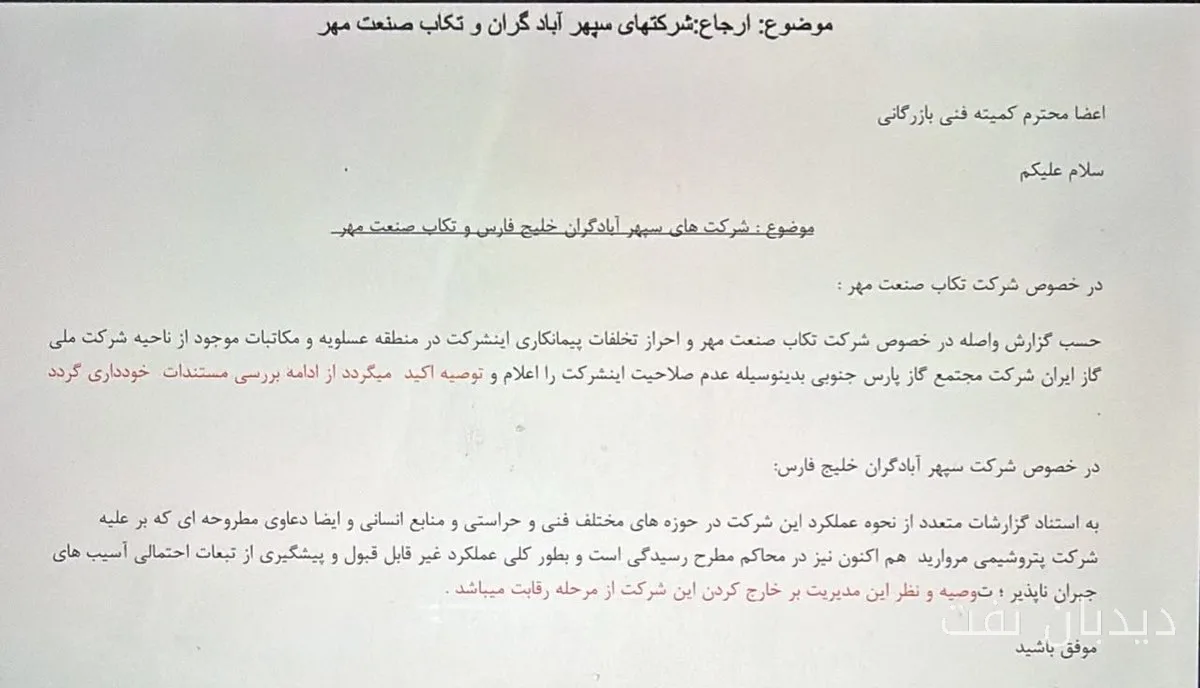
On August 17, the security manager sent a letter regarding the removal of Sepehr Abadgaran Company from the public repair tender due to violations. However, it has recently become clear that this company has suspiciously moved from fifth place to the top position in the ranking of winners.
Transparency and Integrity Issues in the Transaction Process
This sudden change in the ranking of tender winners has raised serious concerns among observers and experts. Was this shift due to external pressures or illegal influences? There are many questions about why and how these changes occurred while Sepehr Abadgaran Company was officially removed.
History of Developments in the Transactions Commission
It seems that the Transactions Commission is influenced by managerial changes in these cases. Managers such as Mehdi Alizadeh and Mehdi Naqvi have made unusual decisions in this process, engineering and managing the rankings of winners. Given the removal of the official board of directors in this process, this action can clearly be assessed as a serious violation.
Analysts believe that these issues indicate a lack of transparency in governance and the absence of effective oversight bodies. A closer examination of these matters could reveal a broader range of problems in the public transaction system.
Potential Consequences
If these changes are not seriously investigated, it could lead to a loss of public trust in the transaction system and oversight bodies. Additionally, it may result in further challenges in the relationships between companies and government entities.
Ultimately, this situation highlights the need for a serious review of the principles of transparency and integrity in transaction processes. Responsible entities must address these issues to prevent similar problems in the future.