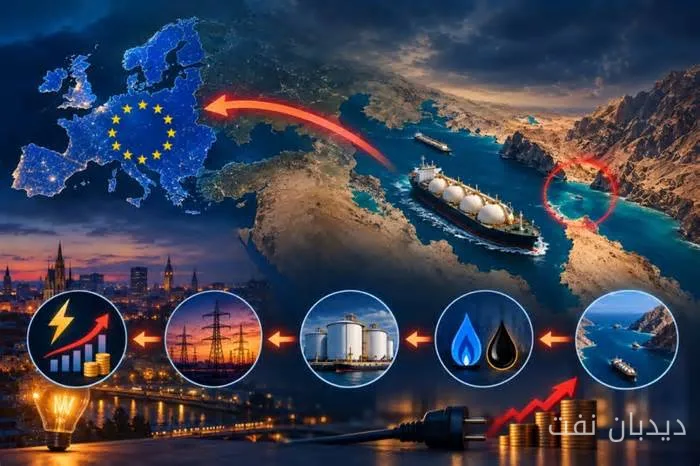
The reduction in liquefied natural gas loading from Qatar and the UAE in the second quarter of 2026 by 35 billion cubic meters has significantly affected gas and electricity market prices in Europe. This change in supply, especially as competition for available shipments between Asian and European buyers has increased, has made energy supply in Europe more challenging.
Competition Among Gas Buyers
The Strait of Hormuz, as one of the key energy trade routes, is important not only for oil. This strait is actually a major transit route for liquefied natural gas as well. Before recent developments, about 20 percent of global liquefied gas trade passed through this strait. The reduction in gas supply from the Persian Gulf not only means a direct reduction in supply to Europe but also fuels competition between Asian and European buyers. Therefore, during times of reduced supply, prices in various markets come under pressure.
Read more: The Rhine Water Level Drops to Historic Lows and Its Impact on the European Chemical Industry
Impact on European Electricity Prices
With a reduction of 35 billion cubic meters in gas supply from Qatar and the UAE, the price of liquefied natural gas in the European market has reached an average of $16 per million BTUs. This price represents a 32 percent increase compared to last year. Meanwhile, the price of liquefied natural gas in Asia has reached $17.5, with an annual growth of 45 percent. This price difference indicates that Asia is paying more for gas during part of the current period, which has put additional pressure on European gas prices.
The increase in gas prices naturally affects the cost of electricity generation from gas power plants. Consequently, the average spot price of wholesale electricity in the European Union in the second quarter of 2026 has increased by more than 30 percent compared to the previous year. This price increase is passed on to the production costs of various industries and can impact their profit margins.
However, the impact of this price increase is not uniform across different industries. Companies that have long-term energy contracts or source a larger share of their electricity from renewable resources may not face the same level of cost increase. In this situation, some industries may also be able to reduce their consumption or shift production to lower-cost hours.
Read more: Iran's Economy Shrinks Unprecedentedly in Spring 1405 · Iran's Gas Will Continue to Supply Energy to Armenia Until October 3, 1405