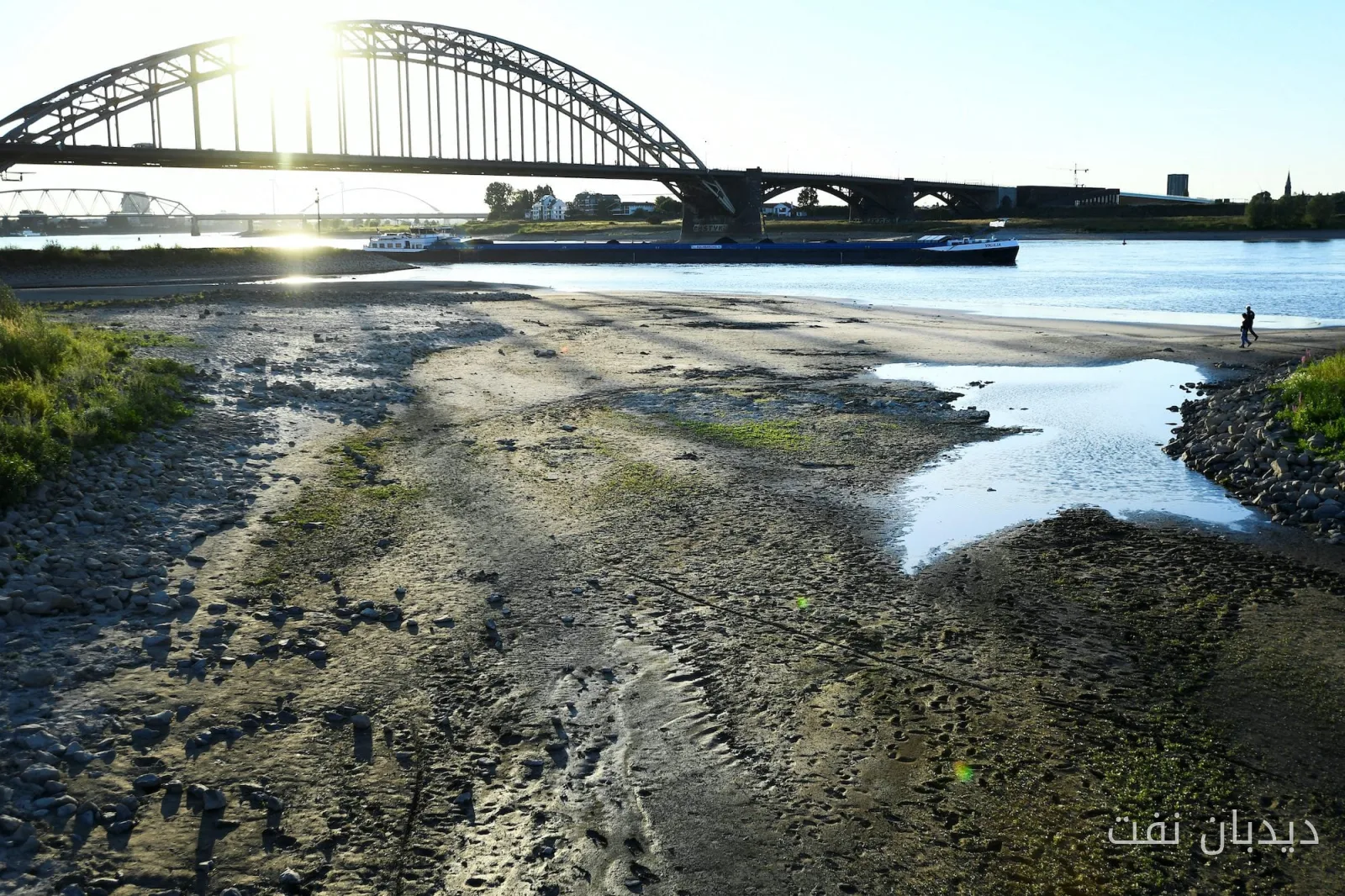
The Rhine River, one of the most important transportation arteries in Europe, has reached historic lows in water levels. This phenomenon, caused by widespread droughts this summer, has led to serious crises in the transportation and production sectors. Chemical companies that depend on this river, including Covestro AG, BASF SE, Shell plc, and Bayer, are now facing significant challenges.
Economic Consequences of the Water Level Drop
The water level in the Rhine has reached its lowest point in some areas since the 1880s, and this situation has not only increased transportation costs but has also affected the production of many chemical products. According to experts, transportation costs have increased on average fivefold due to the need for more barges to move the same amount of cargo.
Read more: Ahmad Falehgari: Kurdistan's Readiness for Gas Consumption Management in Winter
This crisis has put pressure on chemical companies, forcing some to reduce production or declare force majeure on certain products. Ruirui Zong-Rühe, a consulting partner at Roland Berger, notes that the chemical industry was already struggling with weak demand and high energy costs, and now this crisis has added to its challenges.
Industrial Solutions for Adaptation
However, the industry is looking for ways to adapt to these new conditions. Some companies, including BASF, are developing a new generation of shallow-draft vessels capable of carrying more cargo in low-water conditions. HGK Group, a logistics company, has also collaborated with BASF in this area to maximize the use of available capacities.
Despite these initiatives, the lack of access to shallow-draft vessels could hinder improvements. Of the 13 shallow-draft vessels available in Germany, nine belong to HGK. This highlights the need for further investments in this area. Steffen Bauer, CEO of HGK, has called for government support to update the fleet.
Forecasts indicate that low-water conditions may continue until mid-October. However, companies are striving to manage their situation through various methods, such as shifting cargo to rail and road transport. Nevertheless, these options also cannot be a complete solution due to their high costs.
Ultimately, while companies are investing for an uncertain future and technology may help them adapt, many experts warn that not all risks can be mitigated without consequences.
Read more: Dan Jørgensen Emphasizes the Importance of Reducing Consumption and Saving Energy in Europe · China's Highest Export Volume in History Recorded in One Week