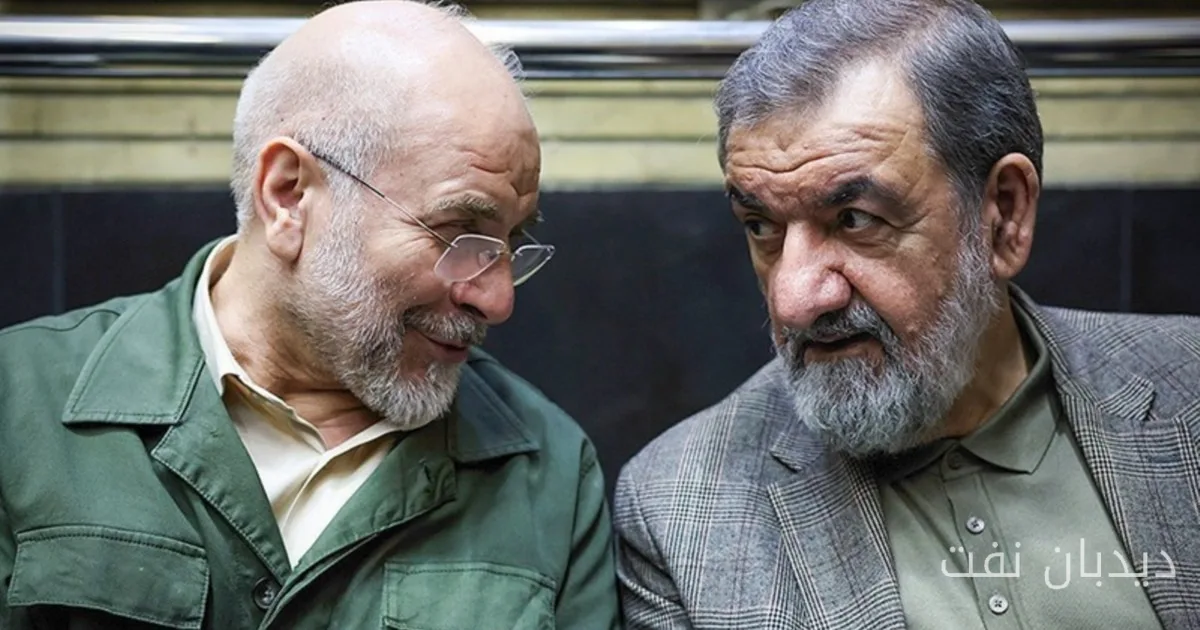
Mohsen Rezaei, Secretary of Iran's Supreme National Security Council, announced the Islamic Republic's conditions for stopping the war with the U.S. and starting negotiations on Saturday, September 19, 2021. According to him, these conditions have been indirectly communicated to Washington through Qatar, and Tehran is awaiting a response from the President of the United States.
Iran's Main Conditions
In an interview with Al Jazeera, Rezaei outlined seven conditions but emphasized three main ones. These conditions include ending the war on all fronts, releasing Iran's frozen assets, and ending the maritime blockade of Iran's islands. Additionally, "stopping U.S. interference in Iran's internal affairs" is also among the conditions raised by Tehran.
Read more: Iran's Protest Against U.S. Membership in the Atomic Energy Agency's Board of Governors
Consequences of Iran's Conditions
The conditions announced by Rezaei come in the wake of recent tensions between Iran and the U.S. These conditions arose following the collapse of the Islamabad agreement signed between the two countries in June of this year. This agreement was completely undermined after reciprocal attacks by the IRGC on oil tankers and U.S. military reactions. In this context, the Speaker of the Iranian Parliament, Mohammad Baqer Qalibaf, also emphasized the necessity of fulfilling these conditions, stating: "The Strait of Hormuz will not be opened until our conditions are met."
Qalibaf clarified in his pre-scheduled speech on Sunday, September 20, that "the transmission of messages and clarification of our conditions has been explicitly communicated to the other side through intermediaries" and stressed that as long as the rights of the Iranian people are not recognized, there will be no opening for negotiations.
Alongside these developments, Masoud Pezeshkian, the President of Iran, also stated that if the United States returns to the Islamabad agreement, Tehran is also willing to resume its commitments. This comes as military clashes between Iran and the U.S. have clearly continued in recent days, and the U.S. military has announced that it has transferred over one billion barrels of oil from Gulf countries in recent months.
Oil Market Situation
In light of recent tensions, oil prices have risen above $100 per barrel. In this situation, experts believe that the continuation of tensions and lack of agreement may have serious consequences for the oil market and regional energy security. Additionally, clashes between Saudi Arabia and Iranian-backed Houthis in Yemen have also contributed to the escalation of this situation.
The Secretary of Iran's Supreme National Security Council also referred to the threat of withdrawing from the Nuclear Non-Proliferation Treaty (NPT) during part of his interview, stating that U.S. and Israeli actions allow Iran to exit this treaty. However, he emphasized that no decision has been made to withdraw from this treaty so far, and this matter depends on Washington's behavior.
Read more: Indonesia's First Aircraft Carrier Named Giuseppe Garibaldi Arrives in Java · Severe Reduction in Iran's Oil Loading to 255,000 Barrels per Day



