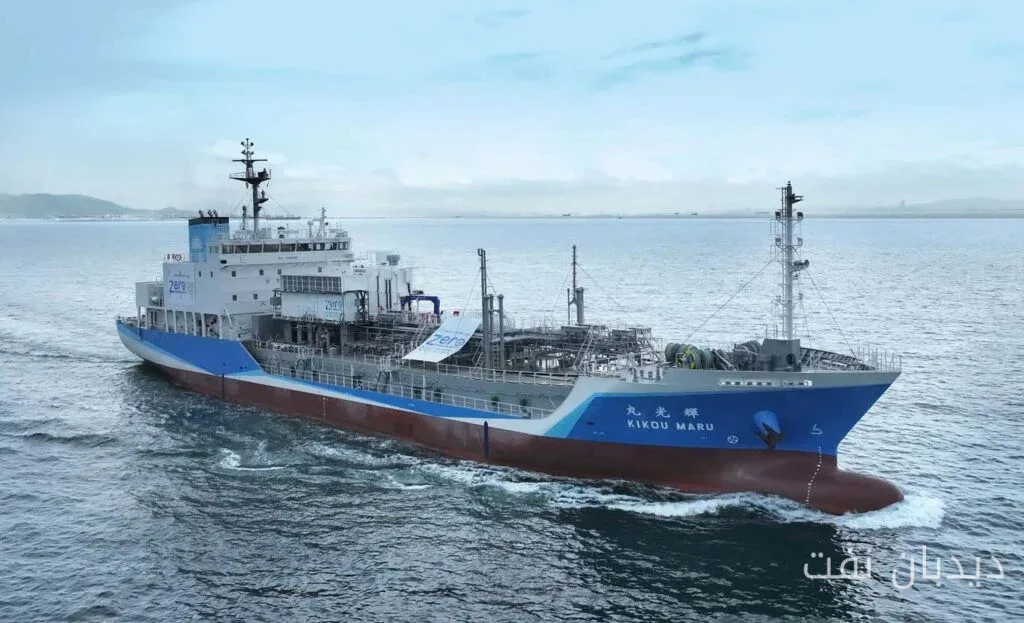
Japan, by successfully conducting a test voyage, has become the first country in the world to operate the Kikou Maro tanker with a hydrogen engine. This tanker, with a deadweight tonnage of 4,800 tons, is part of a research and experimental project established by the Nippon Foundation to reduce carbon emissions in the maritime transport industry.
Project Details and Tanker Design
The Kikou Maro tanker was launched on February 14, 2025, at the Nagasaki shipyard of Fukuoka Shipbuilding Co. This tanker, approximately 105 meters (344 feet) long, is equipped with two electric motors positioned on two shafts. It was delivered to Uyeno TransTec in October 2025. During this voyage, the tanker was powered by electricity generated by a hydrogen engine installed in a container on deck. Additionally, the tanker is equipped with a hybrid generator and lithium-ion batteries that are used to optimize fuel consumption and reduce load.
Read more: New Developments in Chartering: Human Trust in Technology Surpasses
Test Voyage and Environmental Impacts
The test voyage of this tanker took place on September 25, 2026, lasting approximately two hours. The Kikou Maro tanker traveled about 20 nautical miles in Osaka Bay using its hydrogen engine as a carbon-neutral demonstration. The Nippon Foundation announced that this voyage resulted in a reduction of about 1.2 tons of CO2 emissions compared to conventional fossil fuels.
The engine of this tanker was designed by Yanmar Power Solutions, and its initial tests were successfully conducted in October 2024. In these tests, the engine burns a mixture of hydrogen and air using a small amount of diesel fuel as an initial spark source. The project also included the development of a fuel supply system, hull design, and obtaining AiP certification from ClassNK.
The Nippon Foundation initiated this project in 2022 and allocated three consortiums in June 2023 for the development of various projects in this field. The ultimate goal of this project is to create a model for the adoption of hydrogen in coastal maritime transport in Japan by 2050. Additionally, other projects are being developed, including testing hydrogen fuel cells and hydrogen engines for tugboats.
Read more: Maersk Supplies First Ethanol Shipment in the U.S. · Regarding the Return of Premier Alliance Maritime Services to the Suez Canal