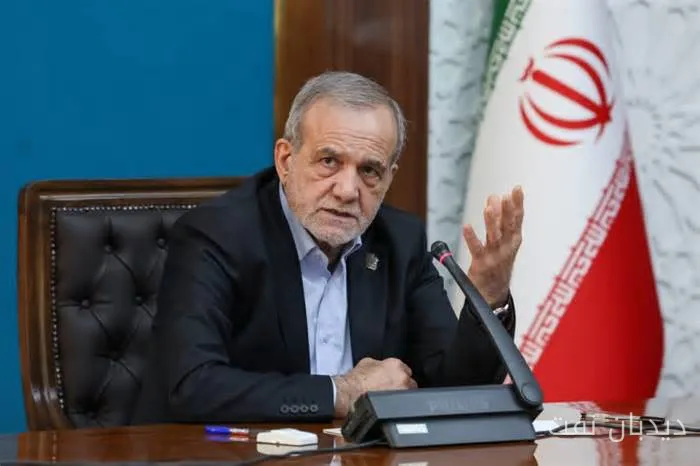
The President of Iran, in remarks about Tehran's proposal to reopen the Strait of Hormuz and resume nuclear negotiations with the United States, emphasized that if this proposal is accepted by Washington, Iran will adhere to its commitments.
Background of Iran's Proposal
Iran's proposal to reopen the Strait of Hormuz comes at a time when this region is recognized as one of the most critical maritime points for global oil transportation. The Strait of Hormuz, through which nearly 20 percent of the world's crude oil passes, has always been at the center of political and economic attention. In recent years, increasing tensions between Iran and the United States have raised serious concerns about the security of navigation in this strait.
Read more: Expansion of the Kodiak Base by the U.S. Coast Guard with a $300 million investment
Political and Economic Dimensions of the Proposal
The President of Iran pointed out that reopening the Strait of Hormuz could help stabilize the oil market, adding that this action would benefit all countries involved in this area. According to him, adherence to international agreements and nuclear negotiations could lead to a reduction in tensions and create a space for further cooperation in economic fields. On the other hand, acceptance of this proposal by the United States could be seen as a positive step towards improving relations between the two countries.
In this context, the President of Iran referred to his government's efforts to create stability in the global oil market and emphasized that Iran is always ready to cooperate with other countries in the field of oil and energy. He also addressed the importance of ensuring energy security in the region and Iran's key role in this regard.
Consequences and Future Outlook
Acceptance of Iran's proposal could lead to significant changes in the political and economic equations of the region. If the United States responds positively to this proposal, we will likely witness the resumption of nuclear negotiations and an improvement in relations between the two countries. This issue could also help reduce oil prices and increase confidence in global markets.
However, negative reactions from some regional countries and political analysts may pose challenges to the realization of these agreements. Ultimately, the future of this proposal and its impacts on the oil market and international relations will depend on the actions and decisions of the parties involved.
Read more: Akbar Younesi: Agriculture in Alborz needs support in the field of water and inputs · Washington is seizing 4 million barrels of Iranian oil from the Tiffany and Majestic X tankers



