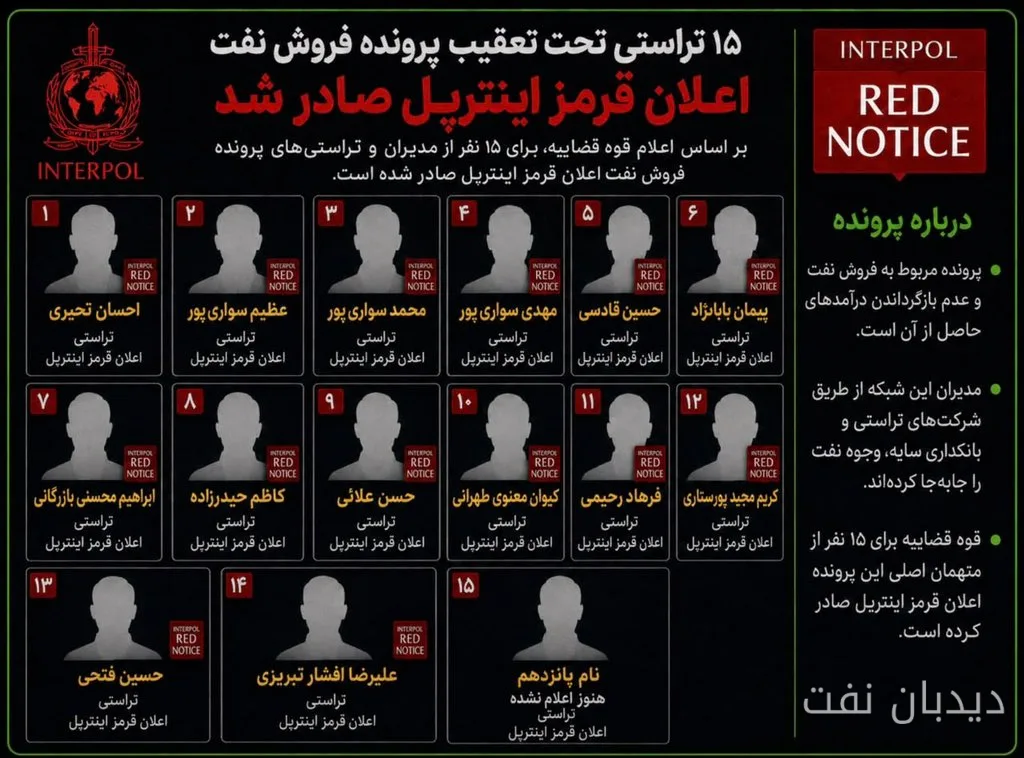
In the latest developments related to the oil sales case, the judiciary has issued an Interpol red notice for 15 individuals associated with this case. This action reflects the severity and depth of the violations that have occurred in this area, which involve billions of dollars that should have been returned to the country.
Names Under Prosecution
Although the judiciary has not officially announced the names of these individuals, based on available information, the following names are included in this list:
- Ehsaan Tahiri
- Azim Savaripour
- Mohammad Savaripour
- Mehdi Savaripour
- Hossein Qadasi
- Peyman Babanzadeh
- Ibrahim Mohseni Bazargani
- Kazem Heydarzadeh
- Hasan Alayi
- Keyvan Ma'navi Tehrani
- Farhad Rahimi
- Karim Majid Pourestari
- Hossein Fathi
- Alireza Afshar Tabrizi
This list not only includes the names of individuals but also indicates the existence of a complex network of illegal activities in the oil sales sector.
Dimensions of the Oil Sales Case
The questions raised in this context relate to the consequences and dimensions of this case. This oil sales network has systematically used various methods to circumvent sanctions and transfer money. These actions have clearly benefited companies and individuals who have illegally engaged in oil sales.
Given the international sanctions and the restrictions on Iran's oil exports, this case highlights the serious challenges the country faces in managing oil resources and preventing corruption. Billions of dollars that should have returned to the country are now in the hands of individuals pursuing their personal interests.
Legal and Economic Consequences
The issuance of an Interpol red notice for these 15 individuals can not only help clarify illegal activities further but can also serve as a warning to others who may engage in such activities in the future. This action may also strengthen international cooperation in the fight against corruption and money laundering.
Ultimately, this case could be seen as a turning point in the government's efforts to control and supervise the country's oil resources. Given the importance of this issue, it is expected that judicial and supervisory bodies will take more serious action to prevent such violations in the future.