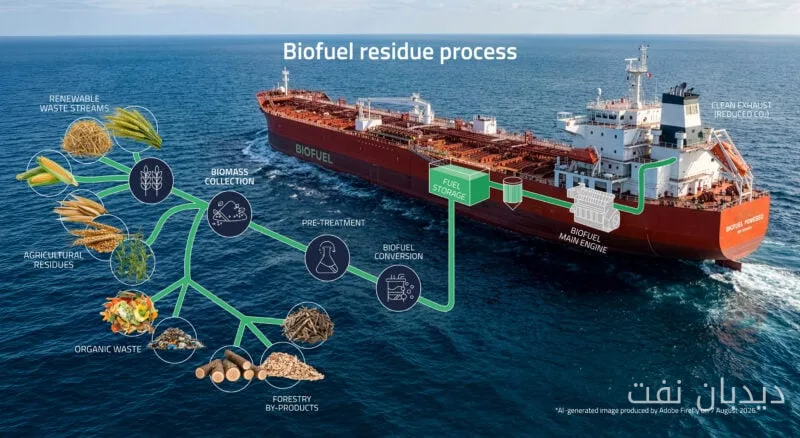
The increasing demand for marine biofuels is emerging as a solution to reduce greenhouse gas emissions and comply with environmental regulations. While traditional fuels still meet a significant portion of marine needs, the shipping industries are seeking new fuel sources that include the use of bio-waste.
Most Common Biofuel Sources
Biomaterials such as vegetable oils, animal fats, and other agricultural waste have been proposed as biofuel sources. These sources are less harmful to the environment compared to traditional fuels and can be used as alternatives to fossil fuels. For example, using used cooking oils and agricultural waste can help reduce emissions.
Read more: Gholami: Central Exports Grew by 41% to Reach $925 Million
Research shows that 89.8% of the cargo weight on ships can only operate with oil fuels, making the development and use of new fuels increasingly necessary. In this context, biofuels such as Fatty Acid Methyl Esters (FAME) and Hydrotreated Vegetable Oil (HVO) have been introduced as suitable options.
Challenges and New Risks in Using Biofuels
With the increasing demand for marine biofuels, new risks have also emerged. These risks may include reduced fuel quality, instability in chemical composition, and the potential for pollution from waste materials. Therefore, managing fuel quality and preparedness against environmental pollution is of special importance.
Currently, the Fuel EU Maritime regulations allow shipping companies to use biofuels, and in return, they can utilize the surplus emissions reductions to mitigate environmental penalties. These regulations, in turn, serve as an incentive for the development of new fuel sources.
However, the risks associated with using lower-quality sources, such as chemical changes and potential pollution, can lead to problems in ship performance. Shipowners must pay special attention to fuel quality and rely on reputable suppliers.
Read more: U.S. Energy Secretary: Trump Prevented Iran from Acquiring Nuclear Weapons · Oil Pollution in the Persian Gulf: A Serious Threat to Habitats