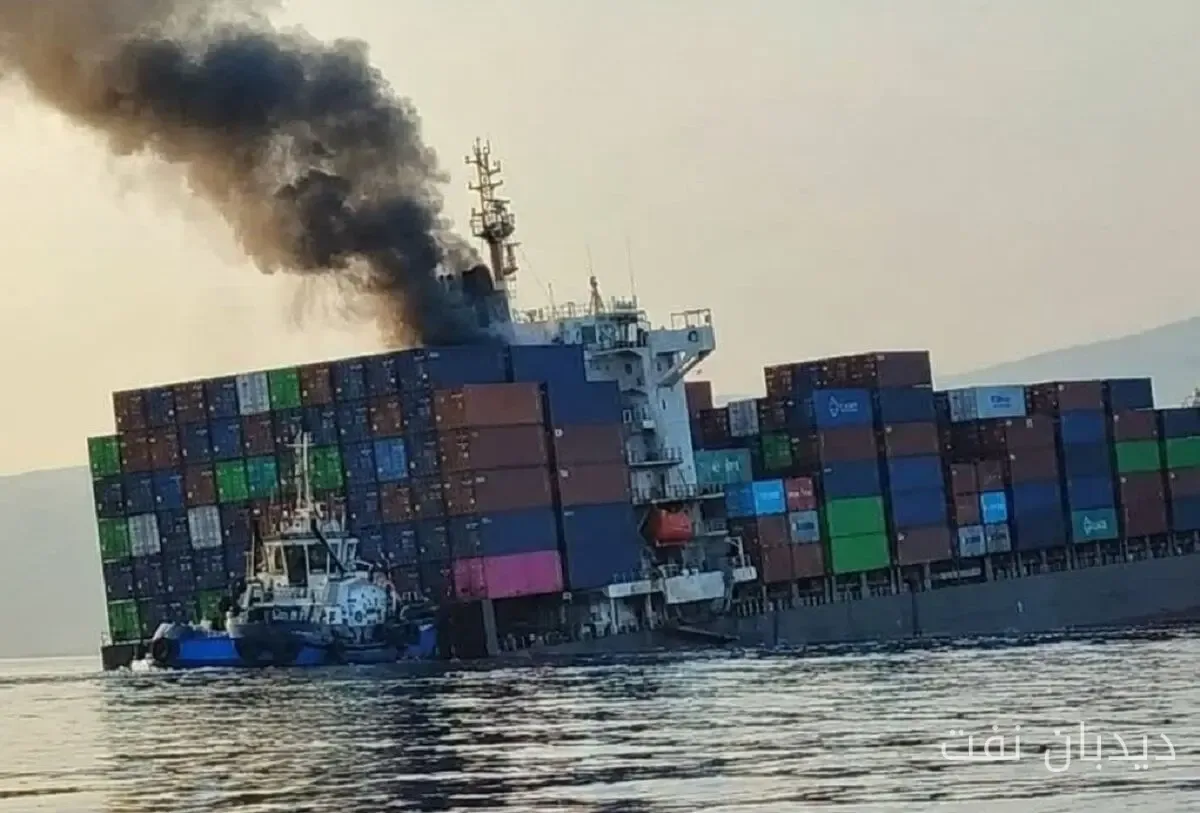
The Strait of Hormuz has once again become the focal point of military confrontation between Iran and the United States. The Navy of the Islamic Revolutionary Guard Corps has issued a recent warning stating: "The Strait of Hormuz is closed, and the consequence of ships violating Iranian regulations is to burn in the fire of the American terrorist army's wrath."
Increase in Maritime Attacks and Changes in Oil Passage
According to received reports, ships operating inside and around the Strait of Hormuz are facing the most intense period of missile and drone attacks from Iran since the onset of attacks by the United States and Israel on Iran over the past seven months. In the two weeks leading up to October 11, 24 ships were targeted, a record number during this period. This figure clearly indicates an escalation of tensions compared to the first two weeks of March when 13 ships were attacked.
Read more: Jones Walker Adds New Partner in International Maritime Litigation
On October 11, six vessels, including three tankers carrying petroleum products and two tankers carrying crude oil belonging to companies from China and South Korea, were attacked. This situation resulted in casualties among sailors, and two Indian crew members went missing.
Security and Economic Implications of the Attacks
Analyses show that the increase in attacks has clearly impacted the security calculations of shipping companies and forced tanker owners to reconsider their decision-making. The Institute for the Study of War has also suggested that Iran is developing its anti-ship missile capabilities to gain greater ability to target vessels.
In this context, the Navy of the Islamic Revolutionary Guard Corps has claimed that on the morning of October 11, a second violating supertanker caught fire due to a mine strike. This vessel, which was carrying over two million barrels of crude oil, intended to pass through an illegal route. The Guard claims that the mine strike led to an explosion in the engine room, and the ship stopped in place.
These claims have not been independently verified but indicate Iran's seriousness in enforcing the rules of passage through the Strait of Hormuz. According to the mechanism announced by Iranian officials, ships must communicate with local control centers via international maritime emergency frequencies and provide information about their routes.
Meanwhile, statistics from the commodity information company Kpler show that the average oil transfer from the Persian Gulf to outside the region in September reached 15.5 million barrels per day, the highest level since the start of the war. However, on October 11, only 2.9 million barrels passed through the strait, the lowest recorded amount for that month.
It seems that ship owners are exercising greater caution in their decision-making given the current conditions, and some vessels have moved away from Fujairah, a key port in the UAE.
Ultimately, despite these disruptions, the U.S. Central Command claims that control of the Strait of Hormuz is in the hands of Washington and its regional partners and views the increase in attacks as a sign of the IRGC's "desperation."
Read more: Analysis of Lexical Challenges in the Shipping Industry · UKMTO Reports Lack of Reporting on Most Attacks on Ships in the Strait of Hormuz



