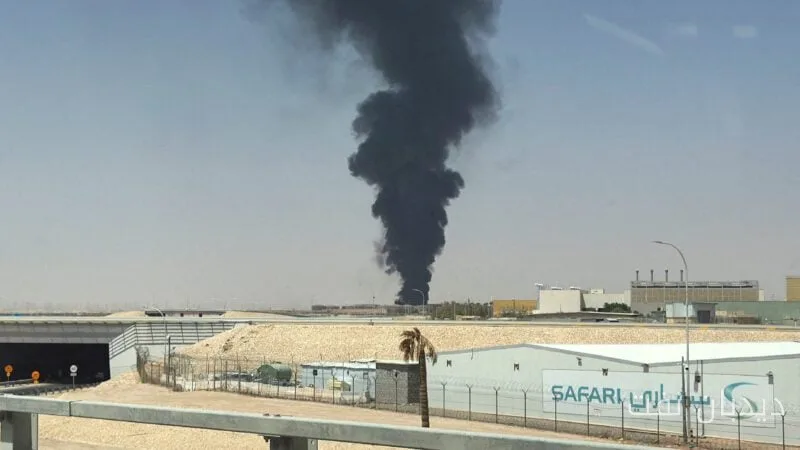
The Houthis (Ansar Allah) attacked two airports in Saudi Arabia in the last two days, resulting in three deaths and dozens of injuries. These attacks are part of the intensified military activities of this Iran-backed group from Yemen.
Details of the Airport Attacks
King Khalid International Airport in Riyadh and Abha Airport in southwestern Saudi Arabia were targeted on Tuesday and Wednesday, respectively. According to reports, in the attack on Riyadh Airport, a Sudanese citizen was killed, and five Saudis, two Egyptians, and one Pakistani were injured. In the attack on Abha Airport, two women — one Moroccan and the other Algerian — lost their lives, and 28 others were injured, with their injuries varying from mild to severe.
Saudi Response and Ground Situation
The General Authority of Civil Aviation of Saudi Arabia (GACA) has announced that it is assessing the damages to these airports and ensuring the safety of facilities. In response to these attacks, a coalition led by Saudi Arabia destroyed 82 military targets belonging to the Houthis in Yemen. These targets included ballistic missile storage facilities and command centers.
These developments are detrimental to the government of Crown Prince Mohammed bin Salman, who is trying to advance his multi-trillion-dollar economic program aimed at diversifying Saudi Arabia's economy. In less than three weeks, Riyadh will host the Future Investment Initiative conference, which is expected to be attended by senior financial officials, including executives from JPMorgan and Goldman Sachs.
Escalating Tensions and Future Implications
The escalating tensions between the United States and Iran are also impacting the regional situation, and there are no signs of the parties involved moving closer to peace negotiations. The Washington government has asked the Pentagon to consider options for attacking Iran, which could be implemented before the midterm elections on November 3.
Meanwhile, in the Persian Gulf and near the Strait of Hormuz, attacks on ships have increased. A tanker was hit off the coast of Qatar, marking the first attack on a tanker in this area in about a month. Reports indicate that in September, the number of attacks reached nine in this region, which is nearly half of the reported number from the previous month.
Ultimately, these developments reflect an unstable and complex regional situation that could have significant implications for global energy markets and maritime security.



