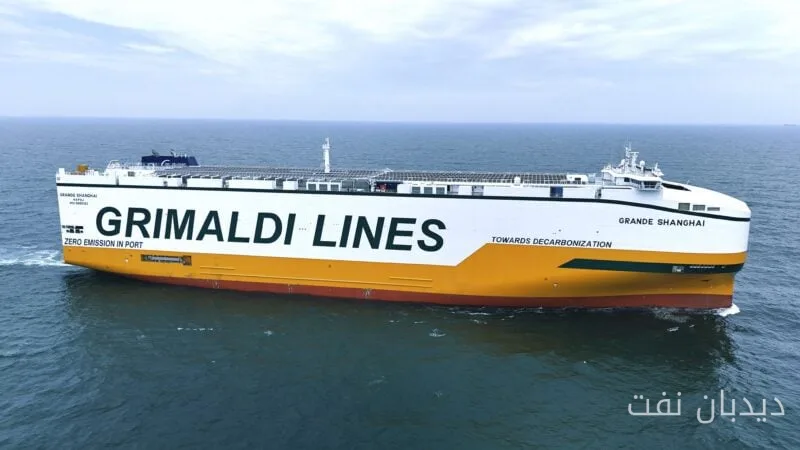
Grimaldi Group has warned that the reinstating of U.S. port fees for ships carrying vehicles manufactured abroad may lead to a rerouting of its ships and their exit from the American trade. This could disrupt transportation services for American exporters and automakers.
Grimaldi's Proposal for Permanent Suspension of Fees
On October 30, Grimaldi submitted a report to the Office of the United States Trade Representative (USTR), strongly supporting the Trump administration's proposal to extend the suspension of Section 301 port fees until January 9, 2027. The company also called for a permanent suspension of these fees for ships carrying vehicles manufactured abroad.
Read more: Announcement of $498 million grant allocation for port projects by MARAD
This warning comes as the USTR is considering a two-month extension for the current suspension, which is set to expire on November 9. The proposed extension would keep the measures suspended until January 9, 2027, while negotiations between Washington and Beijing over China's dominance in the global shipbuilding industry continue.
Impact on American Exports and Imports
Grimaldi, one of the largest operators of roll-on/roll-off, container, and car and truck carriers in the world, has argued that the fees could have unintended consequences for American businesses that rely on its services. The company noted its cargo volumes over the past three years, stating that it accounted for nearly 985,000 tons of U.S. exports and 1.31 million tons of imports. According to Grimaldi, 74.7 percent of U.S. import volumes consist of cargo belonging to American automakers.
Overall, the company has stated that 86 percent of the cargo it transports in American trade involves exports or imports related to American automakers. Grimaldi also emphasized its historical relationship with the United States, noting that it has been operating in U.S. ports since 2001 and provided cargo ships to the U.S. Navy during the Gulf War.
This report reflects growing concerns among international shipping companies about the possible return of Section 301 port fees, which were introduced last year as part of Washington's efforts to counter China's dominance in global maritime, logistics, and shipbuilding sectors. These measures were initially implemented on October 14, 2025, and then suspended on November 10 as part of a broader trade agreement between President Donald Trump and President Xi Jinping of China.
The fees target ships owned by China and ships built in China, as well as some ships carrying vehicles manufactured abroad. While the aim of these measures is to bolster American shipbuilding, they have faced criticism from shipping companies that claim these fees could increase transportation costs and disrupt existing transportation networks.
Grimaldi's warning follows similar concerns expressed by Atlantic Container Line (ACL), whose CEO, Andy Abbott, stated last week that customers were worried that the company might shift its ships from American trade to the growing trade with China.
These concerns from Grimaldi and ACL highlight a potential conflict between Washington's efforts to rebuild domestic shipbuilding and the interests of American exporters who rely on foreign-built ships for their cargo. The proposed extension has also faced opposition from lawmakers and maritime labor groups who are calling for the reinstatement of the fees.
In June, Senators Mark Kelly and Elizabeth Warren urged the USTR to reinstate these fees, arguing that suspending them undermines efforts to rebuild U.S. commercial shipbuilding and deprives the government of potential revenues for maritime investments.
For Grimaldi, however, this issue goes beyond a temporary extension. The company is seeking a permanent exemption from the imposed fees under Appendix III of Section 301, which specifically refers to ships carrying vehicles manufactured abroad.
Grimaldi has expressed hope that "insurmountable obstacles" do not lie in their path.
The USTR's public comment period ends on October 30 at 5 PM Eastern Time, and the proposed two-month extension has yet to be finalized.
Read more: Scott Bessent: Economic pressure on Iran has significantly increased · The shipbuilding industry of Hanjin has reached the top position globally