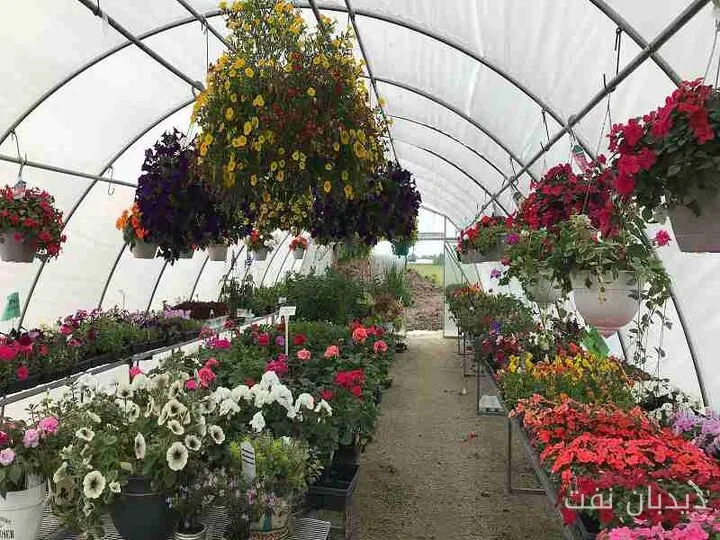
Gholamhossein Soltani-Mohammadi, head of the Tehran Province Flower and Plant Producers Union, in an interview about the state of the flower and plant market and the decline in sales in this sector stated that the flower and plant market, like other markets, has been affected by economic conditions, and purchasing flowers is now a lower priority compared to food items.
Economic challenges and rising production costs
Soltani-Mohammadi pointed out that production costs for flowers have significantly increased compared to the past. The costs of labor, fertilizers, pesticides, electricity, and gas have risen considerably, resulting in higher production costs for producers. In this situation, per capita consumption has also decreased, and people no longer have the purchasing power they once did.
Read more: 238% increase in fuel prices in the European Union
He emphasized that the efforts of the active members of this sector are to support the public and prevent further price increases as much as possible to maintain purchasing ability for consumers. According to Soltani-Mohammadi, the flower and plant industry has not fallen into decline, but there have been fluctuations; at certain times production was high but customer demand was low, and at other times the opposite was true.
The impact of war on imports and efforts for domestic production
Soltani-Mohammadi further referred to the impacts of war and the reduction of imports of inputs, stating: During the war, at a time when flights were not operating, the entry of some inputs and necessary items for this industry from abroad faced difficulties. For example, some flower bulbs that were imported from other countries were not brought into the country during that period, leading to shortages in the market.
He also mentioned efforts to compensate for these shortages through domestic production, adding that Iran is a four-season country with suitable capacities for flower and plant production. He emphasized the need to reduce reliance on imports and stated: Some producers had become accustomed to imports in the past, but now that imports have decreased, domestic production of these items has gained more attention.
Production and export rankings and the need to develop exports
Soltani-Mohammadi pointed out the gap between Iran's flower and plant production capacity and the country's export ranking, saying: Currently, Iran ranks 17th in the world in flower and plant production, but holds the 107th position in exports. Therefore, the country's production situation is favorable, but conditions must be created for this production to move towards exports.
He stressed that we should produce goods that can be made domestically to reduce our need for foreign countries. In conclusion, Soltani-Mohammadi referred to Iran's climatic capacities and stated that neighboring countries could be a suitable market for Iranian products, and the main goal should be to develop exports.
Read more: The highest export volume in China's history recorded in one week · Negative growth of 10.1% in Iran's economy in spring 1405