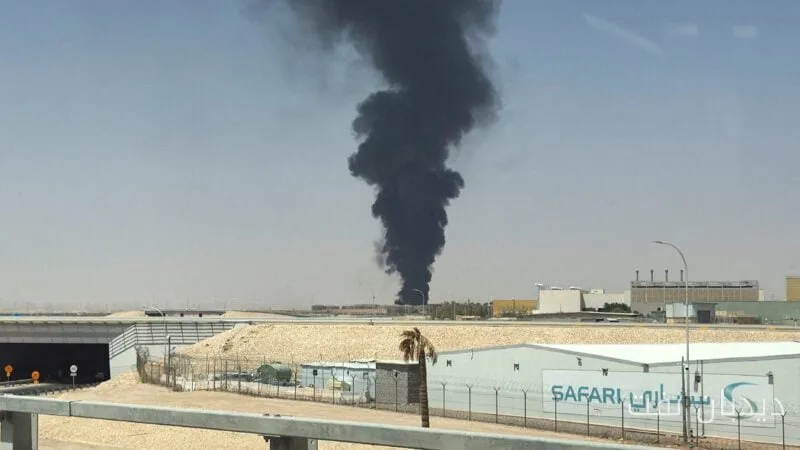
Deadly attacks on King Khalid International Airport in Riyadh on September 19, 2026, illustrate the Houthis' capability to target important Saudi centers and pose a serious threat to regional stability. These attacks, which resulted in the deaths of 12 people and injuries to 309 others, are seen as a response to what the Houthis have termed a "Saudi aggression."
Analysis of the Attacks and Their Consequences
On Saturday, an attack was carried out on Riyadh's main airport, followed by another attack the next day that resulted in one death and 11 injuries. The Houthis stated that these attacks were a response to a recent Saudi strike on Sana'a Airport in Yemen. This situation has put significant pressure on Saudi Crown Prince Mohammed bin Salman and increased the likelihood of escalating conflicts.
Read more: TOTE and Hanwha finalize contract for missile defense ship construction
In response to these attacks, the Saudi Air Force has supported Yemeni government forces and initiated retaliatory operations. Meanwhile, the Houthis, as part of Iran's resistance axis, have become an autonomous fighting force, showcasing their ability to produce weapons and conduct complex operations.
Economic and Military Consequences
Despite the attacks and rising tensions in the region, oil prices fell on Monday. This price drop was attributed to statements made by the President of the United States regarding the energy agreement between Russia and Ukraine. Additionally, these attacks have put further pressure on Saudi allies, including the United States and Turkey, creating difficult options for responding to these attacks.
Analysts believe that the Houthis are ramping up their attacks to pressure the Saudis into reducing the intensity of their airstrikes. These attacks have been specifically described as a serious violation of human rights by the Saudi coalition and have led to increased international criticism.
Furthermore, the Saudis have spent billions of dollars building one of the most complex military forces in the region, yet they still face serious challenges in controlling the Houthis. The Houthis continue to utilize ballistic missiles and inexpensive drones, maintaining their ability to target Saudi civilian infrastructure.
Ultimately, this situation reflects the challenges facing the Saudis and their allies in managing tensions and preventing the escalation of conflicts in the region. As the Houthis continuously increase their power, the Saudis must develop new strategies in response to these attacks.
Read more: Uncertainty in the maritime industry: International Maritime Organization's carbon neutrality framework delayed · Escalation of Houthi attacks on Saudi Arabia and rising oil prices in the global market