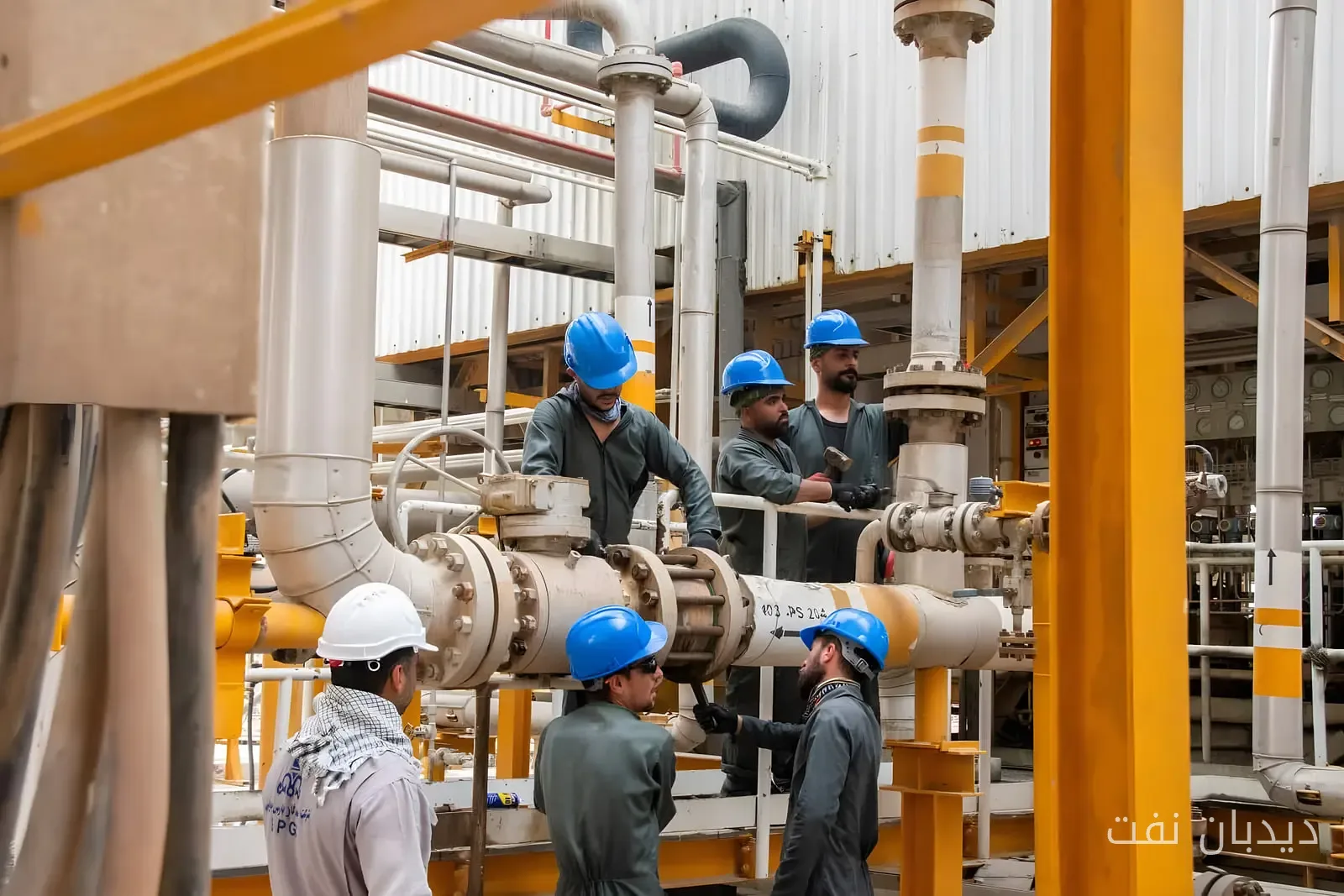
A daily shortage of 90 million cubic meters of gas in Iran has arisen due to a decline in production and increased seasonal demand. Given the reduction in refining capacity and the onset of winter, the necessity of resuming gas imports from Turkmenistan to save industries and power plants has been seriously raised.
Increasing Gap Between Production and Demand
Statistical estimates indicate that out of a total daily production capacity of 750 million cubic meters of gas, about 200 million cubic meters have become unavailable. Even accounting for the recovery of 90 million cubic meters and household savings, the national grid will face a daily shortage of 90 million cubic meters. If exports to Turkey and Iraq are halted, the daily shortage will remain around 60 million cubic meters.
Read more: Shahbaz Hassanpour: Securing energy for industries must be prioritized
Risk of Gas Pressure Drop and Replacement Costs
The concentration of gas production in the south of the country and the significant distance to northern provinces such as Mazandaran, Golestan, and North Khorasan have increased the risk of gas pressure drops for three million subscribers. To compensate for the gas shortfall, replacing liquid fuel in power plants incurs about $9.46 billion in diesel costs, while supplying the same amount of energy with imported gas would cost about $3.55 billion, creating a $5.91 billion difference.
Mohammad Mirzaei, a member of parliament, pointed to the damage inflicted by enemies on the production infrastructure of South Pars, stating that these issues have led to an approximate 20% decline in the country's daily natural gas production capacity. Given the time-consuming process of fully restoring this capacity, which is estimated to take between two to three years, shifting the approach towards optimizing consumption and reducing losses with the participation of the private sector and the community is considered a national priority and necessity.
Saeed Tavakoli, CEO of the National Iranian Gas Company, explained the dimensions of the gas imbalance, stating that following a recent incident, the daily production capacity of 230 million cubic meters of gas was lost, and with the efforts of colleagues, it is expected that about 100 million cubic meters of that will be compensated before the cold season begins, but 130 million cubic meters will be added to the country's gas imbalance.
The existing transmission infrastructure between Iran and Turkmenistan has the capacity to transfer 30 million cubic meters of gas daily, and developing exchanges could also cover part of the goals of Article 44 of the Seventh Five-Year Development Plan to transform the country into an energy exchange hub.
Read more: The specialized meeting "Energy and the Future of Industrial Development in Iran" will be held · The First Vice President announced a reduction of 230 million cubic meters in gas capacity