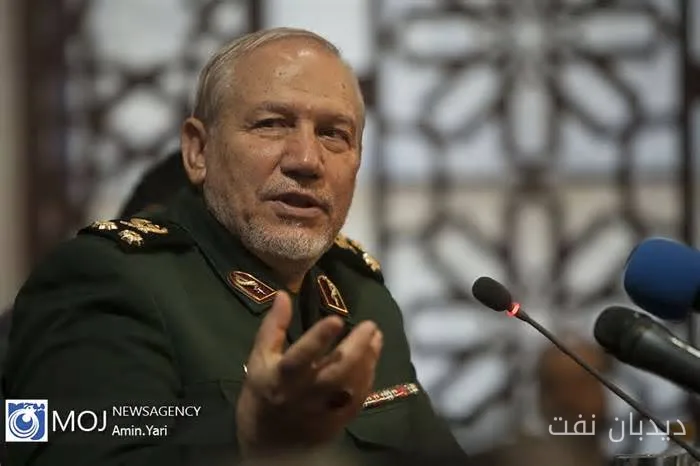
Brigadier General Seyyed Yahya Safavi, advisor to the Commander-in-Chief, elaborated on the key role of the Strait of Hormuz and Iran's energy resources in global equations during a ceremony commemorating the 46th anniversary of the Sacred Defense Week and the anniversary of the liberation of Abadan at the National Iranian Oil Products Distribution Company.
The Geopolitical Role of Energy in National Power
Safavi stated: Energy in today's world is not merely an economic commodity; it has become a source of power, a tool of pressure, and a target of war. He added that Iran's geographical position and its access to important trade and energy routes have made this country a determining factor in regional and global equations.
He also referred to President Eisenhower's emphasis on the special importance of Iran, stating that this country is at the crossroads of global communication due to its oil resources and geographical location. The advisor to the Commander-in-Chief continued: Currently, energy has become one of the main fields of competition among global powers.
Challenges and Threats in the Energy Sector
Safavi expressed that the United States has sought to dominate Iran's energy resources and the Persian Gulf in recent wars. He pointed out the enemy's efforts to exert pressure on Iran's energy infrastructure, stating that significant human and material damages have been inflicted on Iran and the countries in the region, but the strategic objectives of the opposing side have not been achieved.
He went on to mention three major epic events in the history of Iran's oil industry. The first epic relates to the oil workers' strikes in 1979, which played a significant role in weakening the Pahlavi regime. The second epic was during the eight years of the Sacred Defense, when Iran managed to maintain oil production and exports despite enemy attacks. The third epic pertains to the recent war, where oil industry workers were at the forefront.
Safavi also referred to the impacts of the recent war on energy production and exports in the region, stating that some energy transfer and export infrastructures faced challenges. He emphasized the necessity of utilizing Iran's geopolitical capacities to enhance economic and national resilience.
In conclusion, Safavi pointed out that smart management of the Strait of Hormuz, as one of the most important oil and gas transit routes, can play a decisive role in regional and international equations. He believes that Iran must effectively utilize its geographical position and energy capacities to demonstrate that the cost of creating a crisis in energy security can be very high.



