Boskalis has signed a significant contract for the transport and installation of submarine cables in the first phase of the 2-gigawatt Zeevonk offshore wind project located in the North Sea of the Netherlands. The exact value of this contract has not been disclosed, but it is classified as a large contract if its value is between 50 and 150 million euros.
Project Details
Boskalis's scope of work includes the installation of approximately 149 kilometers of 66-kilovolt submarine cable, connecting 69 wind turbines. In addition, the company is responsible for testing and finishing the cables, installing the cable protection system (CPS), conducting survey work, and seabed intervention.
Read more: Use of Cargo Drones in the Maintenance Operations of the Triton Null Wind Farm by RWE and Ampelmann
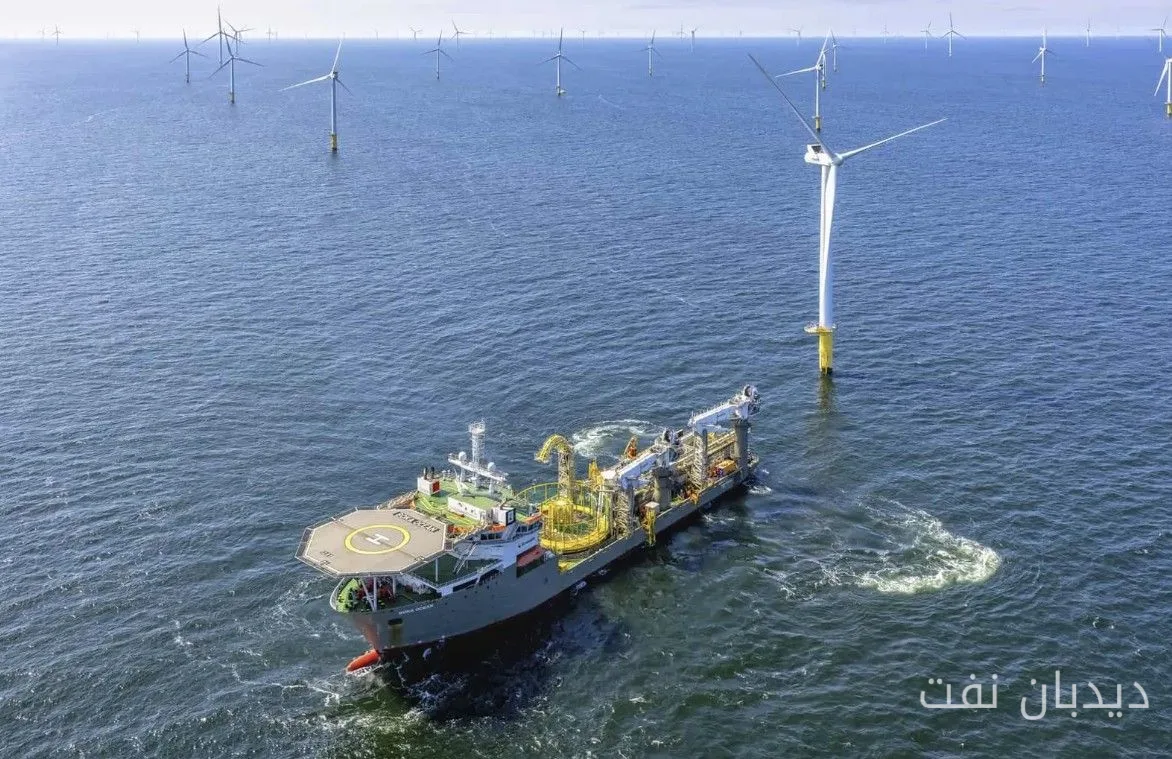
The cables will be transported from a manufacturing plant in Eemshaven, Netherlands, to the wind farm, and the installation will be carried out using Boskalis's cable-laying vessel named Boka Ocean. For seabed intervention work, Boskalis will deploy one of its underwater rock installation vessels.
Project Planning and Implementation Phases
Engineering activities are expected to commence soon, and the marine installation campaign is scheduled to take place in 2029. The submarine cables for the first phase of the Zeevonk project will be supplied by TKF, which has signed a contract with this Dutch company.
The first phase of this project aims to produce 1 gigawatt of offshore wind capacity by 2029. The second phase, which is targeted for completion by 2032, includes another 1 gigawatt of offshore wind capacity and 500 megawatts of integrated system capacity, which will include an electrolyzer at the Port of Rotterdam to support green hydrogen production.
Read more: Sixfold Growth of Renewable Energy Capacity in Khorasan Razavi · Unprecedented Drop in Gas Prices in the Netherlands; Signs of Calm in the Market