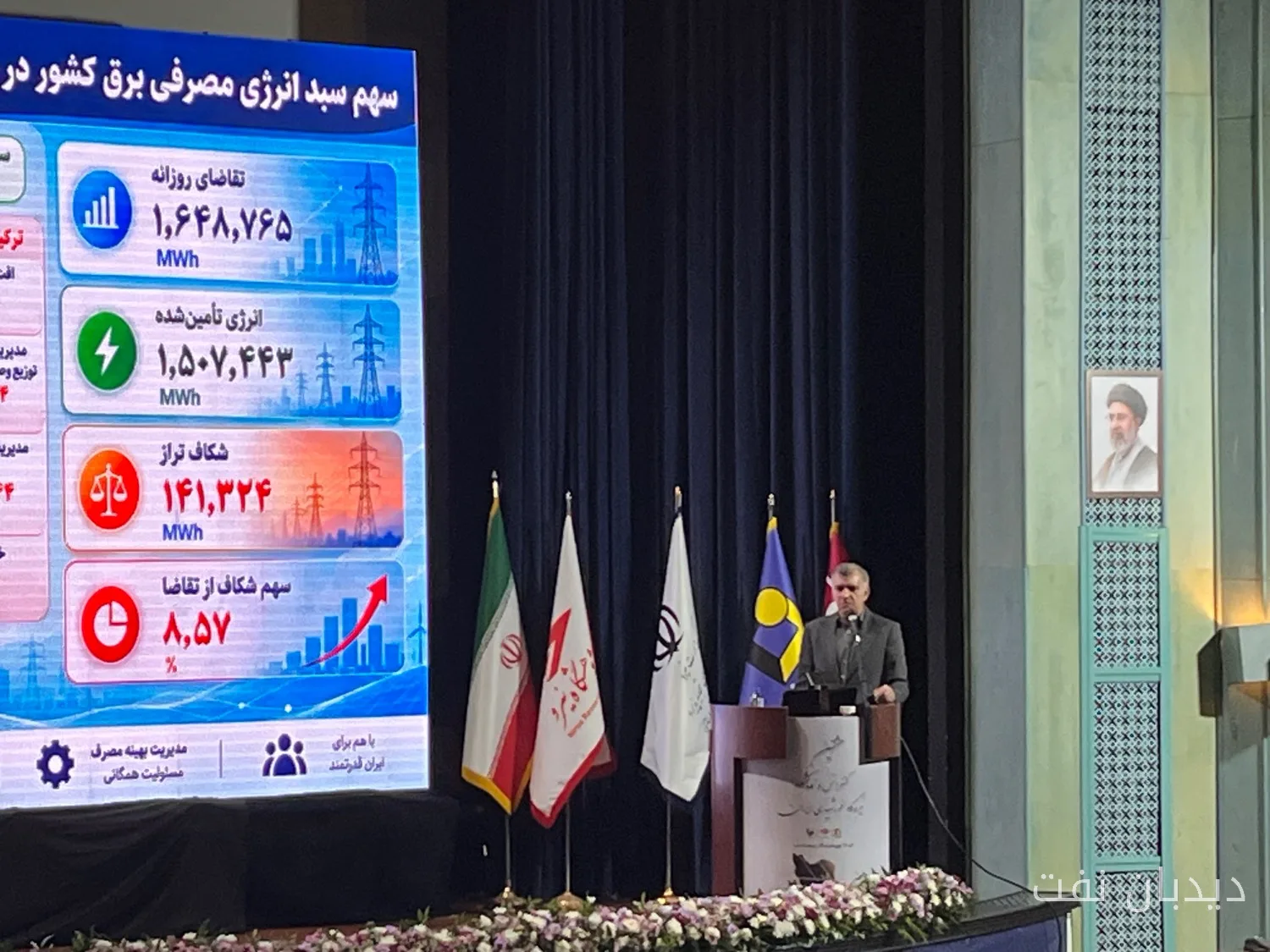
Alireza Parandeh Motlagh, the Technical and Engineering Deputy of the Renewable Energy and Energy Efficiency Organization (SATBA), introduced the development of renewable energies as a fundamental solution for controlling the imbalance in electricity at the eighth national solar power plants conference. He addressed the existing challenges in electricity supply and the role of renewable power plants in mitigating these challenges during the conference.
Unmet Consumption Load and Proposed Solutions
Parandeh Motlagh referred to the peak electricity consumption data in summer and noted that the failure to meet part of the consumption load during this time has been highlighted. According to him, increasing production capacity through renewable power plants at the provincial level can be the main solution to reduce network limitations and ensure sustainable electricity supply. This official emphasized that the Ministry of Energy and SATBA are paying special attention to the development of these power plants with the aim of increasing efficiency and responding to consumer needs.
Read more: The new Douglas CCS platform for carbon storage in the UK has been launched
Investment Challenges and SATBA's Solutions
The Technical and Engineering Deputy of SATBA considered facilitating investment to be contingent upon resolving currency and administrative challenges and noted that the financial resources of the National Development Fund are being utilized as an effective tool to overcome order registration barriers, expedite currency allocation, and facilitate customs clearance of equipment. He stated that these measures help investors minimize the construction period of power plants, which can play a significant role in increasing the capacity of renewable energy production.
Parandeh Motlagh also conditioned the process of land allocation and provision for the construction of power plants on technical and environmental assessments and emphasized that project site selection is based on five main criteria. He regarded the quality of equipment as a fundamental factor in production sustainability and stressed that investors should consider not only the nominal power but also the operational efficiency, performance degradation rate over time, thermal behavior of the panels, and the physical resistance of the equipment against environmental stresses when selecting solar panels.
Finally, Parandeh Motlagh, emphasizing the importance of balanced development of renewable energies, referred to the goal of increasing the capacity of renewable power plants to 12,000 megawatts, stating that this goal is in line with ensuring sustainable electricity supply for the country and reducing dependence on fossil fuels.
Read more: Signing of the agreement between ABS and the U.S. Department of Energy for nuclear-powered ships · Analysis of investment opportunities in Iran's upstream oil and gas sector