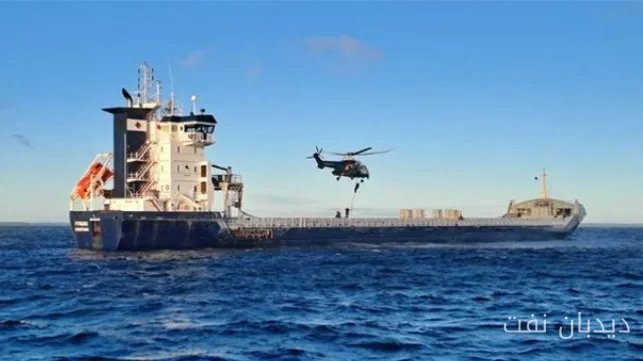
A sailor is missing after the attack on the Greek oil tanker Velos Sapphire in the Persian Gulf. This tanker, flying the flag of the Marshall Islands, had departed from Fujairah towards Sitra, Bahrain on November 3 and was attacked approximately 50 nautical miles north of Madinat ash Shamal in Qatar.
Details of the Attack and the Status of the Tanker
The attacks on this tanker were reported at 23:20 UTC. Maritime sources have reported that two unidentified missiles struck the tanker, causing an explosion on its left rear side. After initial investigations, the International Maritime Organization (IMO) identified the tanker and confirmed that there was no pollution, but one sailor is missing. Other sources have stated that this sailor has lost his life, but this has not yet been confirmed by the IMO.
Read more: Conviction of the Captain and Mate of the Fitberg Tanker for Deliberately Dropping Anchor
Developments in Iran's Sanctions List
The recent attacks on this tanker have increased concerns about maritime security in the region, especially in the Strait of Hormuz. Notably, this tanker is not on Iran's blacklist for violating transit requirements, while another tanker from the same fleet, Velos Amber, is on this list. This attack is also indirectly related to recent changes in Iran's sanctions list. Recently, Iranian officials removed two liquefied gas carriers that were under U.S. sanctions from their non-compliance list.
According to data, there are currently 239 vessels on Tehran's blacklist, down from 240 vessels earlier in the week. PGSA (Persian Gulf Shipping Authority) officials have warned sanctioned vessels that they will face fines or seizure if they pass through designated areas. Meanwhile, mine-related threats in the Strait of Hormuz have also resurfaced as a serious risk.
Maritime traffic in the area has significantly decreased. According to AIS data, only 9 commercial passages were recorded on Thursday, with the seven-day average dropping to about 9 vessels per day. This is significantly lower than the pre-conflict level, which averaged around 85 vessels per day.
At the same time, diplomatic efforts continue. The foreign ministers of Oman and Iran are examining practical and technical arrangements to restore unhindered navigation in the Strait of Hormuz, but no agreement for reopening has been announced yet. This situation reflects the complexities and challenges facing maritime security in the Persian Gulf and the Strait of Hormuz, and the continuation of this situation could negatively impact maritime trade in the region.
Read more: Discovery of 7,700 Liters of Smuggled Fuel in a Waste Garage in Qom · K Line Announces $8 Billion Investment Plan