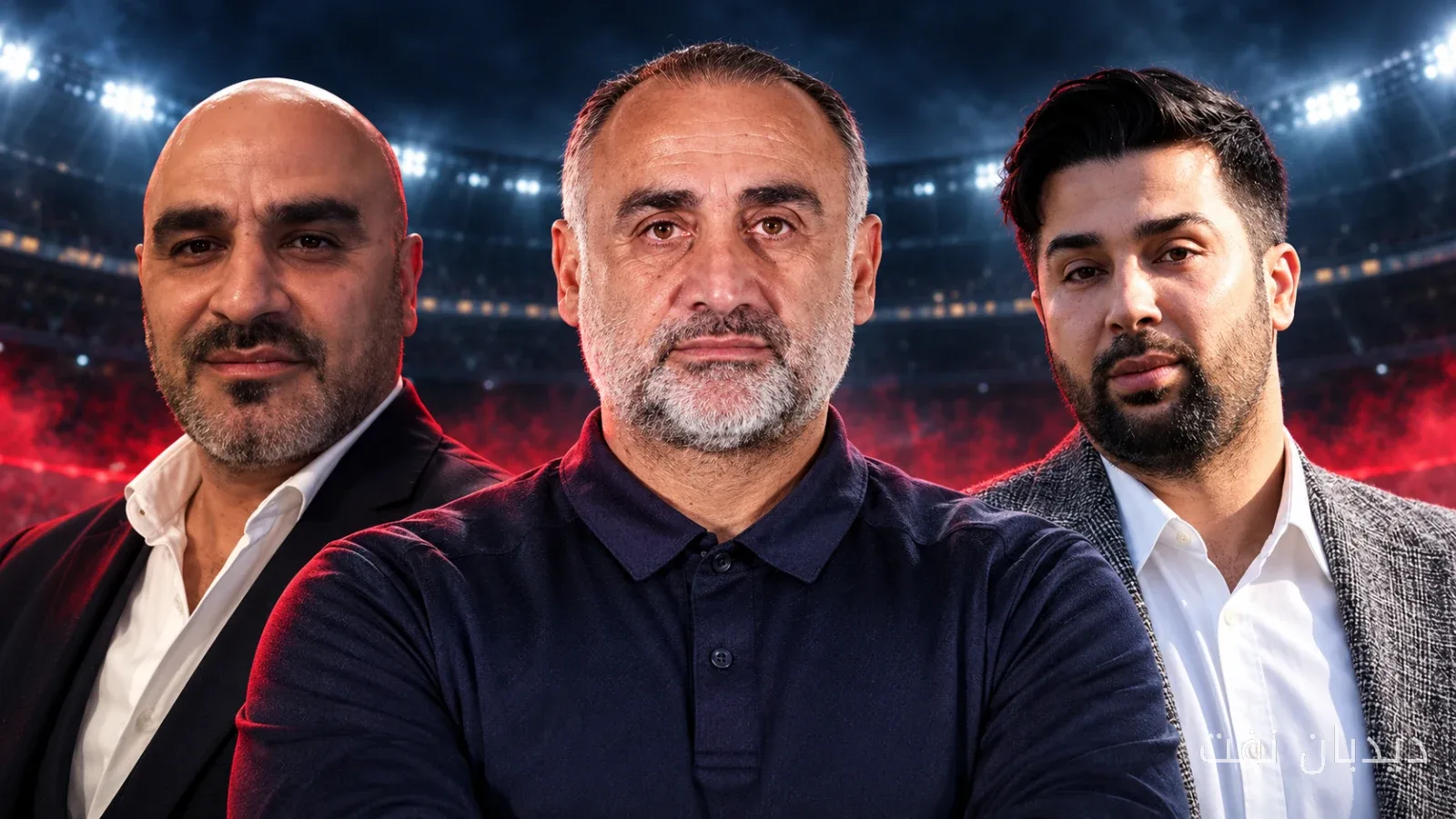
The removal of the national U23 team from the Asian Games was not just a technical failure; the name Hossein Abdi alongside Hooshang Saadati and Shahab Zandi is tied to the player selection case, the figure of 200 billion tomans is on the table, 10 percent is the registered share of the player, and the Football Federation must respond with documents and numbers right now.
The path of money, signatures, and team composition: do not downplay the issue
In this case, three key names are at the center of the questions: Hossein Abdi (head coach of the national U23 team), Hooshang Saadati, and Shahab Zandi. The narrative is clear: the connection between transfer intermediaries and technical decisions aims to increase the players' value through "invitation and play" in the national team. This means that the team composition is shaped not only on the field but also on the contracts and the flow of money. When the head coach's name is placed alongside active intermediaries in the transfer market, every minute of play, every position change, and every call-up to the camp becomes a number convertible to money, and the question arises directly: who signed, what was exchanged, and who is accountable?
Read more: Discovery of over 4000 liters of smuggled fuel in Astara
The public wants numerical answers, not vague statements. Where is the contract? What were the criteria for invitations? What payments were made and what is the exact share of the player? The chain of decisions must be reconstructed with documents: from the moment of selection to the moment of payment. If the selection of a player is linked to the increase in his market value, every minute of the national U23 team effectively becomes a pricing platform, and the federation must respond to this potential conflict of interest transparently and with evidence.
The case of Danial Eiri: the 200 billion price and the 10 percent share
The transfer of Danial Eiri from Nassaji Mazandaran to Persepolis is discussed with the figure of 200 billion tomans for the release letter, and according to this data, only 10 percent of this amount has reached the player. This figure is the focal point of the case: who negotiated and signed this amount? How is the payment path recorded? And more importantly, has Eiri's invitation and minutes played in the national U23 team been linked to this transfer?
The clear answer requires documents: the complete contract, the details of payments, the interested parties, and the sharing method. The presence of a player in the national team alone does not prove a financial link; however, when the figure of 200 billion tomans sits alongside the 10 percent share of the player, the conflict of interest of "profit outside, selection inside" must be clarified line by line. There is no room for soft interpretations here: if national invitations have become a pricing platform in the market, the federation must publish all documents today, not tomorrow.
Masoud Mohibi: position change from center-back to striker
Technical decisions on the field, if placed alongside external interests, must be defended with numerical reasoning. A clear point is recorded about Masoud Mohibi: a player who is known in the existing narrative as a center-back has played as a striker in the next two matches. This radical shift, from the defense core to the attack line, must have a clear technical explanation. The coaching staff must explain why this change occurred, what indicators justify it, and what impact this decision had on the playing opportunities of other players.
When the transfer market is involved, every position change can manipulate a player's valuation; from goal and assist records to visibility in more fluctuating roles. The numbers must answer: what was the selection criterion, the performance evaluation model, and the fundamental reasoning behind such a tactical change?
Shahab Zandi: official position, network connections, and the cases of Kerman and Rafsanjan
In another part of the information, questions arise about Shahab Zandi's role in Nassaji and his official title as "CEO." His name is also linked to cases related to football in Kerman and Rafsanjan, with accusations of paying referees, connections to betting sites, and manipulating results. These are serious allegations and increase the weight of the case. For each specific relationship, a verdict and evidence are necessary. Without a verdict and documents, there is no room for final judgment; however, raising these issues is enough for the federation and supervisory bodies to begin immediate and line-by-line transparency.
The precise question is: what has been Zandi's official position in Nassaji and how has his scope of authority been defined? If the path of technical decisions of the national U23 team is intertwined with external networks, every point of contact must be named and documented; from decision-making meetings to potential financial communications. The weight of this part of the case is so heavy that no general explanation can lighten it: either the documents come to the table, or the questions remain unanswered, and the cost directly impacts the trust of the fans and the credibility of the national team.
The role of the media: "Varzesh 3" and its effect on the lineup
Regarding the Varzesh 3 website and its owners, the influence on player arrangements is also discussed. When the media approaches the point of influence on the lineup, the relationships must be clear: where is the communication link, who transferred what to the coaching staff, and where does the output sit in the invitation list and game arrangement? The media can analyze, but when the influence on selections is at stake, the transparency of relationships and potential conflicts of interest must be published without reservation.
What this means for the public: the price of trust, the cost of removal
In this case, every name and every number casts a shadow over one truth: public trust is valuable and is priced with every minute played in the national team. When the figure of 200 billion tomans is recorded in a transfer and the player's share is reported as only 10 percent, when a player's position changes from center-back to striker in two consecutive matches, and when the names of intermediaries are placed alongside the head coach's name, the public has the right to draw all paths and expect documented answers. This removal is a failure in itself; however, if selections and technical decisions are tied to the market and intermediation, the failure does not remain only in the results table but directly impacts the social capital of football.
The fan wants numbers: contracts, payments, evaluation criteria, performance reports. The Football Federation can and must immediately publish the criteria for player invitations, the logic of position changes, and the details of money sharing in transfers related to invited players. Transparency is necessary not only to dispel suspicion but also to close the path of conflicts of interest. If the national team's invitations have become a pricing platform in the market, the root of the problem lies here: when the national team is perceived as personal property, the result is removal on the field and erosion outside.
The accountability invoice: what should be published?
For a clear and decisive response, the following items must be published immediately: the complete text of the transfer contract of Danial Eiri from Nassaji Mazandaran to Persepolis, the details of payments and the claimed win-win share among the club, player, and intermediaries; the official criteria for inviting players to the national U23 team and the selection indicators in matches; a technical report on the position change of Masoud Mohibi and its effect on the playing opportunities of other players; the official status of Shahab Zandi's managerial title in Nassaji, the scope of his authority, and any institutional contacts he had with the technical decisions of the national U23 team; and any financial or relational ties that have transferred the role of the media from analysis to influence on selections.
These are the basic items. Without these documents, accountability is incomplete, and the result is continued doubt and distrust. The public and stakeholders in football expect a transparent, numerical, and signed report.
Minutes of play; from the field to the office
Every minute played in the national U23 team, when placed alongside the transfer market, becomes a "valuation item." Being invited, playing, changing positions; each of these, if linked to the path of external value creation, causes the national team to fall from "the axis of technical development" to "a pricing platform." This change of use must be stopped. The way to stop it is clear: criteria and contracts must be made public; from the minutes of the technical committee to the details of the settlement related to the transfers of invited players.
The head coach of the national U23 team, Hossein Abdi, must respond directly and with numbers: the list of invitation criteria, the documents of position changes, and the logic of composition in the eliminated matches. The names that are alongside him—Hooshang Saadati and Shahab Zandi—at every level of connection to the transfer market must explain their relationship with technical decisions. In professional football, the separation of interests is paramount; wherever the boundaries are blurred, the result is exactly what we have seen: removal and social cost.
Key numbers
200 billion tomans — the amount of the release letter for Danial Eiri in the transfer from Nassaji Mazandaran to Persepolis.
10 percent — the share that has reached the player from this amount.
2 matches — the number of games Masoud Mohibi played as a striker after being introduced as a center-back.
Conclusion: the end of these questions is documentation
The Football Federation can answer all these questions by publishing the criteria for invitations, explaining technical decisions, and clarifying potential conflicts of interest. As long as these documents are not made public, attributing the removal of the national U23 team to the mentioned individuals is a hypothesis for investigation and not a proven conclusion. However, the duty of accountability does not remain pending: the names are clear, the numbers are on the table, and public opinion is waiting for documents and signatures.
Read more: 1372 to 1405; Amir Noori's timeline and treatment station after the accident