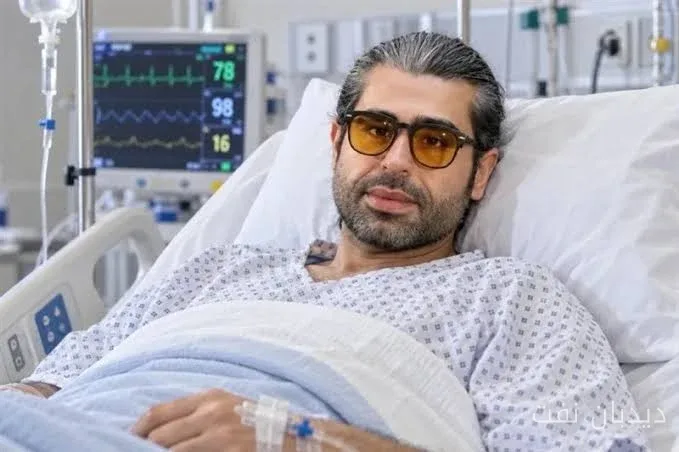
On September 16, 2026, Amir Nouri – an Iranian cinema and television actor, born on August 28, 1986, in Tehran – was injured in a severe car accident and was transferred to the hospital; after surgery, the treatment process continues.
Amir Nouri has been on stage and in front of the camera since 1993, starting at around seven years old, and became known to a wide audience with works such as "Childhood Notes" and "Without Explanation." In recent years, he has distanced himself from acting, according to his own statements. Recently, he spoke about his life and financial situation in the program "Rok" with Majid Vashghani; a conversation that created widespread resonance among audiences and brought his name back into focus.
Now, the main focus is on the treatment path after surgery. No official confirmation of death has been issued, and any announcement without confirmation from the family or hospital lacks credibility. The undeniable reality is: he was transferred to the hospital after a severe accident, and the treatment process continued.
The professional path of Amir Nouri can be summarized with a clear timeline: the starting point in 1993, establishing a public persona with two well-known series, and then a period of distancing by his own choice. This trajectory presents an image of an actor whose main asset is "time on stage"; a time that began in childhood, remained in collective memory, and is currently accompanied by public demand for accurate and credible news after surgery.
In such a pivotal moment, the reintroduction of Amir Nouri has a clear meaning: he is an active figure in contemporary Iranian visual culture whose presence has been etched in the minds of successive generations since childhood. Being recognized with "Childhood Notes" and "Without Explanation" is not just a work label; these two titles outline the coordinates of a period during which Nouri transitioned from a child frame to a familiar face in family viewing. This continuity of recognition is now reflected in the public's pursuit of information about his treatment status.
Regarding the period of distancing from acting, there is a key point: this distance, according to his own expression, has been a choice and not an exclusion from the path. "Recent years" in his narrative mean a retreat from the daily production texts so that his lived experience and personal perspective can proceed with a different rhythm. When such a background sits alongside the candid conversation in "Rok," the result is an increased public attention; attention that refers both to his professional past and to his present, which is in the process of treatment after surgery.
In numerical and temporal terms, Amir Nouri's case has three clear steps: 1) Early start in 1993; 2) Establishing public recognition with two prominent series; 3) Entering a new phase with conversations that discuss his personal and economic status and simultaneously, an unforeseen event on September 16, 2026, which prioritizes health and the pursuit of treatment. This simple yet precise arrangement allows for the importance of each station to be seen: from the formation of symbolic capital to the management of a personal crisis.
When we talk about "recognition," we are discussing a type of intangible asset that is distributed in the audience's basket and collective memory. "Childhood Notes" and "Without Explanation" have played that role for Amir Nouri: transforming a young actor into a name that recurs in viewing choices. The value of this asset is now seen in the ability to mobilize public attention around news of treatment after surgery; attention that relies on the demand for accurate news, avoidance of unverified announcements, and focus on the official information pathway.
From a professional path perspective, starting at seven years old is an important characteristic. This early start means a long-term contact with the camera, text, and audience; a contact that creates both the capacity for role-playing and shapes public expectations. In such a model, every personal milestone – like a candid conversation about life and livelihood – receives a compounded reflection, as the "individual's story" is intertwined with the "collective memory." This overlap has also increased the weight of the news about the accident on September 16, 2026, and the transfer to the hospital, focusing attention on "current health."
Despite a few years of distancing from acting, Amir Nouri's name has remained in the public orbit. This endurance gives special meaning to the reflection of the "Rok" conversation with Majid Vashghani; a conversation that, when discussing life and financial status, shifts the audience's perspective from "roles" to "the person behind the roles." As a result, the news related to the accident and hospitalization is not just an event, but a new emotional and social focal point around which the expectation for accurate and credible news is formed.
Now, the statements are clear: a severe accident occurred on September 16, 2026, the transfer to the hospital took place, surgery was performed, and the treatment process continues. No official source has confirmed the news of death, and announcements without confirmation from the family or hospital lack newsworthiness. These four statements establish the framework for follow-up and show the audience where the point of reliance is.
In such a situation, the tone of introduction and positive outlook means recording and highlighting achievements: starting a career from childhood, the endurance of the name in the viewer's mind, recognition with two prominent series, and the ability to return to the center of public conversations through candidness in expressing personal life. These achievements are now accompanied by the priority of health; health as the most important component of any professional path that is pursued with a therapeutic order after surgery.
If we look at the rhythm of this timeline, the periods of "entry," "establishment," "reconsideration," and "crisis management" sit together. "Entry" in 1993, "establishment" with "Childhood Notes" and "Without Explanation," "reconsideration" in recent years with distancing from work, and "crisis management" in the days following the accident. This rhythm creates a coherent and unambiguous image in which every number, every name, and every event has a specific place.
In analyzing the role of the recent conversation, one message must be emphasized: when a well-known figure speaks candidly about their financial situation, the audience encounters more human details about them. This encounter has a reinforcing effect on the follow-up of subsequent news; including now, as the treatment process after surgery continues. In such conditions, emphasizing credible information channels is part of the social responsibility of all parties, and with the same candor seen in the conversation, it must also be observed in the news: announcements without confirmation from the family or hospital are not credible.
Returning to the starting point also has meaning. The year 1993 is not just a number; it is a sign of perseverance and endurance in a profession that evolves with changing tastes and generations. When this path intertwines with two prominent titles, a combined effect emerges: both the accumulation of experience and the mental connection of the audience. Here, the name "Amir Nouri" becomes something beyond a credit title for the audience; it becomes an element of family visual memory. Now, after a severe accident, as treatment is underway, this collective memory forms a circle of empathy and follow-up.
The path ahead is clear: the absolute priority of health and completing the treatment process. The information dissemination path is also clear: recording any significant change after confirmation from the family or hospital. What matters now is maintaining precision in words and fidelity to official data; the same fidelity that must be observed in narrating the timeline of his life and work: accurate numbers, specific names, and clear statements.
In documenting a figure who has been present in the frame since childhood, the introduction must rely on objective elements. These elements are accessible and sufficient: date of birth (August 28, 1986), place of birth (Tehran), year of starting activity (1993), recognition with two specific series, news of the severe accident on September 16, 2026, transfer to the hospital, surgery performed, and ongoing treatment. These are the pillars of a narrative that is now read with a more human and empathetic tone, without losing precision.
Ultimately, this case has a central axis: a person who has been defined by image and role since the age of 7 and now, after a heavy accident, faces another image; the image of a hospital bed and the light of the operating room that has given way to the treatment process. Follow-ups in the form of this new image require calmness and reliance on credible information dissemination. Alongside this, the reintroduction of a figure who is part of our visual memory is a necessary and beneficial task; as it shows that behind every news story, there are years of effort and a long journey of numbers, names, and roles.
Key Numbers
- Date of Birth: August 28, 1986 (Tehran)
- Year of Starting Artistic Activity: 1993 (around seven years old)
- Prominent Works of Recognition: "Childhood Notes" and "Without Explanation" (2 titles)
- Recent Event: Severe car accident on September 16, 2026
- Treatment Status: Surgery performed; treatment continues
- Credibility of Information: No official source has confirmed the news of death; announcements without family or hospital confirmation are not credible
- Recent Public Activity Period: Recent years with distancing from acting according to himself
- Media Reflection: Conversation in the "Rok" program with Majid Vashghani and widespread reactions