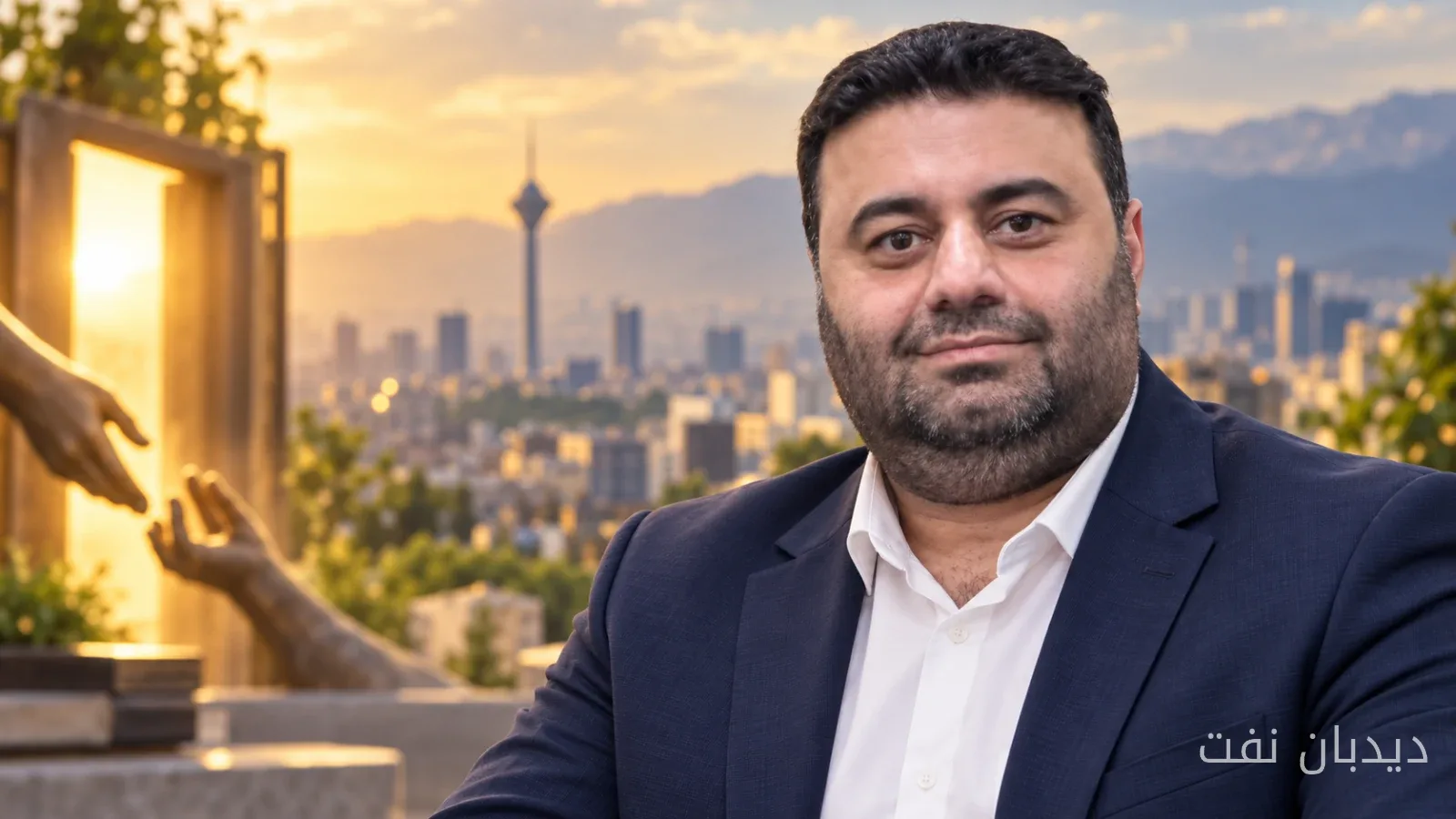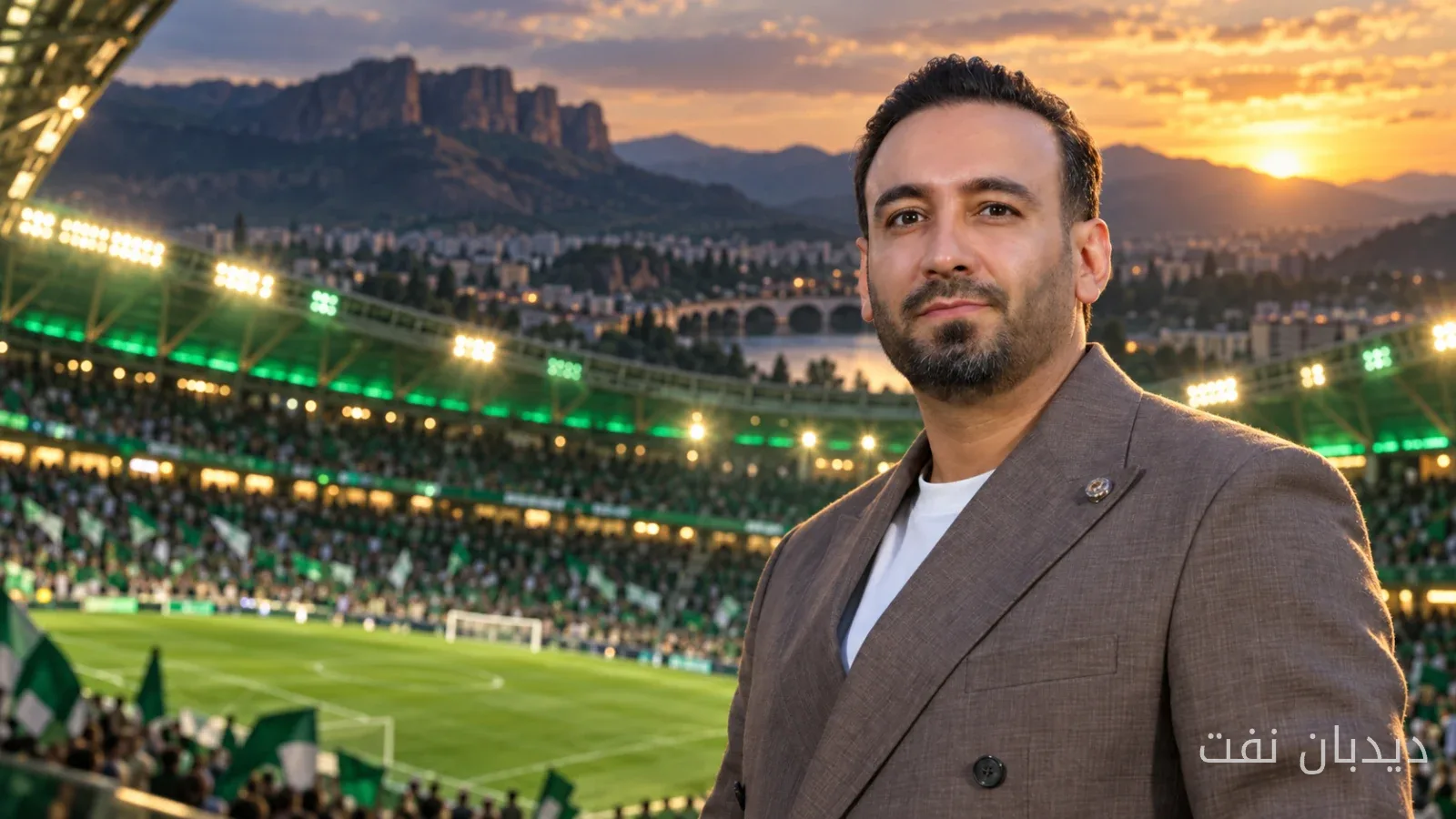
On March 9, 2023, Masoud Abdi received the "Top Entrepreneur and Job-Creating Manager of the Year" award at the fifteenth ceremony honoring job-creating entrepreneurs, and on May 8, 2024, he proposed the name "Lor Arena" for the Khorramabad stadium; two milestones that connected local investment to the path of Kheybar football and economic capacity building in Lorestan.
Starting Point: An Entrepreneur Who Chose a Different Path
In years when many investors choose Tehran and affluent centers for concentrating economic activities, Masoud Abdi, born in 1983 in Khorramabad, forged a different path. Relying on his managerial experience in the Aryan Sazeh holding, he returned investment and organizational skills to his hometown, leading this return from construction and job-creating projects to football fields; where the name Kheybar is more than just a team; it is the social capital of Lorestan.
His management at Kheybar Khorramabad created a clear link between three seemingly unrelated sides: economic activity, social responsibility, and sports investment. In this model, team ownership is not a cost without return, but a "development project"; a project that, through resource management, multi-year horizons, and infrastructure building, can enhance the social return on investment in the form of hope, employment, and regional identity.
Kheybar as an Intangible Asset of the Province
For the people of Khorramabad, Kheybar is not just a name on a jersey. This team is part of the collective memory and a symbol of solidarity in Lorestan. When a local investor takes ownership of the club, the issue goes beyond mere managerial transfer; because an intangible asset called "public trust" is at stake. Managing this trust is a far more valuable asset than any line of credit, and it is precisely here that the role of the local entrepreneur becomes meaningful: the intermediary role that can harness financial resources, networks, and executive skills to serve an old demand; a demand for "Kheybar's sustainable presence at the professional level of Iranian football".
The Top Entrepreneur Award; Official Validation of a Path
Abdi's professional path did not end with sports, nor did it begin with it. Before entering team ownership, he was known for his management in the Aryan Sazeh holding in the construction space, and on March 9, 2023, at the International Conference Center of the Islamic Republic of Iran Broadcasting, among hundreds of entrepreneurs and managers from public and private sectors, he received the "Top Entrepreneur and Job-Creating Manager of the Year" award at the fifteenth ceremony honoring job-creating entrepreneurs. According to a report by Donya-e-Eqtesad newspaper, Abbas Araghchi, Behrouz Kamalvandi, several members of parliament, and well-known economic managers attended this ceremony; thus, Abdi received this award in a ceremony attended by Abbas Araghchi.
The significance of this recognition is not just a title; the type of criteria, level of judgment, and evaluation concepts carry a clear message. This selection was not solely based on the volume of financial turnover or the scale of projects, but rather on axes such as entrepreneurship, creativity, use of technology, localization, commercialization potential of ideas, wealth creation, and sustainable job creation. Thus, before Abdi was recognized as the owner of a football club, he established his professional credibility in the solid ground of the real economy.
Management Model: Linking Construction, Employment, and Team Ownership
In Abdi's model, construction and team ownership are not separate poles; both rely on project management, scheduling, cost control, and cash flow. The output of one side feeds a share of the input of the other: the contractor network and executive forces enhance organizational skills; the football club, with its brand and fan community, activates a new layer of social capital. The result is a multidimensional matrix in which "every rial spent" is not just for next week's result; part of it is spent on developing the academy, training infrastructure, and sustainable club mechanisms to reduce "dependence on short-term results".
Professional team ownership means accepting both hidden and visible costs: from managing player and coaching staff contracts to maintaining facilities and maintaining constant communication with fans. Abdi accepted this responsibility at a time when Lorestan football faced a lack of infrastructure and limited resources. Kheybar's reliance on the lifeblood of spectators who have patiently stood in the stands for years creates both an opportunity and a double responsibility: the opportunity for synergy with the local community and the responsibility to meet professional standards.
"Lor Arena"; One Name, Multiple Consequences
On May 8, 2024, reports emerged about the decision to rename Takhti Stadium in Khorramabad to "Lor Arena", and Abdi explained this name by saying: "This stadium belongs to the Lor ethnic group, and due to the position that Kheybar holds among the dear Lor people, we will choose this name for the stadium." This statement quickly became the focus of media and social networks.
For a significant portion of fans, "Lor Arena" is a sign of regional pride and a tool for introducing a culture rooted in various provinces of Iran. Comparing it with global experiences showed that linking names and local symbols with stadiums, if done with respect and rules, can enhance the identity of a club. Conversely, a group of critics, including Rasool Khaadem, expressed concern over the abandonment of the name Gholamreza Takhti, and some viewed the issue from the angle of strengthening ethnic tendencies. These reactions clearly demonstrated the social sensitivity of naming, especially when a national champion is involved.
Differentiating Local Identity from Ethnic Confrontation
The key point is to differentiate "attention to local identity" from "ethnic confrontation". Lor identity is part of Iran's cultural diversity, and respectfully introducing it, if accompanied by respecting other ethnic groups and national symbols, is a form of cultural synergy, not confrontation. What can reduce anxieties is transparent dialogue with public opinion, maintaining respect for the name Takhti, and clear explanations about the cultural and sports goals of the project. This level of transparency not only increases the social capital of the project but also reduces the risk of misinterpretation.
Project Details; The Necessity of Operational Transparency
Various narratives have emerged regarding the details of "Lor Arena": some reports have spoken of renaming and renovating Takhti Stadium, while others relate "Lor Arena" to a stadium whose construction began in 2007 under the previous name "Shahada-e Lorestan Stadium". In such a context, clarifying ownership, exact location, capacity, budget, timeline, and execution phases is essential for any project that wants to be measured by professional standards. This transparency clarifies the assessment indicators of progress, strengthens public trust, and increases the possibility of planning for sports and economic utilization.
Regardless of disagreements over the name, the essence of creating or completing a modern stadium in Khorramabad is an old demand and a professional priority for Kheybar. A team aiming for sustainability at a professional level needs standard training grounds, medical facilities, professional locker rooms, suitable stands, ticket sales mechanisms, and media infrastructure. Each item on this list can independently be a project; when combined, they create "a set of competitive advantages".
The Value Chain of the Stadium: From Match Day to Surrounding Prosperity
When a standard stadium becomes operational, a value chain is set in motion. On the day of each football match, hundreds of direct and indirect jobs are activated: urban and intercity transportation, food and beverage supply, security services, imaging, outdoor advertising, content production, urban tourism, and accommodation. The impact of this chain is not limited to match day; the preparation, maintenance, and non-sporting events also generate cash flow that revitalizes the local economy. This is where sports investment, with market logic, serves urban development.
If "Lor Arena" is implemented to professional standards, it will not only be the home of Kheybar matches; it can host national competitions, team camps, youth games, and cultural events. This diversity of usage reduces the risk of reliance on a single source of income and increases the utilization rate of the infrastructure. The economic consequences are clear: multiple income streams and broader employment.
Human Capital and Social Hope
Another significant effect occurs at the level of human capital. A teenager growing up in Khorramabad or other cities in Lorestan, when seeing a structured academy, active youth teams, and a professional stadium in their city, does not seek their future solely in migration. This "reduction of sports migration motivation" is a success indicator; an indicator that, by nurturing local talents, also directs the economy of transfers and completes the "identification-nurturing-continuity" loop in this geography.
Multi-Year Strategy; Moving Beyond Short-Term Result Orientation
Published narratives about Abdi's plans indicate that he speaks of a multi-year horizon and calls for trust in this path. The practical meaning of this statement is that the adult team is just the tip of the iceberg. Beneath the surface, the academy, youth teams, training facilities, talent scouting mechanisms, and a sustainable economic model of the club are present. The stronger these layers are, the less the fluctuation of results at the professional level shocks the club financially and behaviorally. This is the "organizational insurance policy" that emerges from long-term management.
Accountability Standards; Criteria That Measure Success
Ultimately, the success of any sports manager is validated by "numbers and indicators", not slogans. Financial stability of the club and regular payment of obligations; quantitative and qualitative growth of the academy; increased share of local players in the adult team roster; professional and service-oriented behavior with fans; transparency in contracts and reporting; and completion of promised projects are criteria that can be measured from within the club itself. In this framework, "Lor Arena" will become a lasting legacy when it moves beyond the stage of name and promise and is made available to the public with appropriate quality.
The Special Role of the Local Investor
Investing in a provincial club, especially in difficult economic conditions, is a high-risk decision; however, this very risk, if accompanied by financial discipline and a clear vision, can change the future of sports in a region. The significant advantage is the "short distance between decision and effect"; the local investor, with knowledge of the playing field, responds to feedback more quickly and creates a shorter learning loop. The result is a reduction in costly errors and gradual improvement of indicators.
A Continuous Narrative from Economy to Sports
The story of Masoud Abdi, from receiving the "Top Entrepreneur and Job-Creating Manager of the Year" award to owning Kheybar and pursuing infrastructures like "Lor Arena", is a continuous narrative: linking productive investment with social hope. This narrative becomes more meaningful when it is accompanied by respect for national symbols, adherence to professional principles, and continuous return to measurable criteria. In this path, every executive step on the stands of Khorramabad becomes a unit of "measurable trust".
Final Words
For the people who have passionately shouted the name Kheybar for years, "Lor Arena" is not just a new structure or a new sign; it can be a home for Lorestan football and a clear sign of trust in local capacities. A home that, if built and completed, future generations will sit in its stands and remember the days when a Khorramabadi entrepreneur decided to link part of his economic success to the development of sports in his hometown. This link, if accompanied by transparency and continuity, places Kheybar on the path to becoming one of the successful symbols of football in western Iran.
Key Numbers
- 1983: Year of Masoud Abdi's birth in Khorramabad.
- 2023: Receipt of the "Top Entrepreneur and Job-Creating Manager of the Year" award.
- March 9, 2023: Date of the fifteenth ceremony honoring job-creating entrepreneurs at the International Conference Center of the Islamic Republic of Iran Broadcasting.
- "Fifteenth" edition: Indicates the continuity of the event and the weight of evaluations.
- "Hundreds": Scale of the presence of entrepreneurs and managers from public and private sectors at the award ceremony.
- May 8, 2024: Date of reports about the naming of "Lor Arena".
- 2007: Year the construction of the stadium, previously known as "Shahada-e Lorestan Stadium", began.