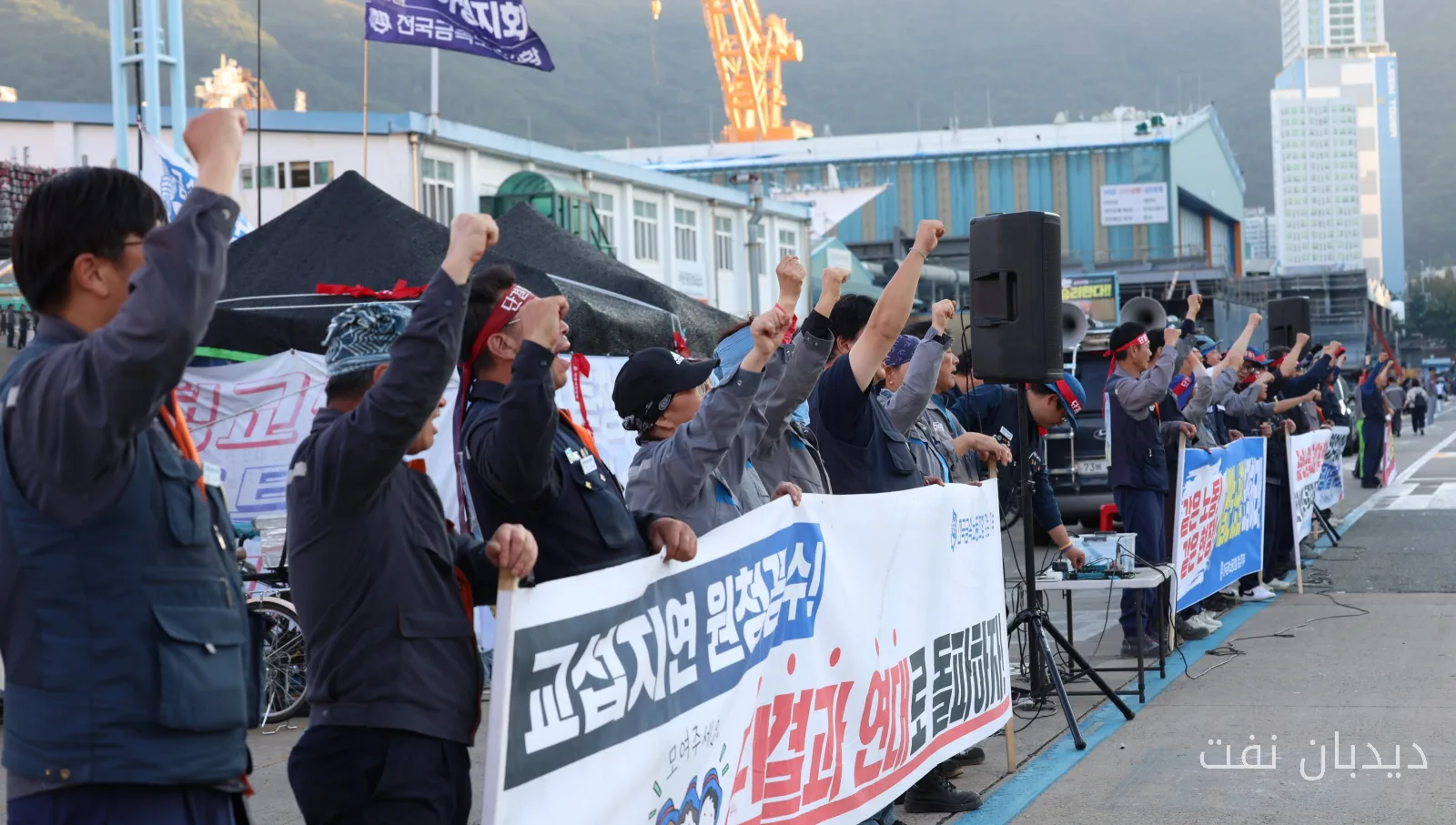
The head of one of the labor unions at Hyundai Heavy Industries (Hyundai Heavy Industries) began their strike by sitting on a crane in the Ulsan shipyard. This move comes after months of unsuccessful negotiations over new collective agreements that have failed to reach an acceptable agreement for union members.
Details of the Strike and Workers' Demands
The Korean Metal Workers' Union (KMWU) has announced that this five-day strike will continue from October 18 to 23. Following a boom in global shipbuilding orders and increased pricing power, the financial situation of East Asian shipbuilders has strengthened, attracting the attention of labor unions. The union is demanding a larger share of the profits gained from the shipbuilding industry's return to prosperity.
In this context, the KMWU emphasized the importance of safety in the workplace in a statement and called for improved benefits and an end to alleged discrimination against contractors and migrant workers. This issue is particularly significant as migrant workers increasingly play a key role in Korea's shipbuilding industry.
Consequences of the Strike and Future Negotiations
The head of the KMWU branch at Hyundai Heavy Industries, Kim Dong-ha, has been positioned on the crane at the large assembly plant in Ulsan since 5:00 PM on Sunday. His goal is to pressure Hyundai Heavy Industries to conclude contract negotiations after months of effort. Union members have recently narrowly rejected the previous contract that had been agreed upon by union leadership and Hyundai Heavy Industries management.
This strike reflects the deep dissatisfaction of workers with the current situation and their need for improved working conditions and safety. If this strike does not lead to positive outcomes, it may result in further tensions in Korea's shipbuilding industry, the effects of which could extend beyond this particular company.



