The U.S. Navy has recently signed a contract for the construction of 30 Medium Unmanned Surface Vessels (MUSV) with Huntington Ingalls Industries (HII), Galliano Marine Services, and Saronic. This contract allows the Navy to produce 30 long-awaited autonomous vessels, with an average cost of about $40 million per hull.
Contract Details and Competitors
In this competition, other companies such as Leidos, PAC MAR, and Sea Machines also received $15 million completion awards for their participation, and their names will be registered in the Drones.mil maritime market for future orders. Huntington Ingalls Industries stated in a press release regarding this contract that the company has made precise investments in the development of autonomous systems that support the Navy's strategy.
Features of the Romulus Vessel
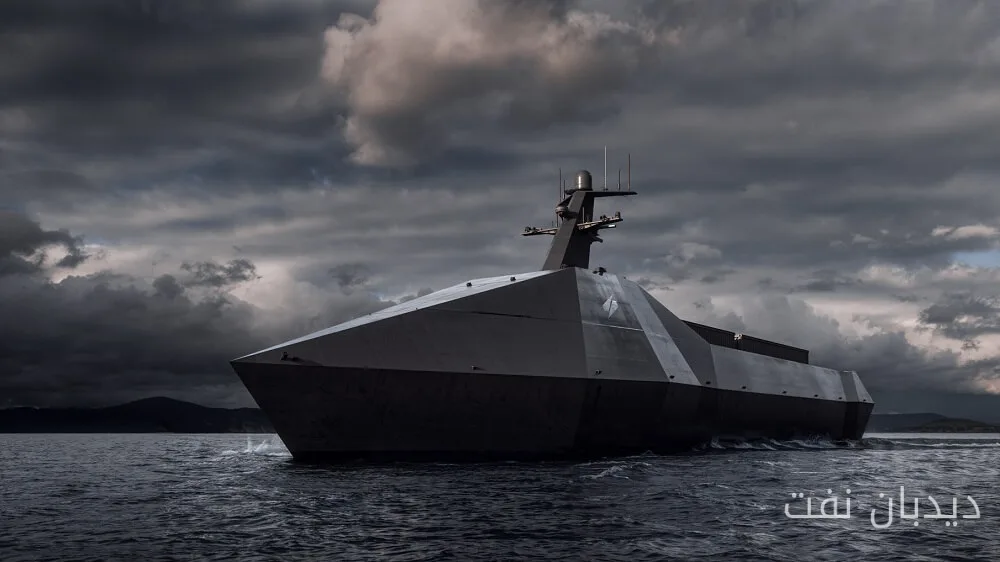
The Romulus model from HII is designed as a medium autonomous vessel with a speed of 25 knots and a range of 2500 miles. This vessel has a design similar to service ships and a long deck at the rear suitable for modular loading. HII anticipates that Romulus will be utilized in various roles such as Intelligence, Surveillance, and Reconnaissance (ISR), counter-drone operations, mine countermeasures, attack, and launching and recovering autonomous platforms.
For the construction of the first prototype of Romulus, HII has turned to the Breaux Brothers, a commercial workshop on the Gulf Coast with a long history of building aluminum ships. HII uses steel in the construction of submarines, destroyers, and surface vessels, while the Breaux Brothers have decades of expertise in aluminum construction, contributing to the design of this vessel.
Saronic Project and Economic Impacts
Saronic, a competitor of HII, is pursuing a similar program but plans to conduct production at its own site by building a large shipyard in Brownsville, Texas, worth $3 billion. This new facility, inaugurated on Wednesday with the presence of prominent officials such as Vice President JD Vance and Texas Governor Greg Abbott, could become the largest shipyard in the United States. Saronic hopes that this project will create up to 10,000 direct jobs and become one of the largest economic development projects in Texas.
The initial capacity of this facility will be about 150,000 gross tons per year, with the potential to expand to 2 million tons per year. Initially, this facility will be limited to constructing ships up to 850 feet long, and upon completion, this size will increase to 1200 feet.