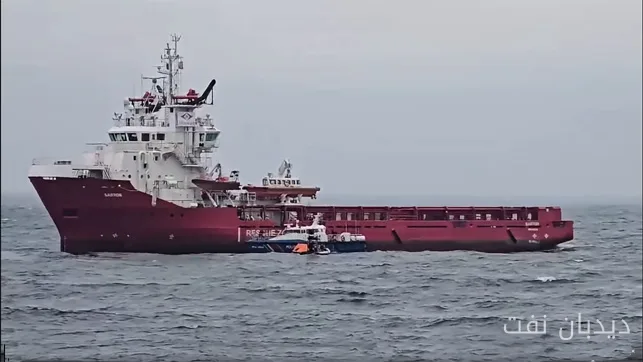
The tanker Royad Mammadov sank in the Black Sea following an attack by two Russian drones. The ship, flying the flag of Saint Kitts and Nevis, was transporting Ukrainian grain to Italy when it caught fire and sank about 30 nautical miles south of Sfantu Gheorghe, near Romania's exclusive economic zone.
Incident Details
The tanker Royad Mammadov, with a capacity of 6,933 tons, was en route from Izmail to Reni on Monday when it suddenly caught fire. Of the 13 crew members on board, 11 were rescued, and one was taken to the hospital due to injuries. Ukrainian President Volodymyr Zelensky described the incident as an attack on a civilian ship in neutral waters.
The Role of Romanian Authorities and Maritime Security
The Romanian Maritime Rescue Coordination Center in Constanța was dispatched to the scene after receiving an emergency alert at 10:37 AM. Rescue vessels, including SAR Apollo and SAR Ares, along with Romanian Coast Guard assets and a helicopter, were sent to the site. Romanian authorities have confirmed the fire, sinking, and loss of life, but have not yet officially confirmed the cause of the incident.
The ship was owned by Turkey, and there were also Azerbaijani and Indian nationals on board. The Indian Embassy in Romania confirmed that three Indian sailors are safe, although one has sustained injuries.
This incident has raised increasing concerns about the safety of commercial shipping in the western Black Sea. Commercial vessels are constantly faced with risks from drones, mines, and the repercussions of the war in Ukraine.
Romania has repeatedly faced incursions or near approaches of Russian drones into its airspace since the onset of the crisis, and commercial shipping servicing Ukrainian Danube ports is particularly at risk.
Turkey and the United Nations are working to initiate new negotiations with Russia and Ukraine for a limited maritime ceasefire in the Black Sea. These talks are expected to take place this month, mediated by the Humanitarian Dialogue Center based in Switzerland. This proposal focuses on the freedom of commercial shipping and the protection of ports and energy infrastructure, leveraging the framework of the Black Sea Grain Initiative established in 2022.