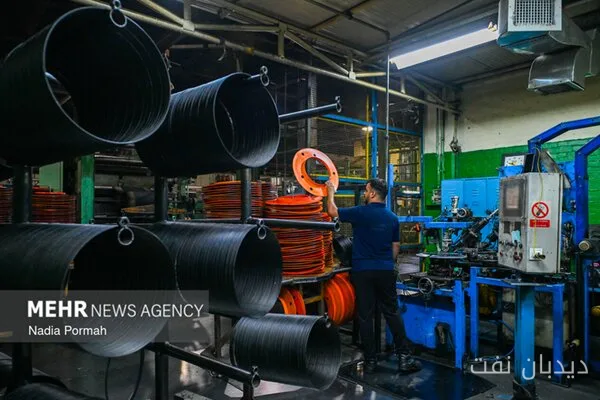
The government is reviewing a new support package to reduce the pressure of energy imbalance on industries. This action comes at a time when energy imbalance has become one of the fundamental challenges in the production sector, and electricity and gas restrictions could lead to the cessation of industrial unit activities.
Energy imbalance situation this winter
Saeed Shojaei, Deputy for Planning, Innovation, and Smartization at the Ministry of Industry, Mine, and Trade, pointed out that estimates regarding the energy situation in the upcoming winter predict climatic conditions and access to energy resources similar to the year 1403. For this reason, the government has prioritized the development of a comprehensive package for managing consumption and reducing the impacts of energy restrictions on the industrial sector.
Read more: Cosco faces a $16.7 million fine for delayed payment
The Deputy Minister of Industry emphasized that maintaining production flow and creating stability in industrial unit activities are priorities for the government and the Ministry of Industry. One effective measure in this regard has been changing the weekly day off and utilizing the capacity of Friday, which has resulted in savings of about 1,200 megawatts in electricity consumption.
Economic dimensions of energy imbalance
The economic dimensions of energy imbalance have become clearly evident over the past two years. The cost imposed on the industrial sector in the year 1403 has been reported to be around 330 trillion tomans, and this figure is expected to rise to about 403 trillion tomans in the year 1404. This increase indicates that energy imbalance is no longer a temporary problem and has profound impacts on production capacity, value-added, and the country's export capability.
Shojaei stated in this regard that electricity and gas restrictions for industrial units are not limited to the amount of unused energy. The stoppage or reduction of capacity in a production unit can have serious impacts on dependent units and the supply chain of raw materials. For this reason, the real cost of imbalance for the country's economy will be higher than the direct loss of profits for businesses.
Now, on the brink of winter, the government's policy for managing energy imbalance faces a serious test. The limitation of energy resources and the necessity of controlling consumption remain in place, and the government must plan in a way that minimizes damage to production units.
Targeted distribution of restrictions based on employment levels and the importance of the production chain can help reduce the damages caused by imbalance. If restrictions are applied purposefully, we can control part of the damages and prevent disruptions in the supply chain and the provision of essential goods.
Read more: The $68 million dispute of Hunter Group with the unpleasant contracting party · Gas delivery to industries increased by one billion cubic meters



