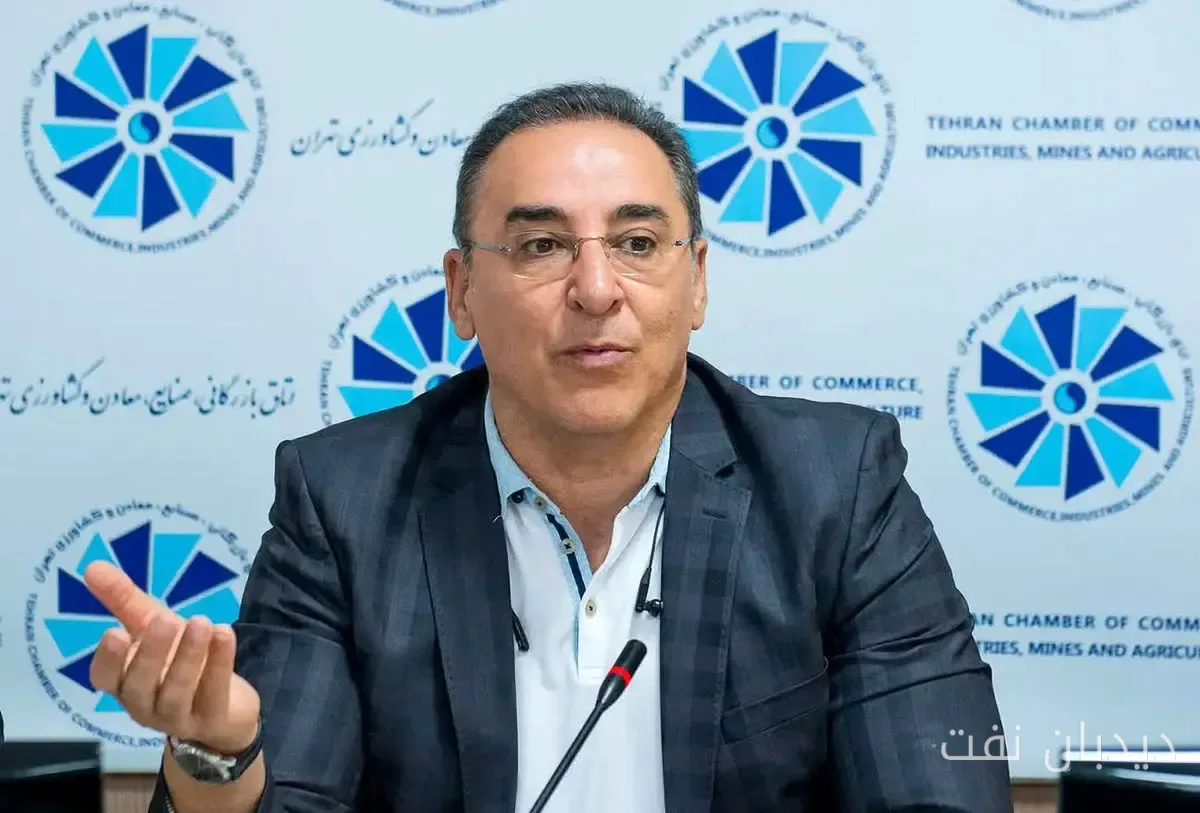
Payman Sanandaji, the head of the Transportation Commission of the Tehran Chamber of Commerce, regarding the status of the country's rail transit after the U.S. sanctions against Iran's railways stated that despite the increase in external restrictions, the capacity and quality of rail services in the country have been maintained under the current economic conditions.
Sanctions on Railways and Their Effects
Sanandaji emphasized that sanctions on railways do not mean the cessation of Iran's rail transit, stating: "The inclusion of an entity on the sanctions list does not automatically mean the halt of all rail activities." He added: "Any restrictions related to railways are not an organizational or contractual issue and can affect some economic actors and transportation companies." According to him, the country's rail industry is not unfamiliar with external sanctions and has also been under pressure in previous years.
Read more: Fars Deputy Governor: Securing gas for the residential sector is a priority
Continuity of Rail Activities
Sanandaji also stated that given the domestic support and capabilities in the rail sector, there will be challenges, but these challenges are not significant enough to stop the movement of trains and the operation of the country's rail network. He pointed out that international payments, contractual collaborations, and equipment procurement are affected by sanctions, but the continuation of train movements under current conditions is possible.
Regarding the geopolitical capacity of Iran's rail network, he noted that this network has a special position and Iran's cooperation capacity is not limited to domestic routes. Sanandaji mentioned that Iran's rail network connects with Turkmenistan and Central Asia through Sarakhs and Incheh Borun, and it is also linked to Turkey, the Caucasus, Pakistan, and Afghanistan.
Iran's Rail Transit Destinations
The head of the Transportation Commission of the Tehran Chamber of Commerce also pointed out that currently, the majority of Iran's rail transit is with China, followed by Russia and Afghanistan. He added: "Due to security issues on the Mirjaveh route, the level of rail transit with Pakistan is lower."
Sanandaji concluded by emphasizing: "Rail is made for movement" and it is the shared responsibility of all to create conditions for this movement to continue safely and sustainably. He also noted that each train set moving from China to Iran carries approximately 54 forty-foot containers.
Read more: The U.S. imposed new sanctions against Iran and Russia's shadow banking network · 210% increase in crude oil exports from the Persian Gulf to 14 million barrels per day