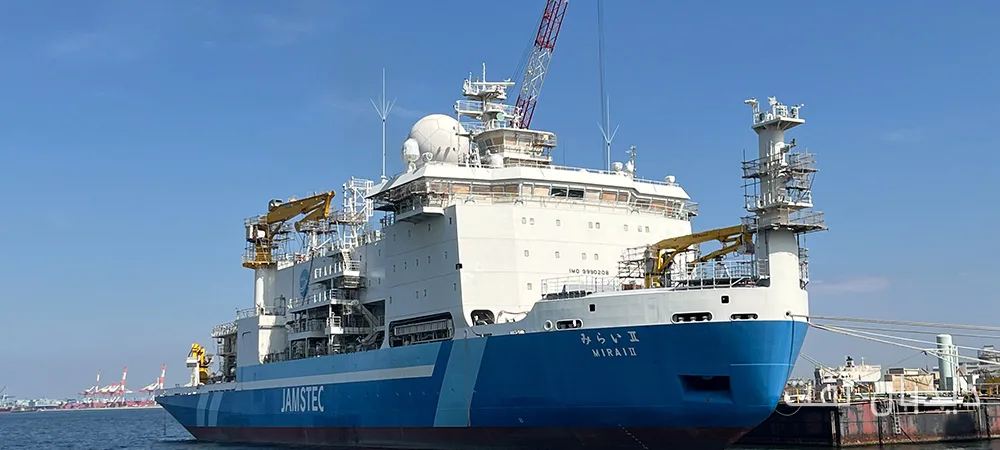
Japan's new Arctic research vessel named Mirai II is nearing completion. This vessel, equipped with full ice-breaking capabilities, is designed for scientific research in polar environments and is set to embark on its first research voyage in the summer of 2027.
Operations Contract with MOL
The Japan Agency for Marine-Earth Science and Technology (JAMSTEC) has signed a contract with Mitsui O.S.K. Lines (MOL) for the management of the Mirai II vessel. Under this agreement, MOL will be responsible for providing operational and related services for this vessel. Since the temporary selection of this company as the operator in 2023, MOL has been preparing the operational infrastructure for the vessel.
Training and Initial Tests
Last February, MOL conducted survival training in polar regions for the crew members who will serve on this vessel. This training included simulating emergency conditions in cold environments and cold water swimming exercises using waterproof clothing. Additionally, exercises for escaping from the sea onto ice and outdoor activities on ice were conducted.
The naming and unveiling ceremony of the vessel will take place in March 2025 at the Japan Marine United (JMU) factory in Yokohama. Currently, equipment works including the installation of accommodation areas, observation equipment, electrical systems, and engine rooms are underway. The Mirai II has successfully completed initial sea trials and is expected to officially enter service by December 18, 2026.
Specifications and Future Activities
This vessel, with a capacity of 13,000 tons, is larger and more capable than the previous Mirai vessel, which was retired in December 2022. Mirai II can break flat ice up to 1.2 meters thick at a speed of 3 knots. Plans for training and test voyages before its public display in April 2027 have been made. Additionally, the first exploratory voyage to the polar ocean is scheduled for the summer of 2027, with trips planned to approach the North Pole in 2027 and 2028.
Japan, as a leading country in scientific research and in light of climate change, is well aware of its responsibility towards scientific research in polar environments. The new vessel will be capable of conducting observations related to the ocean, water, and weather conditions, and will also be equipped for sonar surveys of the seabed and collecting sediment samples.