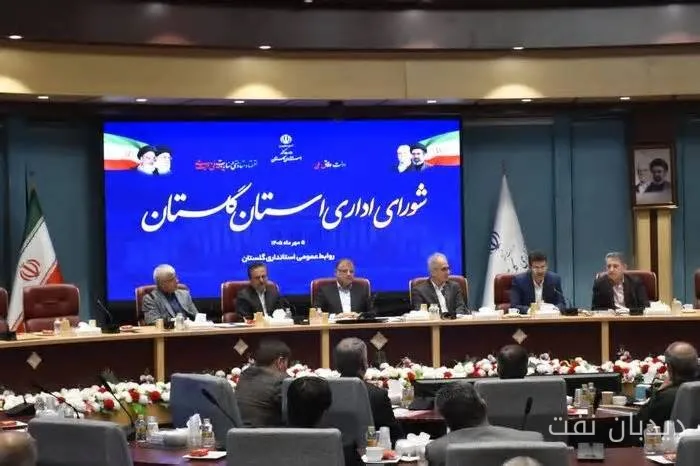
The management of energy imbalance in Golestan province is being prepared to face winter challenges. In a meeting of the Golestan Administrative Council, officials announced the development of seven scenarios for managing gas pressure drops and potential gas outages.
Reduction in Gas Production and Winter Challenges
Abulfazl Narsi, CEO of Golestan Gas Company, said in this meeting: Due to damage to the country's gas and petrochemical facilities, gas production has decreased by about 30%. Part of this reduction has returned to the production cycle, but another part will not be able to return this year. Overall, it is predicted that 11 provinces will face a gas pressure crisis in winter, and Golestan will be one of the provinces in a more critical condition.
Management Scenarios and Alternative Fuel Supply
Narsi added: To manage the situation, various scenarios have been predicted, including a 30% to 70% reduction or cutoff of gas, and the necessary manpower and equipment have been provided. Additionally, planning for the supply of secondary fuel for units is underway, and energy consumption optimization has been pursued since the beginning of the year.
Seyed Mohammad Hosseini, director of the National Oil Products Distribution Company in Golestan, also referred to the actions taken and said: The capacity of liquefied gas reserves and the fuel for the Aliabad power plant and Takol Cement Factory has been completed. For bakeries, four thousand gas cylinders have been provided at subsidized prices, and the capacity of the tanks in 85% of the province's hospitals has also been completed.
Farhad Zare, director of the Industry, Mine and Trade Organization of Golestan, stated: Production units have been prioritized for fuel based on the relevant guidelines, with food, pharmaceutical, and health industries given priority. The fuel needs of production units outside industrial parks are estimated to be about 25 million liters of diesel and 10 million liters of oil by November.
Follow-up on Gas Supply from Neighboring Countries
Seyed Mahdi Mohiayi, Deputy Coordinator of Urban Affairs of Golestan, also referred to the reduction in the country's gas capacity and said: About 30% to 35% of the country's gas capacity has been damaged, and over the past seven months, about 50% of the lost capacity has returned to the grid. Golestan has introduced three private sector investors to the Ministry of Oil for gas supply, one of whom has been approved by the National Gas Company, and two others are being followed up.
Mohiayi continued: Additionally, the purchase of gas from neighboring countries is being pursued, and the issue of energy imbalance has been raised in meetings of Golestan officials with the Minister of Oil and the Minister of Foreign Affairs. Given the shortage of liquefied gas cylinder capacity in the province, the capacity of the private sector is being reviewed to compensate for the shortages.
Preparedness for Winter Conditions
Ali-Asghar Tahmasbi, the governor of Golestan, concluded the meeting by saying: In the Security Council and the Energy Imbalance Working Group, seven scenarios have been developed for various conditions, and gas imbalance management meetings are held weekly. Additionally, negotiations for gas supply from Turkmenistan and Armenia are on the agenda, and investors for purchasing gas from Turkmenistan have been identified and introduced to the government.
Tahmasbi noted: The province's gas consumption in the peak winter reaches 15 to 16 million cubic meters per day, of which about 6 million cubic meters is related to the Aliabad Katul power plant. The provision of alternative fuel for processing industries, greenhouses, and livestock farms is also being pursued to ensure that the fuel needed for these units is supplied in the event of an imbalance.



