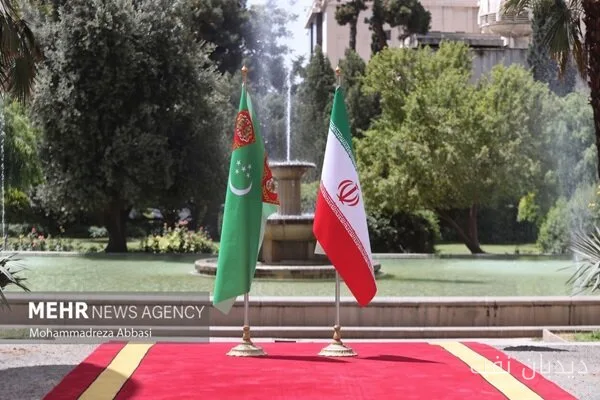
Iran and Turkmenistan, with a shared border of nearly one thousand kilometers, are shaping new economic relations that are particularly advancing in the fields of energy and transit. These developments occur while the current trade volume between the two countries still falls short of potential capacities.
Trade and Existing Capacities
Statistics on the commodity trade between Iran and Turkmenistan indicate that Iran's non-oil exports to Turkmenistan reached $495 million in the first nine months of the year 1404. Despite the intensification of foreign trade restrictions on Iran in 1405, exchanges between the two countries continue, with a greater focus on energy and transit. The total value of non-oil trade between the two countries in the first nine months of 1404 was approximately $504 million and 1.19 million tons, reflecting a 19.9 percent increase compared to the previous year.
Read more: Analysis by Amir Reza Angaji on the Delay in Economic Reforms in Iran
Iran, as one of the main suppliers of goods needed by Turkmenistan in the fields of agriculture, industry, and petrochemicals, is seeking to increase exports and strengthen trade relations. In contrast, Iran's imports from Turkmenistan are significantly lower and include products related to cotton, some industrial goods, and raw materials.
New Cooperation Axes: Energy and Transit
Recent studies indicate that the energy sector has become a new focal point in the economic relations between Iran and Turkmenistan. Negotiations to increase electricity imports and develop transmission lines are among the topics pursued in recent months. In Tir 1405, officials from both countries discussed increasing electricity imports and participating in power plant repairs.
Additionally, the Deputy Minister of Energy announced that necessary arrangements for importing electricity from Turkmenistan and Armenia have been made. These actions reflect the importance of energy diplomacy in strengthening relations between the two countries. Furthermore, at the joint economic commission meeting, topics such as the construction of electricity transmission lines and the transit of Turkmen gas through Iran to third countries were also discussed.
Transit is presented as one of Iran's key advantages for Turkmenistan. This country gains access to southern ports and Gulf markets through Iran, and Iran can connect to the Central Asian transport network via Turkmenistan. The implementation of the Kazakhstan - Turkmenistan - Iran corridor could help strengthen these relations.
Ultimately, it seems that the economic relationship between Iran and Turkmenistan is moving towards energy exchanges, technical and engineering services, and infrastructure cooperation. However, improving the current situation requires additional efforts to create balance in trade and increase Turkmenistan's exports to Iran.
Read more: Seyed Ismail Hosseini: The 1500 and 3000 Toman Gasoline Quotas Have Not Changed · Seyed Ismail Hosseini: We Have Enough Fuel to Get Through Winter



